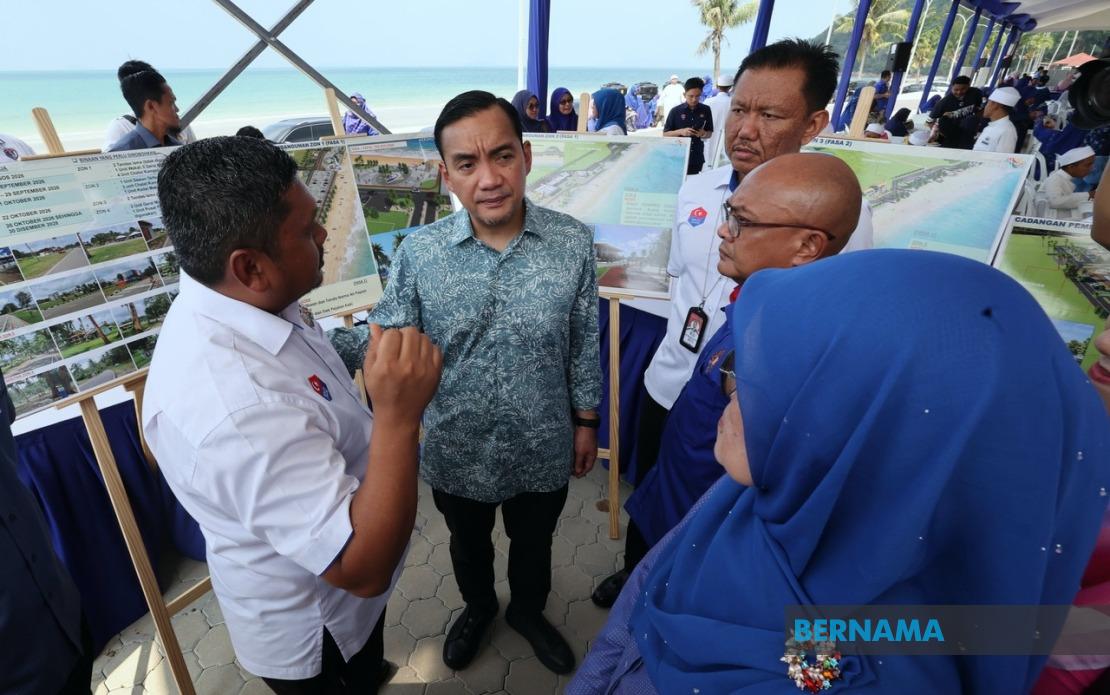
The Johor government has unveiled a RM1.5 million development package for Mersing district, marking a significant expansion of prosperity initiatives beyond the state capital. Menteri Besar Datuk Onn Hafiz Ghazi announced the comprehensive allocation during a visit to the eastern coastal district, emphasising the need to distribute economic gains across all communities rather than concentrating wealth in urban centres.
The funding represents a deliberate strategy to replicate the infrastructure success achieved in Johor Bahru by extending similar developmental frameworks to peripheral districts. Onn Hafiz articulated a vision where the Johor Economic Transformation Plan (JETP) extends beyond macroeconomic targets to directly improve living standards and employment prospects for residents in areas that have historically received less attention from state coffers.
A cornerstone of the allocation addresses healthcare infrastructure, with RM500,000 dedicated to upgrading the Mersing Hospital's haemodialysis unit. This investment acknowledges the critical need for enhanced kidney care facilities in a district serving approximately 80,000 people, reducing the necessity for residents to travel to larger urban centres for specialist treatment. The healthcare focus underscores Onn Hafiz's assertion that economic transformation proves hollow if local populations cannot access improved medical services.
Recreational and community facilities receive substantial attention within the package. RM200,000 has been earmarked for constructing a futsal court at Taman Sri Mersing, while an equivalent amount will repair existing facilities at Felda Nitar. An additional RM200,000 will fund carpet replacement at Kampung Sri Lalang Mosque, demonstrating investment across both secular and religious community spaces. A further RM80,000 targets construction of a sepak takraw court in Felda Tenggaroh 6, preserving traditional Malaysian sports infrastructure.
The menteri besar specifically highlighted the significance of benefiting Mersing's youth population through job creation aligned with JETP objectives. He pointedly noted that tourism products hold little value if local young people cannot secure employment within emerging industries, signalling frustration with development models that generate economic activity without providing local workforce integration. This perspective resonates with broader Malaysian concerns about unequal regional development and youth unemployment.
Infrastructure improvements targeting indigenous communities form another critical component. RM100,000 allocations have been designated for installing solar-powered streetlights in both Kampung Peta and Kampung Tanjung Tuan, Orang Asli settlements that frequently lack modern utility infrastructure. This renewable energy approach addresses both infrastructure deficits and environmental sustainability, reflecting contemporary governance priorities within the state administration.
Educational and skill development initiatives receive strategic attention through planned TVET campus establishment in Mersing, coordinated under the broader JETP framework. This commitment addresses a significant gap in vocational training access for district residents, particularly important given Malaysia's ongoing push to develop technical and skilled workforces amid economic transitions. The proposal signals recognition that peripheral districts often lack training facilities necessary for youth advancement.
Local development priorities also encompass military-related infrastructure, with plans to establish a petrol station serving the Special Forces Group (GGK) at Camp Iskandar. Coordination between the district officer and assemblyman reflects administrative integration, though the strategic rationale for military-specific infrastructure investments merits scrutiny regarding civilian benefit distribution. Religious institutional development features prominently through planned establishment of a Religious Affairs Office, supporting governance infrastructure for Islamic administration within the district.
The allocation breakdown demonstrates careful attention to diverse stakeholder interests, incorporating religious institutions, indigenous communities, sports enthusiasts, and military personnel. This inclusive approach contrasts with development strategies that concentrate resources within narrow sectors, potentially reflecting lessons learned from previous peripheral district neglect. Tenggaroh assemblyman Mohd Youzaimi Yusof and Endau assemblywoman Alwiyah Talib's attendance underscores bipartisan commitment to district advancement.
For Malaysian readers, this allocation represents shifting state priorities toward more equitable regional distribution within Johor, historically the nation's economic powerhouse. The package's emphasis on healthcare and youth employment directly addresses concerns articulated by opposition parties regarding development concentration in wealthy urban zones. Whether similar initiatives extend to other Malaysian states remains unclear, potentially positioning Johor as a model for regional development equity.
The RM1.5 million commitment arrives amid growing scrutiny of development disparities across Malaysian states and within individual states. Mersing's geographic position as an eastern coastal district with tourism potential but limited industrial development makes it representative of districts requiring targeted investment to prevent economic marginalisation. The JETP's articulated commitment to translating economic growth into tangible livelihood improvements for ordinary residents suggests maturation toward inclusive development philosophy.
Successful implementation of these projects will significantly impact Mersing residents' quality of life and economic prospects. Healthcare improvements reduce treatment access barriers, recreational facilities enhance community wellbeing, and proposed educational institutions strengthen human capital development. However, sustained commitment extending beyond initial allocation remains essential; isolated infrastructure investments without ongoing maintenance and development prove temporary solutions to structural disadvantage.

