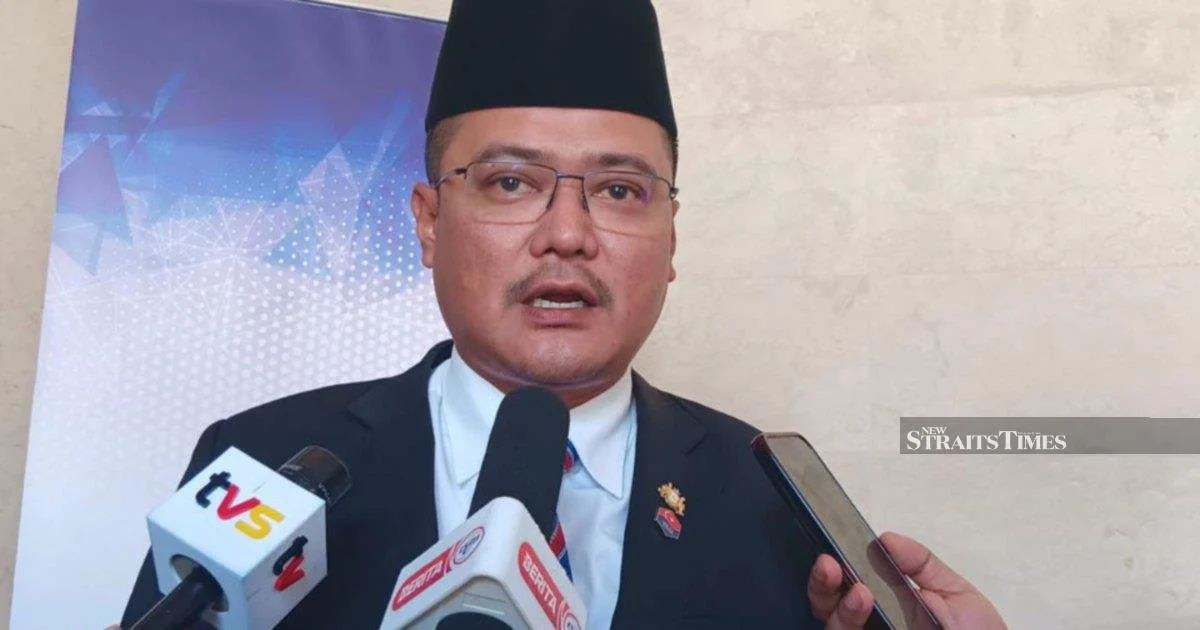
The Johor Barisan Nasional coalition has launched a forceful rebuttal against allegations made by former state legislative assembly speaker Datuk Dr Mohd Puad Zarkashi, dismissing his claims as wholly without foundation and politically motivated. The coalition's swift condemnation signals deepening tensions within the ruling bloc in Malaysia's most economically developed state, where factional disputes have increasingly spilled into public discourse over the past months.
The crux of Puad's allegations centres on assertions that the Johor palace has intervened in political affairs, a charge that strikes at the heart of constitutional governance in the state. Barisan Nasional representatives characterized such insinuations as not merely incorrect but dangerous to the state's stability, framing them as attacks on established institutional boundaries. The rejection was emphatic, with party leaders insisting that royal prerogatives remain entirely separate from executive decision-making within their administration.
Puad's role as former speaker of the Johor state legislative assembly gives his statements particular weight, particularly given his long association with the peninsula's largest Malay-Muslim state. His transition from a prominent assembly position to public critic represents a notable rupture within the Umno-dominated political establishment that has long dominated Johor politics. The shift suggests underlying fractures within the coalition that may have broader implications for succession planning and power distribution at state level.
Umno Youth, the party's youth wing, has escalated the confrontation by claiming that hundreds of party members have filed formal police reports in response to Puad's statements. This mobilization of the party machinery reflects concern among senior Umno figures that allegations against the palace could undermine royal authority and, by extension, their own political legitimacy. The filing of police reports represents an attempt to transform what might otherwise remain internal party grievances into matters of formal state investigation.
The strategic choice to involve the police suggests that Umno leadership views Puad's allegations as crossing significant red lines beyond acceptable political discourse. In Malaysia's constitutional framework, aspersions cast on royal judgment carry particular sensitivity, and bringing complaints to law enforcement officers signals the seriousness with which the coalition regards these statements. This approach also serves to position Umno Youth as defenders of institutional integrity against what they characterize as reckless opportunism.
For Malaysian readers and observers across Southeast Asia, this dispute illuminates the complex interplay between constitutional monarchy, party politics, and factional struggles within Malaysia's largest Malay-Muslim political organization. Johor, with its own constitutional arrangements and relatively strong sultanate, occupies a unique position within the Malaysian federation, and internal disputes there often carry implications for national stability. The nature of these allegations—specifically regarding palace involvement in political decisions—touches fundamental questions about where executive power properly resides within the Malaysian system.
The timing of these allegations and the coalition's aggressive response also reflects broader anxieties within Barisan Nasional about its grip on Johor politics. The state has witnessed electoral narrowing in recent years, with opposition forces making strategic gains in parliamentary constituencies. Any suggestion of internal dysfunction or institutional impropriety risks further eroding public confidence in the coalition's stewardship during a period when renewal and reform messaging might prove electorally advantageous.
Puad's emergence as a critic raises questions about what prompted his transition from insider to outsider and whether his statements reflect personal grievances, principled objections to governance, or ideological disputes within the coalition. His former position commands attention, but it also places his allegations under scrutiny regarding motivation and the reliability of claims made outside the usual institutional channels through which such concerns might be addressed. Barisan Nasional's strategy of categorical rejection and police complaints effectively forecloses dialogue and frames the dispute as a matter for law enforcement rather than internal party resolution.
The police reports filed by Umno Youth members introduce a legal dimension that may ultimately prove inconvenient for all parties. Investigation of allegations regarding palace involvement in political affairs risks exposing sensitive institutional dynamics whether the original claims prove substantive or not. Law enforcement's typical reluctance to become entangled in intra-party disputes or matters touching royal prerogatives suggests that authorities may struggle to determine appropriate prosecutorial responses to complaints they receive.
Looking forward, the escalation from policy disagreement to police involvement signals that Johor's political landscape has entered genuinely fractious terrain. The coalition's robust defence of palace autonomy from political interference paradoxically draws greater attention to questions about the precise relationship between royal and executive authority in state governance. For the broader Malaysian political ecosystem, developments in Johor warrant attention as potential harbingers of similar institutional tensions that might emerge in other states where coalition dominance faces challenge.

