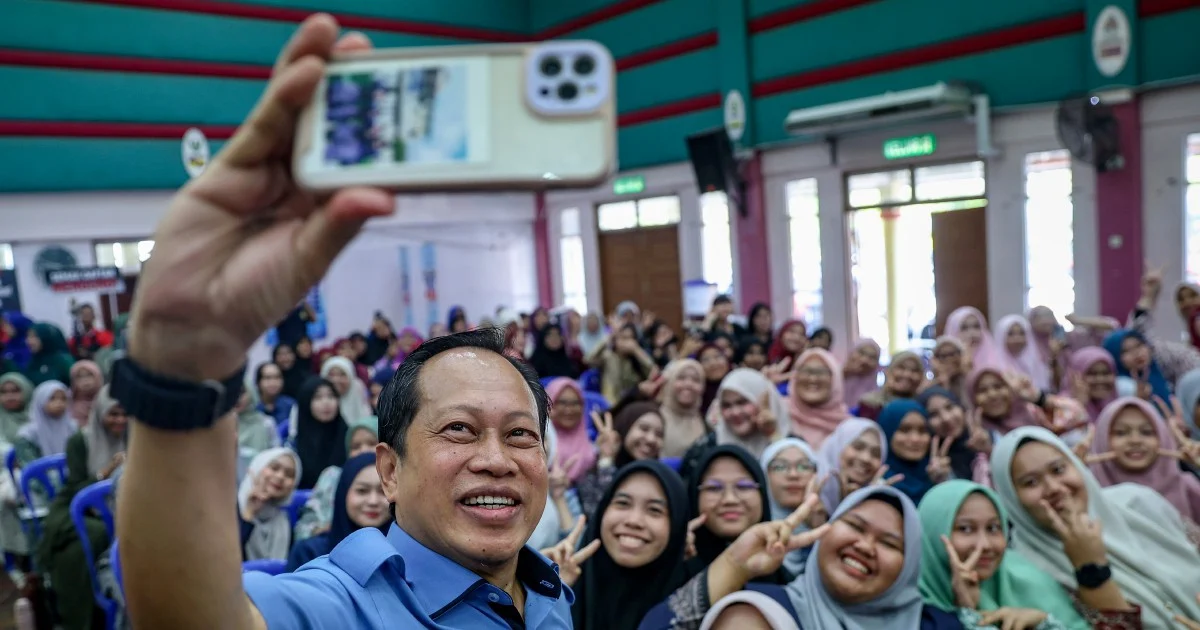
Johor Umno's deputy chairman Datuk Seri Ahmad Maslan has dismissed allegations from the Democratic Action Party that Barisan Nasional's political foundation in Johor is fracturing, stating at a gathering in Batu Pahat that such assertions lack credibility. The rejection comes amid ongoing manoeuvres by opposition parties to undermine confidence in the ruling coalition ahead of potential electoral contests in the state.
The DAP, as the largest component of the Pakatan Harapan opposition bloc, has been making calculated statements suggesting internal strains within Barisan Nasional's grassroots organisation. These claims typically centre on allegations of rifts between coalition partners or waning public enthusiasm following recent political developments at national and state levels. Ahmad Maslan's counter-assertion directly challenges the opposition's narrative strategy, which relies partly on portraying the government as increasingly unstable.
Johor remains Malaysia's most strategically significant swing state, having delivered decisive majorities to whichever coalition has governed during recent election cycles. The state's 56 state assembly seats and 26 parliamentary constituencies make it the third-largest electoral prize after Selangor and Sabah. Understanding voter sentiment in Johor thus becomes essential for assessing national political trajectories, as the state often signals broader national shifts before they crystallise nationwide.
For Umno specifically, Johor functions as a traditional stronghold dating back decades, though the party's dominance has faced periodic challenges, particularly following the 2018 general election when Pakatan Harapan captured federal power. Ahmad Maslan's assertion reflects Umno's broader messaging strategy: that despite national controversies and leadership transitions, the party maintains robust electoral machinery and voter loyalty within its heartland areas. This positioning becomes particularly important as Umno seeks to rehabilitate its image following the fall of Najib Razak's administration and subsequent criminal proceedings against various party figures.
The timing of the DAP's claims and Ahmad Maslan's rebuttal reflects the intensifying political competition that characterises Malaysian politics during periods when no immediate election is scheduled. Both coalitions engage in continuous low-level campaigning, making statements designed to either energise their base or demoralise opposition supporters. Such rhetoric serves multiple purposes: it maintains party visibility, tests messaging for eventual campaign use, and provides leadership a platform to demonstrate confidence to internal party audiences.
Johor's political landscape has grown more complex since the 2022 general election consolidated Barisan Nasional's revival at federal level. Bumno's performance in particular rebounded dramatically compared to 2018, regaining credibility among voters who had abandoned it during the corruption-focused campaigns of the Pakatan Harapan years. However, this revival remains fragile, dependent on continued economic performance and absence of new scandals involving senior leadership. The state also hosts significant population centres including Johor Bahru, Skudai, and Kluang, where younger voters and urban professionals represent less reliably Barisan Nasional-aligned demographics.
DAP's strategic interest in Johor extends beyond simple parliamentary representation. The party has been attempting to expand its footprint into traditionally Malay-Muslim majority states, viewing Johor as containing sufficient urban Chinese, Indian, and progressive Malay populations to justify investment in candidate development and grassroots organising. Success in Johor would represent a symbolic breakthrough for Pakatan Harapan's aspiration to establish itself as genuinely national rather than merely peninsular-concentrated.
Ahmad Maslan's dismissal of DAP's claims should be contextualised within Umno's broader struggle to project unity and forward momentum. The party faces internal factionalism over leadership direction, with different camps competing for influence over policy and candidate selection. When senior figures like Ahmad Maslan make definitive statements about electoral strength, they simultaneously address external audiences and internal party members who may harbour doubts about the organisation's resilience.
The substance of whether Barisan Nasional's Johor support is genuinely wavering or merely experiencing normal fluctuations ultimately depends on empirical measures such as polling data, which remains limited in Malaysia due to strict regulations governing election-related surveys. Both coalitions make claims about momentum and voter sentiment that cannot be independently verified until actual elections occur, creating space for competing narratives to coexist.
For Malaysian voters and political observers, the exchange between Ahmad Maslan and DAP illustrates how both coalitions continuously vie for psychological advantage, using rhetoric to shape perceptions of inevitability and strength. Ahmad Maslan's intervention suggests Umno leadership views the DAP narrative as sufficiently credible to warrant direct rebuttal, even while dismissing it as baseless. This apparent contradiction reflects the subtle dynamics of Malaysian political competition, where denials themselves constitute implicit acknowledgments that underlying questions about stability resonate with portions of the electorate that both sides seek to influence.

