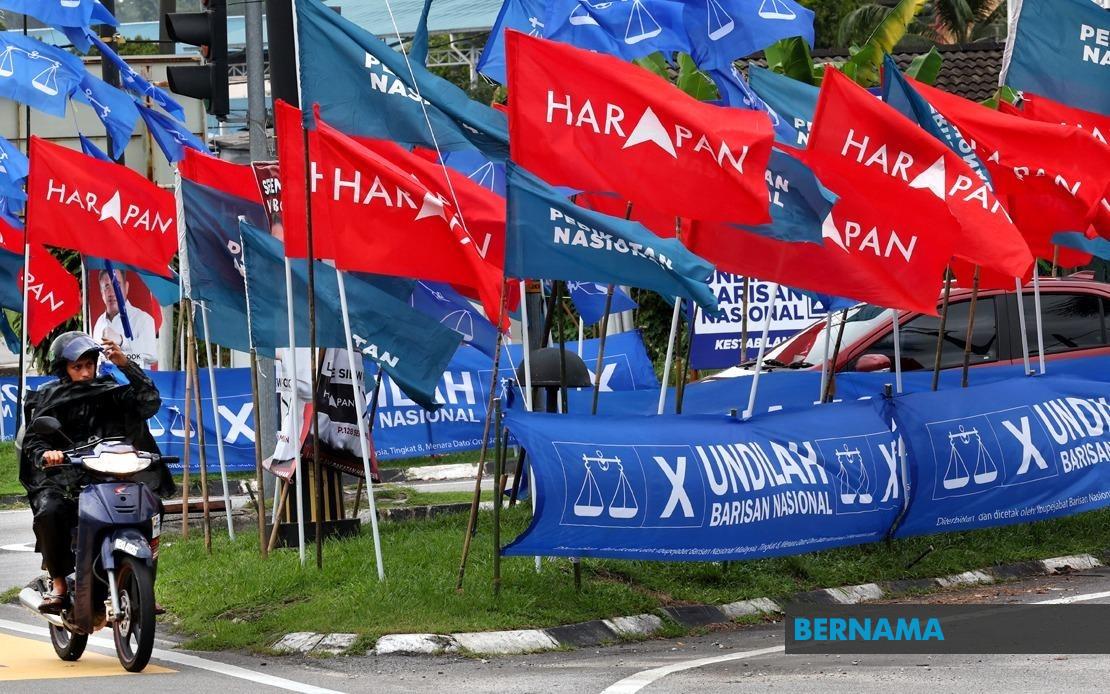
The Johor state election campaign is entering its decisive phase as the clock winds down on one of Malaysia's most closely watched regional contests. With only 48 hours remaining before midnight tomorrow marks the official end of the campaign period, 172 candidates competing for 56 state seats are accelerating their efforts to capture voter support ahead of Saturday's polling day. The intensity on the ground reflects the high stakes involved, as three major political coalitions battle for control of the southern state's government.
Pakatan Harapan is deploying its heavyweight contingent to secure what could be decisive victories in key constituencies. Prime Minister Datuk Seri Anwar Ibrahim is scheduled to headline three major rallies across the state tonight, with particular focus on the keenly contested Puteri Wangsa seat. The coalition's strategy emphasises large-scale public gatherings alongside intensive grassroots mobilisation, combining top-down messaging from national figures with ground-level voter engagement. PH's candidate for Puteri Wangsa, Maszlee Malik, has taken to social media to drum up attendance at the coalition's "Grand Finale Harapan Johor Selatan" rally, appealing to voters with contemporary language that reflects the party's effort to energise its support base in the final hours.
The commitment of individual PH candidates reveals the scope of their final campaign drive. Dr A. Ruban, contesting Paloh, recently returned to the campaign trail despite taking time off for medical treatment, signalling the urgency with which the coalition views the closing stages. Similarly, Johor PKR chairperson Datuk Seri Dr Zaliha Mustafa has joined campaign activities for other party candidates, such as mobilising a 120-strong convoy of motorcyclists in support of Kemelah hopeful Mohd Afif Abd Hamid. These efforts underscore how PH is leveraging its organisational network across multiple constituencies simultaneously, attempting to generate momentum that extends beyond individual races.
Barisan Nasional's campaign machinery is equally focused on consolidating support in what remains a competitive battle. Coalition chairman Datuk Seri Dr Ahmad Zahid Hamidi has embarked on a final push visiting Endau and Kempas constituencies, activities designed to bolster candidate morale and reinvigorate party workers. Johor's incumbent Menteri Besar, Datuk Onn Hafiz Ghazi, who is contesting the Machap seat for BN, continues campaigning across his constituency while using digital platforms to reinforce his message about the coalition's development record. In Larkin, BN candidate Mohd Hairi Mad Shah is sustaining his "Ziarah Kasih" programme, a voter engagement initiative focused on direct community interaction that aims to build personal connections between the coalition and voters.
Perikatan Nasional is capitalising on this final campaign window through high-profile mass gatherings designed to generate publicity and energy. The coalition is hosting a mega rally in Endau tonight that features its chairman Datuk Seri Ir Dr Ahmad Samsuri Mokhtar alongside PAS president Tan Sri Abdul Hadi Awang, mobilising behind Endau candidate Hasnul Hakimi Hussien. PN candidates such as Mazlan Bujang in Kahang are demonstrating determination to maintain ground presence until the final moment, viewing each voter interaction as valuable despite the shortened timeframe remaining. This focus on direct engagement suggests PN is attempting to convert last-minute contact into tangible electoral support.
Smaller parties are also maximising their campaign visibility in the contest's final stretch. Parti Bersama Malaysia has initiated its "Bersama Tour Truck" campaign initiative, bringing its message to voters through mobile engagement strategies. Kota Iskandar candidate Sahrudin Omar is participating in these efforts, while Larkin candidate Norsinah Abu has pivoted toward intimate small-group community dialogues rather than large-scale events. These approaches indicate that parties competing outside the major coalition frameworks are adapting their strategies to reach voters through more localised interaction, potentially reflecting constraints in campaign resources compared to their larger counterparts.
The presence and visibility of national political figures has demonstrably shaped the campaign's final days. Prime Minister Anwar's scheduled appearances carry particular symbolic weight, signalling PH's investment in securing Johor, a state where the coalition faces meaningful competition. Such high-level campaign involvement generates media attention, energises party supporters, and communicates national leadership endorsement of specific local candidates. The contrast between the three coalitions' campaign strategies—PH's emphasis on large rallies with national figures, BN's focus on incumbent performance and local development records, and PN's combination of religious leadership and grassroots activation—reflects distinct approaches to winning voter confidence at this critical juncture.
The final campaign push across Johor's diverse constituencies highlights the state's political significance within Malaysia's broader electoral landscape. Johor has traditionally served as a political bellwether, and contests for its state assembly frequently prefigure broader national political shifts. The 16th state election thus carries implications extending beyond regional governance, potentially influencing the trajectory of federal politics and coalition dynamics. The intensity of campaign activity in these final hours suggests all major parties recognise the stakes involved and are marshalling resources accordingly.
Voter engagement strategies vary considerably across constituencies, reflecting local political dynamics and candidate profiles. Urban seats like Puteri Wangsa and Larkin are witnessing large-scale coalition rallies and digital campaigning, while rural constituencies see more personalised engagement through community visits and convoy-based campaigns. This geographic variation in campaign tactics demonstrates how parties tailor their approaches based on constituency characteristics while simultaneously executing coordinated statewide strategies. The mixture of old-school grassroots campaigning and modern digital mobilisation characterises the final push across all three major coalitions.
As the campaign enters its final 48 hours, the frantic pace reflects the competitive nature of the contest and the genuine uncertainty about electoral outcomes. The presence of 172 candidates across 56 seats, combined with the visible engagement of national political leadership, indicates this is not a forgone conclusion. Voters in Johor will make their decision on Saturday with multiple parties and candidates actively competing for their support right until the deadline. The intensity of last-minute campaigning will likely continue through tomorrow night, with candidates and party operatives extracting maximum value from the remaining time available to influence voter behaviour.

