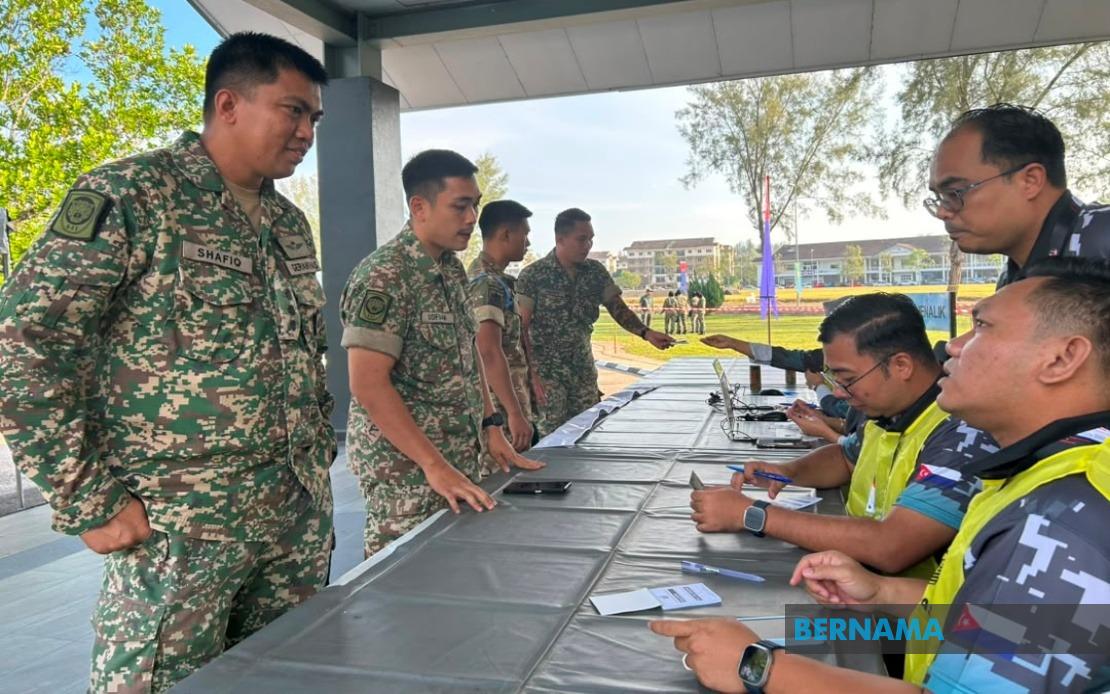
The Johor state election advanced into its early voting phase on July 7, with clear skies and favourable conditions supporting a seamless opening at polling centres throughout the state. Security personnel, who constitute a significant portion of early voters under Malaysia's electoral framework, began arriving from 7:30 am at venues that opened officially at 8 am, ensuring their ability to participate in the voting process ahead of the main polling day scheduled for Saturday.
A total of 24,751 registered voters took advantage of early voting provisions on the first day, reflecting the substantial number of personnel whose duties prevent them from voting on the standard election date. This cohort included 12,041 members of the Malaysian Armed Forces and their spouses, alongside 12,710 personnel from the Royal Malaysia Police and General Operations Force, along with their family members. The early voting mechanism has become an established feature of Malaysian elections, allowing security and emergency services to fulfil their civic obligations without compromising operational readiness.
The Election Commission deployed 64 dedicated polling centres across Johor to manage this early phase, with facilities positioned at strategic military and police installations including the 5th Battalion GOF Camp in Simpang Renggam, the Johor Contingent Police Headquarters, and Mahkota Kluang Camp. Observers and election officials conducted thorough inspections before operations commenced, establishing protocols to ensure the voting process unfolded in an orderly and transparent manner. The infrastructure reflected careful planning to accommodate not only the volume of early voters but also the particular logistics of military and police environments.
Weather conditions proved fortunate during the morning hours, with clear skies facilitating the movement of voters and election staff to polling locations. The Malaysian Meteorological Department, however, issued advance warnings of potential thunderstorms developing across Johor during the afternoon period, indicating that subsequent days of early voting may encounter less favourable conditions. Such weather monitoring is routine during election cycles, as rainfall and electrical storms can occasionally disrupt logistics and voter movement, though experience demonstrates that Malaysian elections typically proceed without weather-related complications.
Polling centres operated on staggered closing times, with venues shutting down between noon and 6 pm depending on their locations and the volume of registered voters assigned to each facility. This arrangement balanced operational efficiency with security protocols, ensuring that personnel could return to their duties without extended interruptions. The staged closing also prevented sudden congestion at final hours, maintaining orderly queues and allowing election officials sufficient time to secure ballots and documentation at each venue.
The early voting phase represents the opening chapter of a broader electoral exercise encompassing the entire Johor electorate. In total, 2,727,926 registered voters across the state remain eligible to participate in the 16th Johor state election, with voting taking place at 1,140 polling centres distributed throughout the state's constituencies. This substantial voter population underscores Johor's significance within Malaysia's electoral landscape, as the state represents one of the country's most populous regions and a consistent bellwether for national political sentiment.
Competition for representation is vigorous, with 172 candidates vying for 56 state assembly seats across Johor's 16 parliamentary constituencies. The candidate slate reflects diverse political affiliations and backgrounds, though the specific breakdown and party strengths vary across individual seats. Voter turnout in Johor elections has historically been substantial, and early indications suggest sustained public interest in the contest.
The smooth execution of early voting carries symbolic significance beyond the immediate logistics of ballot casting. For security personnel who dedicate their professional lives to maintaining order and protecting citizens, the provision of early voting arrangements affirms their role as stakeholders in democratic processes. Their ability to participate without compromise to operational capacity reflects the institutional maturity of Malaysia's electoral system and its adaptation to the practical realities of governing a complex modern state.
From a regional perspective, Johor's state election demonstrates the continued vitality of electoral competition within Malaysia's federal system. State elections provide voters with opportunities to express preferences on issues of particular local concern—including education provision, infrastructure development, urban planning, and service delivery—distinct from federal politics. For Malaysian observers and regional analysts, Johor results frequently signal shifts in political sentiment that may reverberate in subsequent national contests.
The early voting process also reflects ongoing refinements to electoral administration following experience accumulated over multiple electoral cycles. Feedback from previous elections, logistical improvements to polling infrastructure, and enhanced coordination among election officials have collectively strengthened the operational framework. The absence of reported irregularities or administrative complications during the first day of early voting suggests that election commission preparations proved adequate to the task.
Looking forward to Saturday's main polling day, electoral officials will manage a substantially larger voter flow across the full network of 1,140 centres. Experience from the early phase provides confidence that operational systems are functioning as intended, though the concentration of voters in a single day will test administrative capacity more extensively. Weather forecasts, contingency staffing arrangements, and security protocols will become increasingly important as the election enters its decisive phase.

