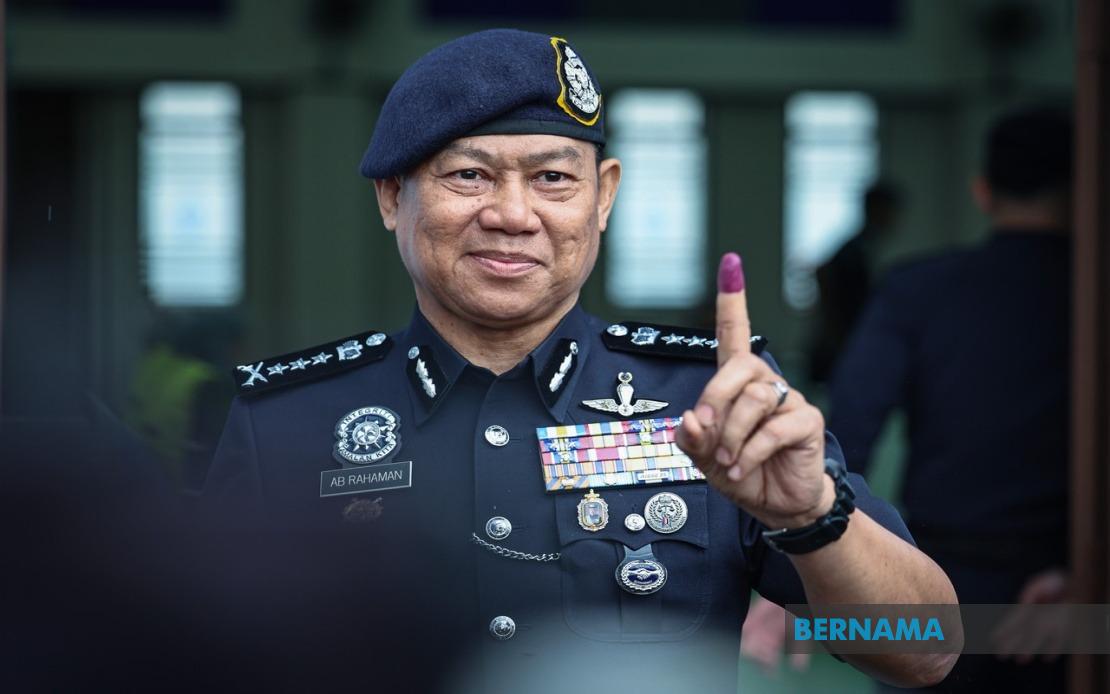
The 16th Johor state election entered a crucial preliminary phase on July 7 as police personnel and military staff exercised their voting rights in staggered early voting sessions held across the state. By 10.30 am, 4,257 officers from the Johor Police contingent—representing 36.3 per cent of those eligible to vote early—had already submitted their ballots, signalling robust participation among security forces ahead of the main polling day scheduled for Saturday.
Johor Police Chief Datuk Ab Rahaman Arsad confirmed that voting operations proceeded without disruption across all 53 early voting centres established throughout the state. The decision to allow police and Malaysian Armed Forces personnel to cast votes in advance addresses the unique demands placed on uniformed services during election cycles, ensuring that security personnel maintaining order on polling day do not sacrifice their democratic right to vote. This administrative accommodation reflects best practice in election management across democratic systems worldwide.
The early voting framework mobilised 64 polling stations that opened simultaneously at 8 am, accommodating 20,607 registered early voters drawn primarily from security establishments. Voting continued in staggered closures beginning at noon and extending through 6 pm, tailored to individual centre capacity and voter registration numbers. This phased approach distributes workload and maintains queue discipline, preventing the congestion often witnessed in consolidated single-day elections involving millions of participants.
Ab Rahaman reassured the public that the integrity of voting procedures remained uncompromised, with no complaints or irregularities documented throughout the morning sessions. The absence of reported incidents reflects meticulous preparation by election authorities and the professionalism of polling officials tasked with supervising the process. Such administrative competence becomes particularly important in Malaysia, where election credibility directly influences public confidence in democratic institutions and governmental legitimacy.
The campaign period preceding this election generated significant police activity, with law enforcement recording numerous reports centred on vandalism of campaign materials. Political billboards, party flags, and promotional signage became targets for destruction, reflecting the competitive intensity characteristic of state-level contests. While such incidents appear contained to property damage rather than violence, they nonetheless highlight the passion mobilised during electoral cycles and the importance of maintaining order throughout the process.
A controversy emerged during campaigning when former Johor State Assembly Speaker Datuk Dr Mohd Puad Zarkashi made allegations regarding intervention by the Johor Palace in the dissolution of the state legislative assembly. His claims generated 153 police reports filed nationwide as authorities examined whether his statements contravened relevant legislation. Investigations into his case remained ongoing at reporting time, with police maintaining standard investigative protocols to determine whether any legal violations occurred. This development underscores the sensitivity surrounding institutional relationships in Malaysian politics and the scrutiny applied to public statements concerning royal involvement in state affairs.
The broader election involves 172 candidates competing across 56 state assembly seats, with more than 2.7 million registered voters eligible to participate in Saturday's main polling. This scale demonstrates the substantial electoral machinery required to conduct democratic exercises in a state of Johor's population and geographic complexity. The staggered early voting for security personnel represents merely the opening phase of a more comprehensive process that will culminate in the definitive mandate granted by the broader electorate.
For Malaysian observers and regional analysts monitoring institutional health, the Johor election carries implications extending beyond state governance. As one of Malaysia's most economically significant states and a traditional political battleground, outcomes in Johor often signal broader shifts in federal political dynamics. Election administration quality—demonstrated through early voting procedures proceeding without incident—reinforces institutional confidence and validates the technical capacity of Malaysian election authorities to manage democratic exercises at scale.
The decision to allow advance voting for uniformed services, combined with the documented absence of procedural irregularities, suggests election authorities approached this exercise with careful planning and resource allocation. Such competence matters considerably in Southeast Asian contexts where election credibility sometimes becomes contested. By demonstrating administrative rigour in this preliminary phase, Malaysian authorities establish a foundation of process legitimacy that ideally extends to Saturday's main polling and the eventual declaration of results.

