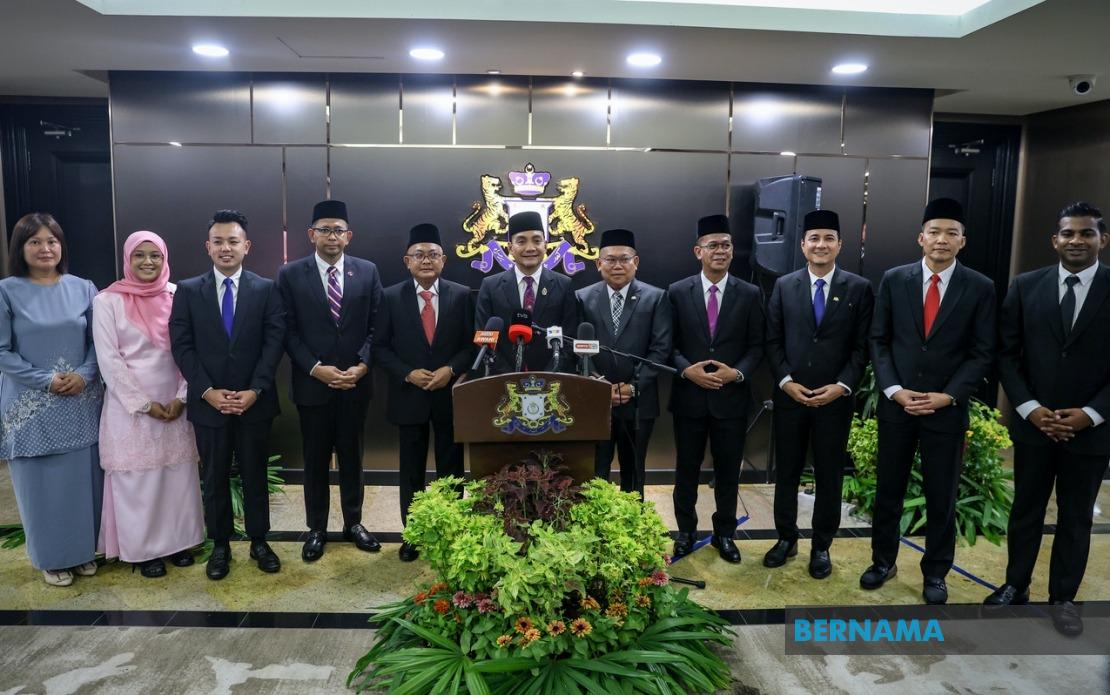
Johor's newly constituted Education and Information Committee has taken a significant structural step by establishing a deputy chairman position, a move state leaders argue will translate into more effective governance and public outreach in the education portfolio. The appointment comes as part of a broader administrative refresh, with Menteri Besar Datuk Onn Hafiz Ghazi announcing ten deputy chairmen across various state government committees in a coordinated effort to streamline operations and accelerate the delivery of government services to constituents across the state's diverse districts.
Dr Muhammad Naqib Md Ghazali, who chairs the committee, outlined the rationale behind the structural enhancement during an aspiration ceremony at the Johor Talent Development Council office in Kota Iskandar. The creation of a deputy chairman position, he explained, represents a deliberate shift toward collaborative governance within his portfolio, allowing responsibilities to be distributed more strategically among committee leadership. This delegation model, he contended, would enable the committee to cast a wider net in terms of public engagement, creating additional channels through which community concerns can be heard and addressed.
V. Rugendran has assumed the newly created deputy chairman role, bringing his own expertise to a portfolio that encompasses education policy, information management, and institutional oversight. The appointment reflects an acknowledgment that the breadth of education-related responsibilities in Johor's administrative landscape requires distributed leadership to avoid bottlenecks and ensure sustained momentum on priority initiatives. By formalizing a second senior position, the committee structure mirrors modern organizational practice, where shared accountability and clear divisions of labor are understood to enhance output quality and institutional responsiveness.
For Malaysian readers familiar with state-level administration, the appointment signals a broader confidence among Johor's political leadership in intensifying the state's education transformation agenda. Education sector improvement remains a consistently high-priority issue across Malaysia, where states compete to demonstrate progress in student outcomes, infrastructure development, and institutional innovation. Johor's structural reorganization suggests the state government is positioning itself to accelerate implementation of key initiatives, particularly the Sekolah Rintis Bangsa Johor programme and the expansion plans for the Johor Talent Development Council.
Dr Muhammad Naqib's emphasis on creating "Bangsa Johor" through education reflects the state's distinctive branding efforts, positioning itself not merely as an administrative jurisdiction but as a distinct cultural and developmental entity within Malaysia's federation. This framing carries implications for how education policy is articulated—moving beyond generic federal frameworks toward state-specific initiatives designed to cultivate a particular identity and set of values. The deputy chairman appointment, in this context, represents institutional capacity-building to deliver this localized vision effectively.
The timing of the deputy chairman appointments deserves scrutiny. Menteri Besar Onn Hafiz, at his first State Executive Council meeting, reminded all appointed figures of their responsibility to serve constituents impartially, emphasizing that public service transcends considerations of ethnicity or religion. This rhetorical emphasis, paired with the administrative restructuring, suggests an attempt to reset the tone of state governance following recent leadership transitions. The expansion of deputy positions across committees can be interpreted as both a practical efficiency measure and a political move to broaden the representation of viewpoints within the state administration.
From a Southeast Asian perspective, Johor's governance adjustments reflect broader regional trends toward more responsive, distributed-authority models of state administration. As Malaysian states vie for economic and human capital competitiveness, structural innovations in government committees often precede or accompany substantive policy shifts. The education portfolio, in particular, attracts intensive scrutiny because human capital development directly influences economic trajectory and social cohesion. Johor's competitors—Selangor, Sabah, Sarawak—are similarly investing in education infrastructure and institutional innovation, making the deputy chairman appointment part of a regional competitive dynamic.
The expansion of the JTDC represents a tangible manifestation of the committee's mandate. Talent development councils have become increasingly important across Malaysia as a mechanism for identifying, nurturing, and retaining high-potential individuals who might otherwise migrate to other states or overseas. By expanding this institution's reach, Johor signals commitment to building a knowledge-based economy within its borders. The deputy chairman, working alongside Dr Muhammad Naqib, will share responsibility for ensuring that such expansion occurs according to quality standards and budgetary discipline.
Implementation will ultimately determine whether the deputy chairman appointment translates into measurable improvements in education service delivery or remains a structural reorganization without substantive impact. Malaysian government committees sometimes accumulate positions without corresponding clarity regarding decision-making authority or performance accountability. The success of this appointment will depend on whether Johor's leadership defines clear responsibilities for the deputy chairman, establishes mechanisms for interdepartmental coordination, and creates measurable benchmarks for committee performance.
Dr Muhammad Naqib's confidence in the experience of department heads and directors under his portfolio suggests reliance on existing institutional expertise to drive implementation. This approach carries both strengths and risks. On one hand, retaining experienced personnel provides continuity and institutional memory. On the other, significant organizational change sometimes requires fresh perspectives or personnel capable of challenging established routines. The deputy chairman's role, therefore, may involve not simply distributing existing workload but introducing new methodologies or accountability frameworks.
For Malaysian citizens and policymakers observing state-level administration, the Johor restructuring offers insights into how governance structures are being adapted to meet contemporary demands. The appointment of deputy chairmen across multiple committees reflects an assessment that single-leader models are insufficient for managing complex portfolios effectively. Whether other Malaysian states follow Johor's lead—and whether such appointments yield measurable improvements in public satisfaction with government services—will shape the trajectory of administrative reform across the federation.

