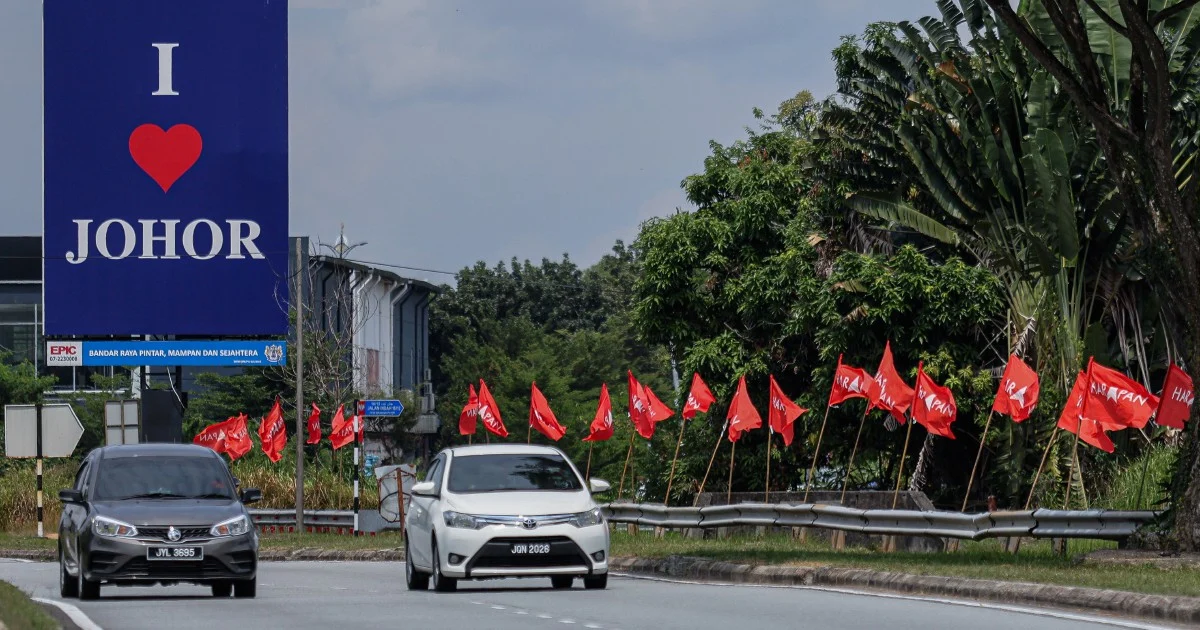
The upcoming Johor state election represents far more than a personal competition among potential mentri besar candidates, according to a prominent voice within the PKR youth movement. Rather than allowing the contest to devolve into a personality-driven showdown, the party argues that voters must carefully evaluate the competing coalitions themselves—assessing their organisational coherence, policy depth, and capability to translate promises into concrete improvements for residents across the state.
This framing reflects a strategic effort to broaden the election discourse beyond the inevitable focus on individual leadership contenders. In Malaysian state politics, elections frequently become centred on high-profile figures, their track records, and interpersonal rivalries. By pushing back against this tendency, PKR youth leadership seeks to ensure that substantive questions about governance competence and developmental priorities remain front and centre in voters' minds during the campaign period.
The emphasis on coalition strength carries particular weight in contemporary Malaysian politics, where electoral outcomes often hinge on the stability and unity of multiparty alliances. A coalition that functions cohesively, with complementary party strengths and aligned policy objectives, typically delivers more stable and effective governance than one marked by internal tensions or conflicting agendas. For Johor specifically—Malaysia's second-largest state by population and a significant economic contributor—the capacity of whichever coalition takes office to maintain internal discipline will directly influence the state's ability to implement development initiatives and respond to constituent concerns.
Economic development and social welfare represent the core stakes of the election, from this perspective. Johor's economy faces evolving challenges in the post-pandemic environment, including the need to diversify revenue streams, attract quality investment, and ensure equitable distribution of opportunities across urban and rural constituencies. The state's social fabric also demands attention, with pressing issues around education, healthcare access, affordable housing, and job creation affecting millions of residents. Each coalition offering itself to voters should therefore be evaluated on its concrete vision for addressing these interconnected challenges, the technical expertise within its ranks, and past performance in delivering outcomes.
The PKR youth position implicitly critiques a phenomenon common in Malaysian politics: the elevation of personality over substance. While individual leaders certainly matter—their decision-making style, integrity, and administrative competence shape state operations—voters benefit from stepping back and assessing the entire team that will hold responsibility for governing. A single capable individual leading a fractious or inexperienced coalition may struggle to deliver; conversely, a coalition with diverse complementary talents, clear internal hierarchies, and shared strategic vision can accomplish substantial work even with less towering individual figures at the helm.
This argument also touches on coalition coherence. In Malaysia's multi-ethnic, multi-religious context, coalitions ideally represent broader stakeholder interests than a single party could encompass. When coalition partners respect each other's core constituencies, maintain transparent power-sharing arrangements, and coordinate effectively across organisational lines, they can build policies with wider legitimacy and implement them more durably. Johor's demographic composition—while predominantly Malay and Muslim, with significant Chinese and Indian communities—requires governing coalitions capable of navigating diverse interests and building consensus around development priorities.
For voters evaluating coalition plans, several dimensions merit scrutiny. First, economic strategy: which coalition's proposals most convincingly address Johor's development gaps, leverage its geographical advantages, and create quality employment? Second, sectoral focus: are there commitments to priority areas like education infrastructure, healthcare availability, or small-business support tailored to Johor's specific circumstances? Third, social policy: how will the winning coalition address housing affordability, crime prevention, or environmental sustainability? Fourth, fiscal responsibility: have the coalitions demonstrated capable financial stewardship previously, and do their proposals reflect realistic, costed approaches rather than merely aspirational rhetoric?
The PKR youth argument further reflects awareness that voter fatigue with personality-centric politics runs deep in Malaysia. Constituents increasingly seek parties and coalitions that present themselves as professional, capable, and focused on delivering tangible improvements to daily life. By repositioning the Johor election as fundamentally about coalition competence and development vision, PKR youth aims to occupy higher ground in the political narrative—suggesting that serious voters should ask serious questions about governance capacity, not merely cast ballots based on individual appeal or historical tribal loyalties.
Moreover, this rhetorical move carries implications for how political outcomes translate into actual governance. Elections framed around coalitions and their teams tend to generate clearer mandates for implementing agreed programmes and maintaining party discipline in the legislature. When voters select a coalition partly on the basis of its stated development agenda, the winning coalition faces stronger pressure—from voters and from its own constituent parties—to pursue that agenda faithfully. This can strengthen accountability and reduce post-election drift toward policies that differ markedly from campaign promises.
For Malaysian observers monitoring Johor politics, the PKR youth intervention signals an attempt to elevate campaign discourse and set standards for what constitutes a serious electoral choice. Whether this framing gains traction with voters—whether it successfully redirects attention from MB candidates toward coalition performance and plans—will partly determine both the substance of the campaign and the legitimacy that the eventual winning coalition claims to govern. It also underscores ongoing debates within Malaysian political culture about how voters should weigh personal leadership qualities against institutional coherence and policy vision when making electoral decisions.

