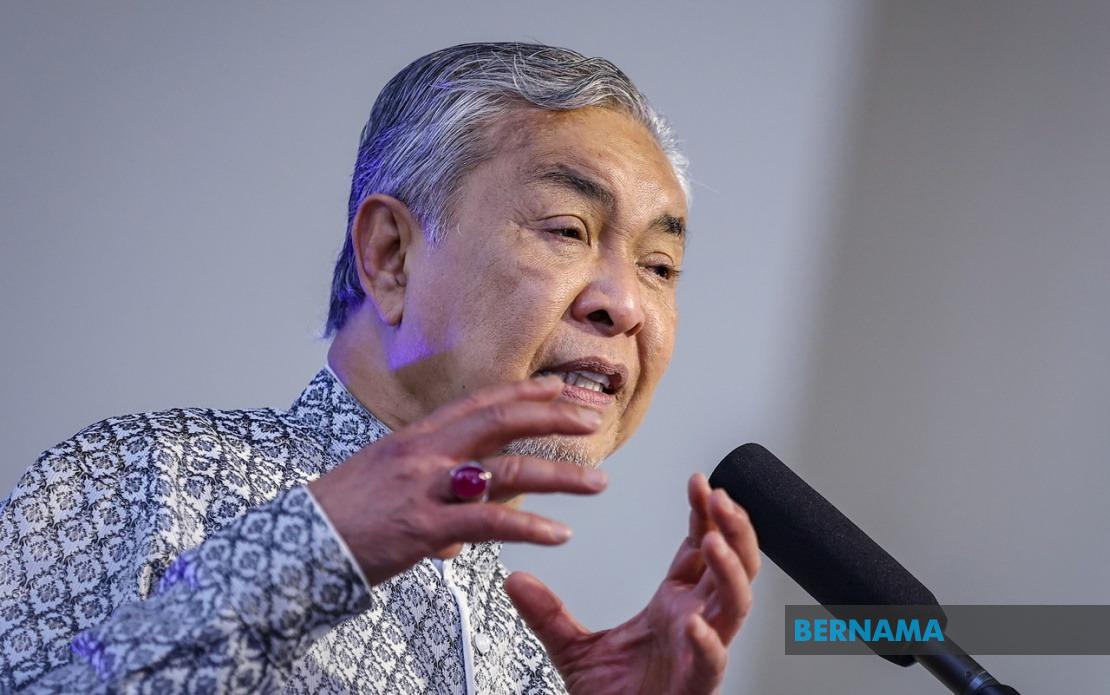
As the Johor state election enters its final campaign stretch ahead of polling on July 11, Barisan Nasional chairman Datuk Seri Dr Ahmad Zahid Hamidi has made a direct appeal to all competing parties to conduct the contest on a higher plane, moving beyond the historical grievances and unrelated issues that have periodically surfaced in Malaysian politics. Speaking after attending a community programme in the Kempas state constituency, the Deputy Prime Minister stressed that voters deserve a campaign focused on substance rather than score-settling, particularly given that several parties contesting the state election maintain cooperative relationships at the federal government level.
Ahmad Zahid's intervention reflects an underlying tension within Malaysia's coalition politics: the necessity of maintaining working relationships across multiple levels of government even when parties compete fiercely in state contests. His point that Cabinet colleagues should not feel uncomfortable encountering one another weekly while one has attacked the other's historical record underscores the practical complications that arise when partners at the national level become rivals at the state level. This dynamic is particularly acute in Johor, where BN faces a genuinely competitive electoral environment after capturing only 40 seats in the previous state election, a performance that falls well short of the supermajority governments that were routine in the state for decades.
The BN chairman's characterization of his coalition as "the underdog" represents a significant acknowledgment of shifting political dynamics in Malaysia's most industrialized state. This framing departs markedly from the triumphalism that once characterized BN campaigns and reflects the genuine uncertainty within ruling circles about whether traditional support structures remain robust. Johor's electorate has undergone profound demographic transformation, with more than half of voters now comprising younger citizens who came of age during periods when BN's grip on power appeared less inevitable than it did to their parents' generation. This generational transition renders historical narratives about past administrations potentially less relevant to voters more concerned with immediate economic prospects and career opportunities.
The centerpiece of BN's appeal to these younger voters centers on a manifesto emphasizing skills development and employment pathways, themes that Ahmad Zahid repeatedly stressed during his remarks. The coalition is positioning itself as the architect of expanded opportunities through Technical and Vocational Education and Training programmes, arguing that premium-wage employment requires more than formal education alone. By anchoring their campaign to tangible proposals for youth employment rather than retrospective arguments, BN strategists hope to shift discourse toward forward-looking considerations that favor the incumbent's ability to implement programmes through government apparatus.
Ahmad Zahid cited the decline in national unemployment to 2.9 per cent as evidence of the government's economic stewardship, though he acknowledged that raw employment figures mask deeper concerns about job quality and earnings potential. The distinction between securing employment and accessing genuinely remunerative work resonates particularly acutely in Johor, where industrial transformation and automation have disrupted traditional manufacturing employment pathways that previously provided stable middle-class livelihoods for workers without tertiary qualifications. His emphasis on skills training as the bridge between available employment and satisfying careers represents an implicit acknowledgment that demographic and technological forces have permanently altered the labour market landscape.
Menteri Besar Datuk Onn Hafiz Ghazi's manifesto, which Ahmad Zahid highlighted, represents BN's attempt to position itself as responsive to the concerns animating young Johor voters rather than defensive about its track record. By centering youth needs and future-oriented policy offerings, the coalition seeks to redirect campaign discourse away from terrain where opposition parties might invoke historical grievances or administrative lapses. This strategic repositioning requires discipline among all coalition members, however, necessitating the kind of explicit appeal that Ahmad Zahid issued cautioning against the reopening of old controversies.
The appeal to maturity in political competition carries particular weight in Johor, where the state election occurs against a backdrop of intense federal-level political maneuvering. Malaysia's coalition governments at both national and state levels depend upon maintaining sufficient unity among partners to govern effectively, yet these same partners must differentiate themselves to voters in competitive elections. Resolving this tension demands restraint and a shared commitment to preserving working relationships, precisely what Ahmad Zahid sought to reinforce through his cautionary remarks.
BN is contesting all 56 seats in the Johor assembly, signaling the coalition's determination to recapture lost ground and consolidate advantages. The scale of the contest underscores the high stakes involved, with implications extending well beyond state boundaries given Johor's political and economic significance within Malaysia's federal structure. Early voting occurs on July 7, providing an opportunity for voters unable to participate on polling day to cast ballots, a development that has become increasingly significant as work patterns and residential mobility have grown.
The timing of Ahmad Zahid's intervention, just days before early voting commences, suggests that BN strategists recognized a risk that uncontrolled campaign rhetoric might undermine the maturity and dignity that they wish to characterize their electoral effort. By publicly establishing parameters for acceptable campaign conduct, the BN leadership sought to establish norms that would constrain more inflammatory rhetoric from subordinate figures within the coalition, though such top-down appeals inevitably encounter resistance from grassroots activists and local politicians who perceive advantage in aggressive messaging.
For Malaysian observers monitoring the state election as a barometer of shifting voter preferences, Ahmad Zahid's framing of the contest provides revealing insight into BN's strategic assessment. The characterization as underdog, the emphasis on youth-oriented policy offerings, and the explicit plea for campaign decorum all suggest an organization aware that business as usual will not suffice to retain Johor at the electoral level it previously enjoyed. Whether these recalibrations prove sufficient to satisfy younger voters seeking meaningful improvement in employment prospects and economic participation remains the central question animating the campaign's final days.

