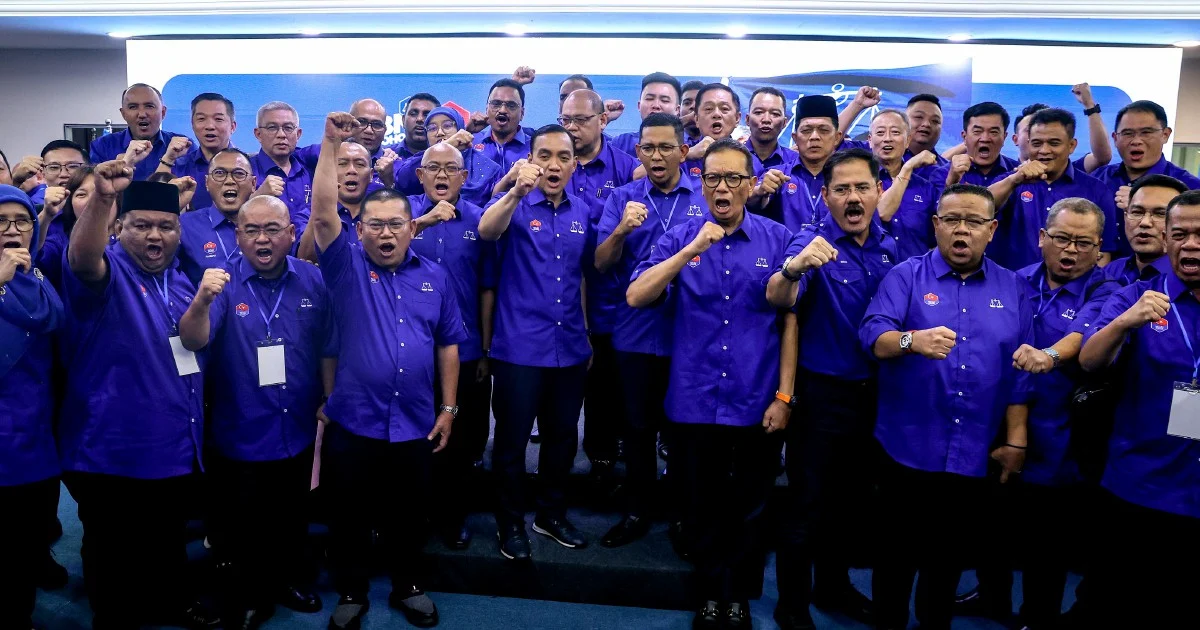
Anticipation surrounding a possible electoral alliance in Johor has largely dissipated following Barisan Nasional's release of its full slate of candidates for the state poll, with the coalition notably excluding representatives from Parti Wawasan Negara from its nomination roll. The announcement marks a decisive moment for BN's strategy heading into the election, signalling the preferred direction of the traditional coalition as it seeks to retain control in Malaysia's second-largest state by population.
Prior to the candidate unveiling, political observers and media outlets had circulated persistent reports of behind-the-scenes negotiations that might incorporate Wawasan into a broader electoral arrangement alongside BN and Pas. Such speculation reflected the fluid and often unpredictable nature of Malaysian coalition politics, where alliances frequently shift based on electoral calculations, personality dynamics, and seat-sharing mathematics. The potential inclusion of Wawasan would have represented an unconventional configuration in Johor's political landscape, adding complexity to what has historically been a two-front contest.
The decision to proceed without Wawasan figures on the BN ticket suggests the coalition's leadership concluded that going it alone, or maintaining existing partnership structures with component parties, offered a more viable path to victory. BN's component parties—UMNO, MIC, and MCA—have long dominated Johor politics, and the coalition may have judged that introducing a new player would complicate internal negotiations and dilute its message. The move reflects confidence, or at least calculation, that the traditional coalition mechanics remain sufficient for electoral success in a state where BN has held considerable influence.
For Malaysian readers, this development carries broader implications about the trajectory of BN as a political force. The coalition has faced considerable pressure in recent years, losing federal power in 2018 before regaining it through unusual circumstances. In Johor, where it previously enjoyed hegemonic status, BN must contend with increasingly organised opposition from Pakatan Harapan and other challengers. The exclusion of Wawasan suggests BN strategists believe their core coalition remains their strongest asset, rather than pursuing broader inclusive arrangements that might appear desperate or internally destabilising.
Wawasan's non-inclusion also reflects the party's limited political footprint and leverage in Malaysian politics. Founded relatively recently as a splinter from UMNO, the party lacks the organisational depth and electoral machinery of established players. By not securing BN backing, Wawasan faces a difficult calculus: contest independently with limited resources, seek alignment with opposition forces, or negotiate with Pas as a secondary partner. Each option carries substantial risks and uncertain returns, underscoring the precarious position of smaller parties in Malaysia's polarised two-coalition environment.
The timing of this announcement proves significant for the broader Southeast Asian context. Malaysia's electoral politics increasingly serve as a laboratory for coalition-building in the region, with implications for how parties in Thailand, Indonesia, and the Philippines approach similar challenges. The willingness of BN to stick with established arrangements rather than pursue novel coalitions suggests that despite globalising pressures and changing voter preferences, entrenched political structures retain considerable resilience. This pattern reinforces existing hierarchies within Malaysian politics and may discourage emerging or marginal parties from challenging the established order.
For voters in Johor, the candidate announcement clarifies the choice before them. With BN presenting a unified slate drawn from its existing components, opposition parties can sharpen their messaging around specific differences with these nominees rather than grappling with uncertainty about shifting alliances. Clear lines of accountability become possible when coalition membership and candidate selection follow established patterns. However, this clarity may also entrench predictability; if voters perceive BN as a monolithic force unlikely to reform or substantially refresh its approach, turnout and engagement could suffer.
The exclusion of Wawasan also speaks to calculations about Johor's religious and ethnic demography. With its substantial Malay-Muslim population and significant Indian communities, Johor's electoral dynamics differ from more urban, ethnically diverse states. BN's existing component structure—with UMNO representing Malay-Muslim interests, MIC serving Indian voters, and MCA engaging the Chinese community—appears designed to address these constituencies. Adding Wawasan would introduce a force without established community anchors, potentially complicating rather than clarifying BN's appeal to these voter blocs.
Observers should watch how this development reshapes political positioning across all parties. If BN achieves strong results despite excluding newcomers, it will reinforce the logic of maintaining established coalitions and may discourage similar insurgent parties elsewhere. Conversely, if BN's performance disappoints, pressure could mount to reconceptualise alliance strategies. For Wawasan specifically, this rejection may force a strategic reassessment about its long-term viability as an independent political entity in Malaysia's constrained multi-party landscape.