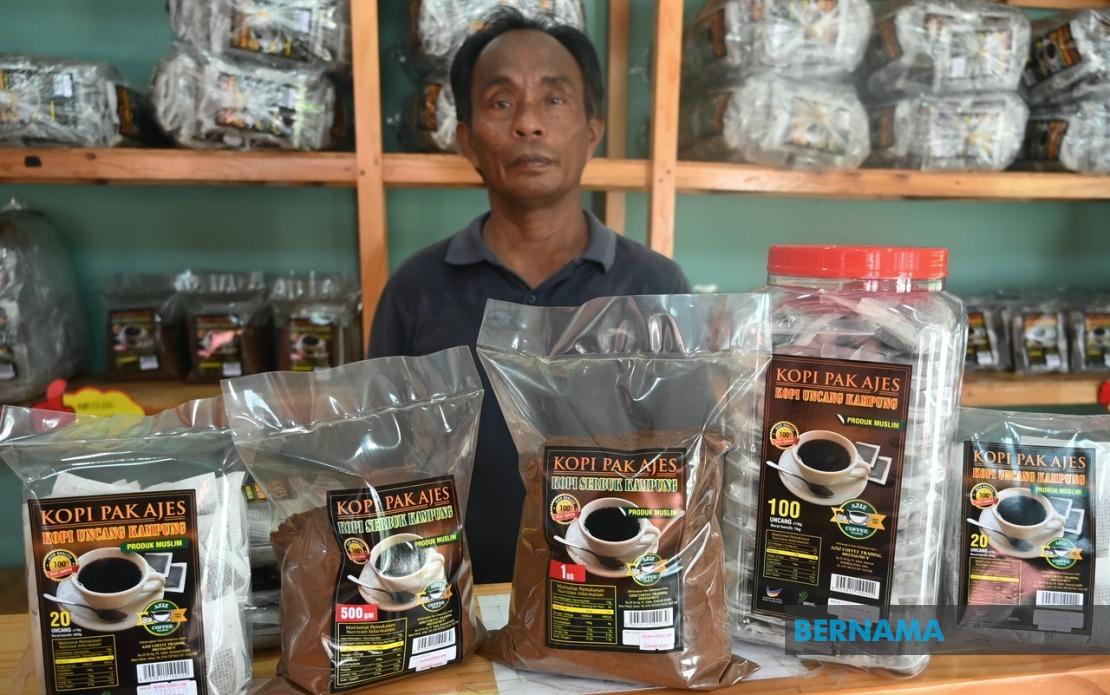
The 16th Johor state election is delivering unexpected commercial gains for Aziz Mohd, a 65-year-old coffee producer based in Kampung Parit Sidek, Semerah, whose operation has scrambled to meet explosive demand from campaign machinery and election workers crisscrossing the state's constituencies. Political campaigns typically generate sustained consumption patterns among workers and support teams managing ground operations, and Pak Ajes—as he is known locally—has positioned his three-decade-old enterprise to capture this seasonal windfall. With 172 candidates competing for 56 state seats in voting scheduled for Saturday, the scale of campaign activities has translated into orders that his production facility can scarcely keep pace with.
Pak Ajes's coffee trading enterprise has existed since 1991, born from an observation about surplus coffee bean supplies in nearby villages that initially served personal use and small-scale beverage stalls operated by acquaintances. The genesis of his business reflects the opportunistic entrepreneurship common among rural Malaysians who identify market gaps within their communities. What began with minimal capital—approximately RM200 derived from quail egg and mushroom sales—has evolved into a manufacturing operation capable of producing five tonnes of coffee powder monthly. His willingness to pivot from quail farming and mushroom cultivation to coffee processing demonstrates the adaptive commercial instincts necessary for survival in Malaysia's competitive informal economy.
The production methodology underlying Pak Ajes's operation emphasizes meticulous process control at each transformation stage. Coffee beans must be separated from stems and husks before undergoing approximately 15 days of sun-drying—a procedure dependent on weather cooperation and suitable facilities. Subsequent roasting, grinding, and packaging phases require precision to preserve product integrity; the powder's susceptibility to moisture absorption and air exposure necessitates careful handling throughout manufacturing and distribution chains. These technical requirements explain why scaling production during election season demands advance coordination and resource mobilization rather than spontaneous capacity expansion.
The current election cycle has compelled Pak Ajes to source raw materials from more distant suppliers, including Rengit and Kluang, supplementing his traditional procurement networks. This geographic expansion of sourcing logistics reflects the intensity of demand emanating from campaign operations across Semerah, Sungai Balang, and Bukit Naning constituencies. His readiness to double production capacity indicates that campaign teams and political machinery view consistent coffee supply as essential infrastructure supporting their mobilization efforts. The candidate organizations involved recognized the value of establishing supply relationships in advance, demonstrating that successful campaign logistics depend partly on securing reliable access to consumables that sustain volunteer and worker morale during intensive ground operations.
Pak Ajes's current market reach extends across Muar and Batu Pahat, where coffee shops represent his primary retail distribution channels. However, his ambitions extend far beyond regional consolidation. In 2022, he opened Kupi Nang Ajes Cafe immediately adjacent to his processing facility, establishing a direct-to-consumer retail presence with the operational assistance of his son, Muhammad Fitri, 22. The cafe emphasizes affordability while offering standardized espresso-based beverages including Americano and latte, positioning itself within the expanding specialty coffee market segment that has proliferated across Malaysian towns during the past decade.
The expansion trajectory that Pak Ajes envisions reflects confidence in market growth sustainability beyond immediate election-driven demand. His stated objective includes establishing a second outlet in a prominent commercial location within either Batu Pahat town or Muar, with ultimate aspirations toward multi-state franchise expansion. This ambition represents entrepreneurial thinking shaped by three decades of incremental business development. Rather than viewing the current election surge as a discrete windfall to be passively enjoyed, he conceptualizes it as market validation justifying capital investment in retail infrastructure that could generate sustained revenue streams independent of electoral cycles.
Governmental support mechanisms have facilitated Pak Ajes's operational development beyond what private sector resources alone might accomplish. The Department of Agriculture has contributed equipment including coffee grinders and bagging machinery, alongside formal training in packaging protocols and product labeling standards. These interventions reflect Malaysia's agricultural extension services and small business development initiatives designed to professionalize informal economy operations and enhance compliance with food safety and commercial packaging regulations. Such institutional support explains how rural microenterprises can transition toward formalized commercial structures capable of supplying multiple retail outlets and institutional customers.
The election's immediate economic effects on small businesses like Pak Ajes's operation illustrate how political processes generate multiplier effects throughout local economies. Campaign expenditures, whether for materials, services, or consumables, circulate through supplier networks and reinvigorate periodic demand among producers positioned to serve campaign infrastructure requirements. However, these windfalls typically prove transitory; once voting concludes and campaign machinery dismantles, consumption patterns revert toward baseline levels. Pak Ajes's recognition that such opportunities "don't come often" reflects realistic assessment of election-driven market cycles and explains his proactive approach to capacity planning and supply chain coordination during this temporary expansion.
For Malaysian readers and regional observers, Pak Ajes's experience exemplifies how elections catalyze economic activity at microenterprise scales throughout the nation's rural and semi-urban areas. His evolution from mushroom and quail farmer to established coffee processor and cafe operator demonstrates the entrepreneurial pathways available within Malaysia's diverse economy. The confluence of agricultural production, food processing, and retail services within a single family enterprise mirrors business models prevalent across Southeast Asia's emerging economies. His generation's accumulation of capital through patient, incremental expansion contrasts sharply with investment patterns characteristic of younger urban entrepreneurs, suggesting divergent trajectories in Malaysia's evolving commercial landscape.
The immediate electoral context—with voting scheduled for Saturday and 56 state seats contested across diverse constituencies—explains the concentrated demand surge affecting Pak Ajes's operation. Johor, as Malaysia's second-most populous state and a critical electoral battleground, attracts intensive campaign mobilization requiring sustained supply of basic consumables. Coffee consumption among campaign workers represents a seemingly minor logistical requirement yet reflects the practical necessities of sustained ground operations. Election machinery depends upon countless such supply relationships functioning smoothly; voters and observers typically perceive only campaign messaging and voter outreach, remaining largely unaware of the commercial ecosystems supporting intensive political mobilization efforts.
Looking beyond the immediate electoral cycle, Pak Ajes's trajectory suggests how rural enterprise operators navigate Malaysia's transition toward more formalized commercial structures. His engagement with governmental agricultural support, willingness to adopt mechanized production equipment, and investment in branded retail infrastructure indicate movement toward professionalization within the specialty coffee sector. Whether his franchise ambitions materialize will depend partly upon his capacity to maintain consistency in product quality, establish effective supply chain management across multiple outlets, and develop appropriate operational systems supporting multi-unit management. These represent familiar challenges confronting small business expansion, yet remain surmountable for operators with established market presence and sustained customer relationships.

