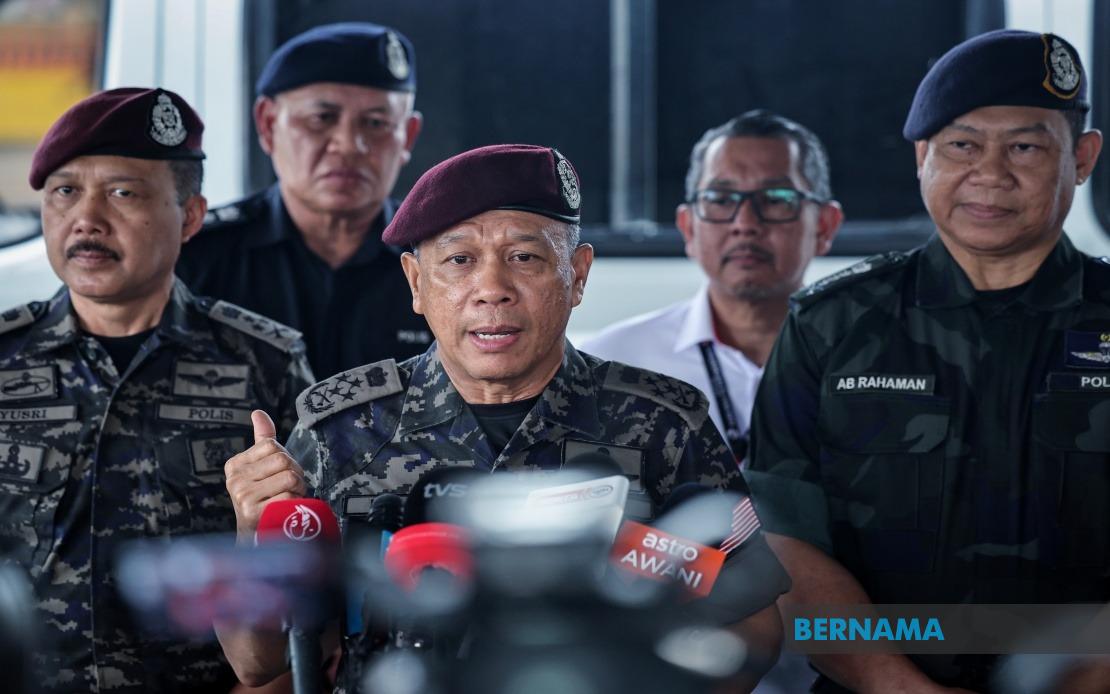
The 16th Johor State Election campaign wrapped up yesterday after a fortnight marked by relative calm, with police recording 90 incident reports that did not involve any election candidates or top-ranking party officials. Inspector-General of Police Tan Sri Mohd Khalid Ismail disclosed the figures during a visit to a polling station in Taman Molek on polling day, underscoring the orderly nature of this significant electoral exercise in Malaysia's southern gateway state.
Authorities initiated formal investigations into 25 of the reported incidents, bringing them under proper procedural scrutiny to determine culpability and apply relevant legal provisions. The bulk of these complaints centred on vandalism and related activities, particularly the deliberate damage, unauthorised removal, and destruction by burning of political party insignia displayed throughout neighbourhoods and towns. Such incidents, whilst worth documenting, fell short of the threshold that would draw senior political leadership into police inquiries, a development that observers may interpret as reflecting reasonable restraint during an intense campaigning period.
The fact that no candidates or prominent party leaders faced implication in these reports carries symbolic weight for Malaysian electoral integrity. Election periods traditionally generate friction as rival camps jostle for visibility and voter attention, yet the absence of top-tier involvement suggests that ground-level campaign workers and supporters, rather than directed organisational strategy, drove most violations. This distinction matters because it indicates that while minor infractions occurred, the competitive landscape remained largely within acceptable parameters without descent into leadership-orchestrated chaos.
MohdKhalid addressed reporters after witnessing the voting process firsthand, noting that the election unfolded without serious disturbance across all 56 state constituencies. More than 2.7 million registered Johor voters participated in the democratic exercise, representing one of Malaysia's largest electoral cohorts in a state-level competition. The absence of what police termed "untoward incidents" throughout polling hours reflected careful preparation and robust ground management by both electoral authorities and law enforcement agencies.
Deploying 14,000 police officers and personnel across Johor's constituencies demonstrated the state's commitment to maintaining public order during voting. This substantial force included 5,600 officers seconded from police contingents nationwide, representing a significant mobilisation of resources coordinated specifically for election duties. Such numbers ensured visible police presence at polling centres while maintaining sufficient reserve capacity to respond to any emerging disturbances. The internal security and public order apparatus, represented on-site by department director Datuk Seri Mohd Yusri Hassan Basri and Johor Police Chief Datuk Ab Rahaman Arsad, maintained heightened vigilance throughout the day.
The concentration of reported violations on flag desecration and removal incidents reflects a familiar pattern in Malaysian electoral campaigns. Political parties invest considerably in street-level signage and banners to maintain brand visibility throughout their constituencies, and rival supporters occasionally engage in tit-for-tat destruction of opposition materials. While such behaviour violates local ordinances and electoral regulations, it sits at the lower end of campaign misconduct, distinguishing this exercise from elections marred by physical confrontations, ballot irregularities, or systematic intimidation of voters.
Investigation papers being processed at various police jurisdictions indicate that authorities intend to follow through with determining responsibility for the documented incidents. This procedural diligence sends a message that even apparently minor violations warrant formal inquiry and potential prosecution if evidence warrants. The ongoing investigative work prevents perpetrators from assuming that campaign-period infractions will be overlooked once votes are counted, maintaining the principle that electoral law applies equally throughout the voting cycle.
The Inspector-General's appeal for voters experiencing election-related complaints or grievances to file police reports creates an accessible feedback mechanism linking grassroots concerns to both the Election Commission and other government agencies positioned to intervene. This invitation acknowledges that not all electoral problems materialise through police discovery; instead, aggrieved voters themselves constitute an important information source identifying breaches of electoral conduct. By encouraging formalised reporting, authorities establish documentation trails that strengthen the regulatory framework's transparency and create accountability records for post-election analysis.
For Malaysian observers monitoring electoral health, Johor's performance during this campaign period offers cautiously positive indicators regarding the operational management of state-level polling. The absence of candidate involvement in documented infractions suggests that senior party leadership, despite competitive pressures, maintained sufficient discipline over campaign cadres. The substantial police deployment and smooth voting process, coupled with moderate reporting levels, collectively point toward an election that respected fundamental democratic principles despite the inevitable frictions accompanying multi-sided political competition.
The implications extend beyond Johor itself, as state elections in Malaysia frequently serve as testing grounds for electoral procedures later applied in federal campaigns. The demonstrated capacity to manage a 2.7-million-voter exercise with minimal serious incident provides reassurance about institutional capabilities during high-stakes voting periods. Whether this comparative calm represents the norm or an anomaly will become clearer as post-election analysis examines the factors contributing to orderly conduct and identifies areas requiring refinement for future electoral exercises.

