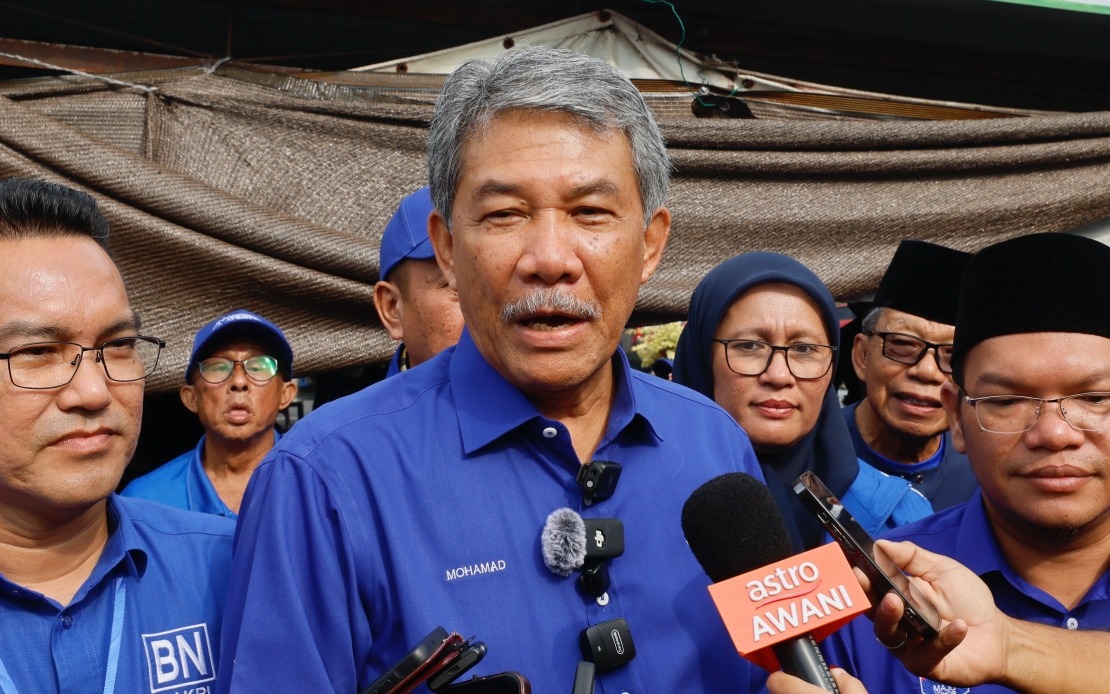
As Johor prepares for its state election on July 11, UMNO deputy president Datuk Seri Mohamad Hasan has issued a pointed plea for electoral decorum, emphasising that campaign conduct must remain restrained and focused on policy rather than personal grievance. Speaking during a constituency engagement in Johor Bahru, Mohamad stressed that the current political landscape demands a delicate balancing act, where regional contests do not undermine the cooperative framework that underpins governance at the national level.
The distinction Mohamad drew between robust policy debate and personal attack reflects broader tensions within Malaysia's coalition politics. Under the Unity Government arrangement, multiple parties with divergent ideologies and organisational interests must navigate simultaneous electoral cycles without allowing state-level competition to fracture federal partnerships. This tension is particularly acute in Johor, where UMNO traditionally holds significant electoral sway and where intra-coalition dynamics are especially complex.
Mohamad's intervention carries particular weight given his dual role as both Foreign Minister and UMNO deputy president, positioning him as a custodian of both state party interests and federal governmental continuity. His framing of "prudent" campaigning reflects a sophisticated understanding that electoral campaigns in Malaysia's current political environment risk becoming proxies for underlying federal disputes. By explicitly permitting policy presentation whilst restricting personal attacks, he attempted to create a narrow corridor for competitive electioneering without destabilising the broader coalition.
The timing of Mohamad's remarks is significant, arriving at a moment when opposition voices have questioned whether the Johor election serves purposes beyond formal state governance. He directly addressed allegations linking the election to efforts favouring former Prime Minister Datuk Seri Najib Tun Razak, characterising such claims as baseless and asserting that state electoral outcomes cannot realistically influence federal prerogatives regarding ministerial clemency or presidential pardons. This denial itself underscores the sensitivity surrounding these allegations within ruling coalition circles.
Moreover, Mohamad's emphasis on constitutional limitations proves instructive for understanding Malaysian federalism. He noted that a state Menteri Besar possesses no power to affect decisions regarding federal pardons, which remain exclusively within the Yang di-Pertuan Agong's authority. This emphasis on institutional boundaries serves a dual purpose: it deflects suggestions of impropriety whilst simultaneously reinforcing the constitutional hierarchy that structures Malaysian governance.
The Johor state election represents a consequential electoral exercise, with 172 candidates competing for 56 seats in the State Legislative Assembly. Early voting commences immediately following Mohamad's remarks, whilst polling occurs on July 11. The scale of candidate participation and the geographic distribution of constituencies ensure that this election will substantially influence Johor's political trajectory and potentially reshape internal party dynamics within the ruling coalition.
Mohamad's characterisation of interpersonal campaign friction as acceptable—noting that "teasing" between political rivals occurs routinely—whilst drawing a firm line at personal attacks reveals a nuanced appreciation of campaign culture. He acknowledged that some degree of competitive sparring is inevitable and even healthy within democratic discourse, but insisted that such exchanges must not degenerate into assaults on individual character or integrity that could poison future working relationships. This distinction becomes critical in coalition environments where today's rivals may become tomorrow's government partners.
The Foreign Minister's intervention also reflects broader concerns about Malaysia's international standing and governance credibility. A state election marked by acrimony and personal vituperation could internationally reinforce narratives about Malaysian political instability and coalition fragility. By promoting civilised campaign conduct, Mohamad positioned the Johor election as demonstrating Malaysia's democratic maturity and institutional resilience, arguments of obvious relevance for a nation navigating complex regional geopolitical relationships.
For Malaysian voters in Johor and observers across Southeast Asia watching Malaysian coalition politics, Mohamad's message carries implications extending beyond electoral etiquette. It represents an attempt to establish boundaries for acceptable competition within the Unity Government framework, suggesting that political actors understand certain red lines must remain uncrossed to preserve the coalition's functionality. The election will ultimately test whether this appeal for restraint effectively constrains campaign rhetoric or whether competitive pressures overwhelm these cautionary invocations.
The constitutional principles Mohamad invoked—respect for the Yang di-Pertuan Agong's prerogatives, the supremacy of law, and institutional hierarchy—form the theoretical foundations justifying coalition continuity and explaining why federal partnerships must transcend state-level electoral competition. His framing presents the Johor election not as an isolated regional exercise but as a test of whether Malaysia's political actors can simultaneously pursue electoral advantage and maintain federal governance stability.
As campaigns intensify toward July 11, Mohamad's appeal for mature conduct will face practical pressure from grassroots activists, competing candidates, and opposition groups eager to mobilise supporters through confrontational rhetoric. The extent to which this call for civility influences actual campaign behaviour will significantly shape both the election's tone and subsequent assessments of the Unity Government's ability to manage electoral politics without internal rupture.

