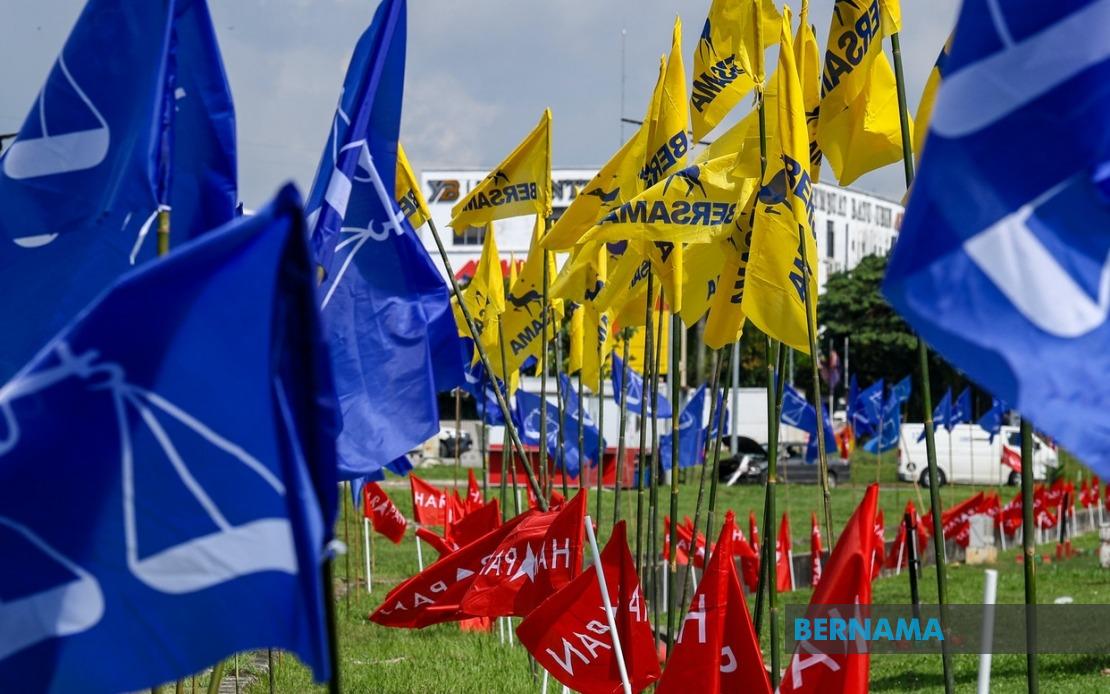
The upcoming 16th Johor state election presents an opportunity for Malaysian political parties to demonstrate maturity by anchoring their campaigns on concrete policy proposals and administrative records rather than inflammatory rhetoric, according to leading political analysts. With 172 candidates vying for 56 seats in Saturday's polling, the stakes extend beyond the state capital—expert commentary suggests that how parties conduct themselves in Johor will have implications for post-election collaboration across different tiers of government.
Prof Datuk Dr Awang Azman Awang Pawi, a sociopolitical analyst at Universiti Malaya and fellow of the Malaysia National Civics Academy, emphasises that legitimate democratic competition need not entail scorched-earth tactics. Instead, he advocates for campaigns that openly pit manifestos and pledges against one another, allowing voters to assess which coalition can most effectively manage Johor's economy, bolster investment inflows, bridge urban-rural divides, and tackle persistent challenges such as affordability, employment, housing security and welfare provision. This framework shifts the battleground from personality clashes and tribal loyalties to measurable governance outcomes—terrain on which voters can make informed judgments.
The risks of straying from this constructive path are substantial. Awang Azman cautions that campaigns steeped in personal attacks, sectarian appeals, or rhetoric portraying coalition partners in federal government as existential threats risk confusing the electorate and poisoning the well for future cooperation. In a parliamentary system where coalition governments are common, such damage proves costly. Ministers and opposition figures who have traded barbs in Kuala Lumpur often find themselves needing to collaborate in Cabinet committees, legislative bodies, and inter-agency forums once results are tallied. Campaigns that forge political wounds too deep make reconciliation and functional governance harder to achieve.
Awang Azman identifies specific boundaries that should guide campaign conduct. Parties must resist personal attacks and avoid invoking race, religion, or the legitimacy of rival organisations as campaign fodder. Constructive competition, by contrast, can centre on contrasting administrative track records, approaches to economic development, leadership quality, and competing visions for state governance. Opposition parties advocating a check-and-balance role can articulate their case through emphasis on institutional reform, representation diversity, and responsiveness to urban and middle-class concerns—arguments grounded in substantive difference rather than demonisation.
For Johor specifically, analysts identify several policy domains that merit voter attention and substantive debate. The border economy with Singapore, volatile cost-of-living pressures, job creation in an evolving labour market, the Rapid Transit System Link's implementation, development of the Johor-Singapore Special Economic Zone, affordable housing shortages, urban congestion, technical education expansion, and equitable welfare distribution represent tangible issues on which party platforms should be tested and compared. These topics directly affect household welfare and reflect genuine governance challenges that distinguish between competent and underperforming administrations.
Dr Norman Sapar, a political analyst who has monitored Johor's electoral dynamics, broadly concurs with Awang Azman's assessment while offering a measured observation about current campaign tone. Sapar notes that political maturity today should not be gauged by decibel levels of opposition attacks but rather by each party's demonstrated capacity to manage disagreements without sacrificing national interests. By this yardstick, he observes that the Johor campaign has thus far maintained reasonable decorum, with parties tending toward subtle criticism rather than open confrontation—a pattern he attributes to enduring Johor political culture emphasising courtesy and procedural propriety.
Sapar stresses that open political competition forms an essential democratic feature, provided it does not corrode the political trust and working relationships that enable effective national governance after votes are counted. This balancing act proves particularly important in Malaysian federalism, where state-level electoral outcomes frequently reshape the composition and dynamics of federal coalitions. A state election campaign that severely alienates potential federal partners effectively complicates post-election administration and policy coordination across different governmental layers.
Both analysts emphasise that contemporary Malaysian voters have grown increasingly sophisticated in distinguishing between legitimate state-level competition and threats to national stability. This maturation suggests that parties emphasising practical solutions, transparent administrative records, and coherent policy agendas tend to resonate more persuasively with electorates than those relying primarily on oppositional fury. The implication is that candidates and party strategists who invest campaign resources in articulating clear visions for Johor's future—rather than attacking rivals—may find themselves better positioned with voters who increasingly demand substance over spectacle.
The broader significance of this analytical consensus extends beyond Johor's borders. Malaysia's regional partners, particularly Singapore given the Special Economic Zone initiative, and international investors assessing political stability and governance quality, observe how Malaysian parties conduct electoral competition. Campaigns characterised by hostility and polarisation send troubling signals about institutional resilience and reasonableness within the political elite. Conversely, campaigns that combine competitive vigour with fundamental respect for opponents and commitment to post-election cooperation reinforce perceptions of democratic maturity and institutional stability—assets that translate into investor confidence and regional standing.
The timing of this analytical guidance also matters. With Saturday's polling date approaching, parties have limited opportunity to recalibrate messaging and campaign tone. Yet the counsel from established political observers suggests that even in the final campaign phase, emphasising policy substance over personal attacks remains both ethically defensible and strategically prudent. For Malaysian voters in Johor, the message is clear: candidates worthy of support are those who prove capable of disagreeing without demonising, competing without destroying, and advocating their vision without sacrificing the broader national interest that ultimately binds all Malaysians together regardless of electoral outcomes.

