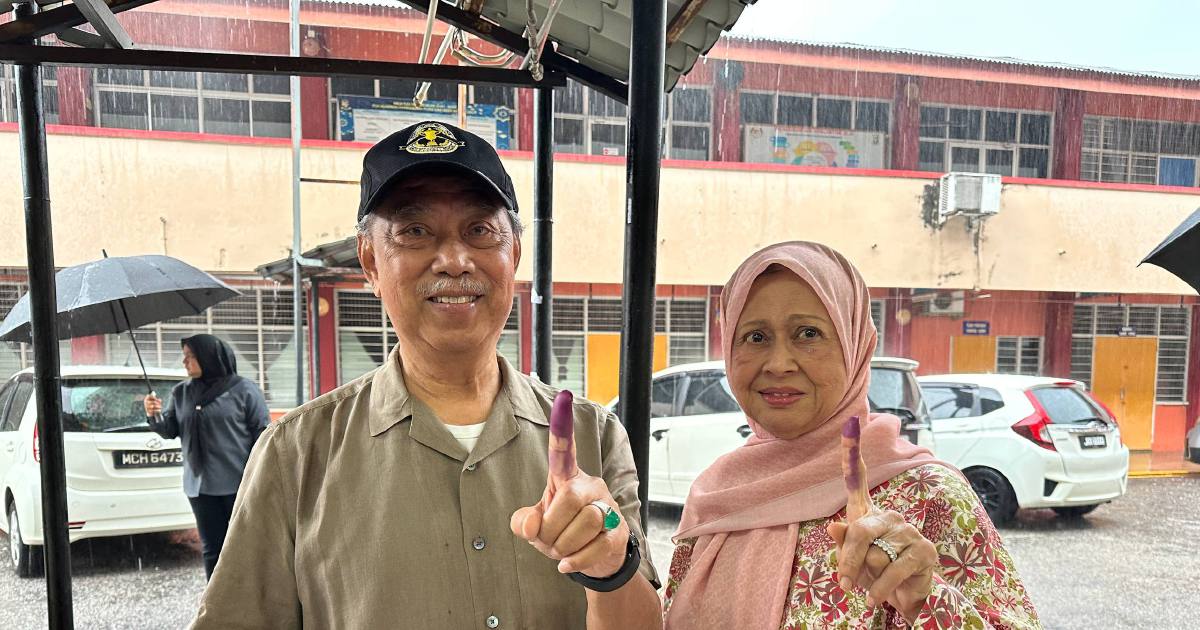
Bersatu chairman Muhyiddin Yassin remains optimistic about achieving a strong voter turnout in the Johor state election being held today, setting an ambitious target of exceeding 70 per cent participation despite weather disruptions affecting multiple districts throughout the morning. The political coalition is banking on sustained interest from the electorate despite adverse conditions that could potentially discourage citizens from visiting polling stations.
Weather challenges have emerged as an unexpected factor in the electoral process, with substantial rainfall recorded across various constituencies in Johor since early morning. Such meteorological interference in voting exercises can historically impact turnout figures, as inclement conditions may deter elderly voters and those dependent on public transportation from making the journey to their designated polling stations. The party leadership, however, appears resolved to interpret early indications as encouraging, maintaining their confidence in reaching the self-imposed benchmark.
The 70 per cent threshold would represent a notably robust participation rate in Malaysian state-level elections, reflecting the intensity of political engagement within Johor. Achievement of such a figure would signal substantial public investment in the electoral process and provide any winning coalition with a stronger popular mandate for governance. For Bersatu and its alliance partners, a high turnout could amplify the legitimacy of their potential electoral victory or, conversely, test the resilience of their political positioning if results prove unfavourable.
Muhyiddin Yassin's public statements ahead of the polls demonstrate the party's strategic focus on narrative-building around voter enthusiasm and democratic participation. By openly addressing the rain situation rather than allowing it to become a negative talking point, the Bersatu leadership has attempted to frame the election as significant enough that voters will brave harsh weather conditions to cast their ballots. This messaging approach seeks to reinforce the notion that the democratic exercise transcends ordinary inconveniences.
The timing of the Johor state election carries particular significance within Malaysia's political landscape. Johor remains one of the nation's most politically influential states, with outcomes here often signalling broader trends in federal politics and regional power dynamics. A strong showing by Bersatu and its coalition partners in this competitive electoral arena could reshape the balance of power in Johor's state assembly and affect the configuration of alliances at the national level.
Voter participation rates in Malaysian state elections typically vary considerably based on multiple factors including campaign intensity, local political sensitivities, weather conditions, and the perceived stakes of the contest. The 70 per cent target articulated by Bersatu suggests the party views this election as consequential enough to generate exceptional civic engagement. Whether this ambition will materialise depends partly on how voters weigh competing pressures—their political convictions against the inconvenience posed by persistent rainfall throughout their electoral constituencies.
From a Southeast Asian perspective, Malaysia's continued conduct of elections amid various challenges, from weather disruptions to political polarisation, underscores the region's general commitment to democratic processes despite occasional infrastructural and logistical obstacles. The Johor election serves as another test case of the nation's institutional capacity to manage electoral administration effectively even when circumstances prove less than ideal. This becomes particularly relevant as other regional democracies navigate their own electoral cycles and grapple with comparable challenges.
For voters across Johor, the weather situation presents a practical dilemma that will ultimately influence their decision to participate. Those with inflexible schedules or mobility constraints may find the combination of heavy rain and electoral duties too demanding, particularly if their designated polling centres require substantial travel. Conversely, politically engaged citizens who view this election as bearing directly on their preferred vision for Johor's governance may interpret weather merely as an obstacle to overcome rather than a reason to defer participation.
The current election environment in Johor has been characterised by competitive campaigning and multiple contending coalitions seeking to establish dominance in the state assembly. The parties involved have invested considerable resources in mobilisation efforts, and many candidates have conducted extensive grassroots engagement. A high turnout would suggest that these campaigning endeavours have resonated with the electorate and that voters believe the electoral outcome meaningfully affects their local governance and representation.
State-level elections in Malaysia frequently demonstrate different voter priorities and engagement patterns compared to federal elections, with local issues, community concerns, and regional leadership often taking precedence over national political narratives. The Johor electorate's response to today's voting exercise, measured through actual turnout figures, will reveal much about the intensity of local political feeling and the perceived importance of this particular contest relative to ordinary state electoral contests.
As polling stations remain open throughout the day despite the challenging weather conditions, election administrators will monitor participation patterns carefully. Officials will likely observe whether turnout concentrates at particular times of day, whether rain intensity fluctuates and encourages or discourages voters at different periods, and whether preliminary figures align with Bersatu's optimistic projections or suggest more modest participation levels. These operational observations will provide early insights into whether the 70 per cent target remains achievable or requires revision downward based on ground-level realities.
The ultimate turnout figure will be recorded once polls close and officials complete their tallying processes. This number will thereafter serve as an important metric in evaluating the election's perceived legitimacy, the success of party mobilisation efforts, and the broader health of democratic participation in Malaysia's most populous state. Whether Muhyiddin Yassin's optimistic forecast proves justified will depend substantially on whether voters determine that weather inconvenience pales in comparison to the importance they assign to participating in this consequential electoral contest.

