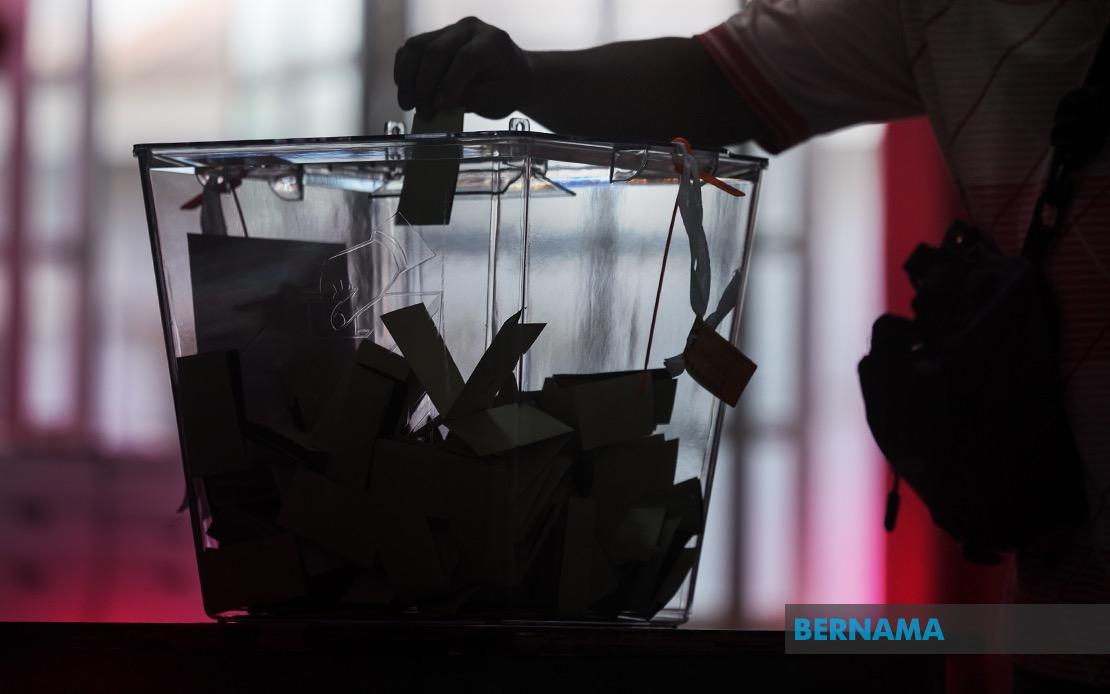
The upcoming 16th Johor state election on Saturday could hinge significantly on voter participation levels, with a political analyst suggesting that strong turnout—particularly among outstation voters—may create a structural advantage for the Pakatan Harapan coalition. Associate Professor Dr Mazlan Ali from Universiti Teknologi Malaysia warns that the demographic composition of voters who actually cast ballots could prove decisive, especially in urban and semi-urban seats where PH's support base concentrates.
Dr Mazlan's analysis hinges on the contrast between the 2022 Johor state election and the subsequent 15th General Election that same year. The state poll recorded turnout just above 50 per cent, a figure depressed by lingering COVID-19 concerns that discouraged many voters living outside Johor from returning home. This low participation benefited Barisan Nasional substantially, which retained 40 seats through its entrenched local networks and deeply rooted constituency machinery. However, when the general election occurred later that year with approximately 75 per cent turnout as pandemic anxieties eased, the political landscape shifted markedly in PH's favour.
The numerical transformation between these two contests is striking. During the 2022 state election, PH accumulated roughly 350,000 votes across Johor, translating into limited seat gains. By the general election just months later, that figure more than doubled to approximately 830,000 votes, enabling PH to secure 14 parliamentary seats. This doubling of the popular vote demonstrates that returning outstation voters—who tend disproportionately to support PH—represent a pivotal swinging force in Johor politics. Translated into state assembly dynamics, where seat boundaries differ but similar demographic patterns apply, the implication is that elevated turnout could substantially increase PH's seat total.
The crucial variable is understanding who these outstation voters represent. Dr Mazlan characterises PH's core support base as disproportionately composed of mobile urban professionals, educated younger voters, social media-engaged citizens, and those amenable to messaging centred on social justice and equitable governance. These voters contrast sharply with the electoral base that BN cultivates through appeals to communal identity and traditional political loyalties. The return home of PH-inclined outstation voters thus changes the electoral calculus in ways that uniform swings cannot capture, creating localised advantages in specific constituencies.
Currently, structural conditions appear more conducive to strong turnout than in 2022. Pandemic-related disruptions have fully dissipated, removing a significant barrier to travel for those registered voters living beyond Johor. The broader political environment has also shifted: federal political stability under a PH-led government has been established and consolidated, removing uncertainty that might previously have discouraged participation. Simultaneously, the government's economic management and policy initiatives—including sustained fuel subsidies and targeted financial assistance programmes—have generated tangible benefits that resonate with ordinary household budgets.
Dr Mazlan contends that these improvements in living standards and political predictability create powerful motivation for PH-supporting voters to prioritise returning home to vote. Citizens who have experienced both political instability and economic anxiety in recent years may perceive the current administration's achievements as worth protecting through electoral participation. This calculus operates differently for different voter segments; it particularly influences voters who value orderly governance and economic competence as voting criteria. Such voters, concentrated in urban areas, represent PH's strongest demographic profile.
The distinction between urban and rural constituencies thus becomes critical to understanding where turnout effects would matter most. Urban and semi-urban seats function as genuine battlegrounds where multiple layers of contestation occur simultaneously. Voters in these areas engage more actively with contemporary governance debates, respond more readily to policy performance metrics, and tend to factor economic management and social justice considerations into their electoral decisions. These characteristics align closely with PH's messaging strategy and voter appeal. When turnout rises, these voters appear in greater proportional numbers, shifting the composition of the overall electorate towards PH's favour.
The contrast with rural and semi-rural constituencies, where BN maintains deeper traditional networks and stronger communal bases, illustrates why uniformly higher turnout benefits different coalitions differently across Johor's geography. Rising participation rates do not simply magnify existing support evenly; they add voters with particular demographic characteristics and policy priorities. If that marginal turnout consists disproportionately of educated urban professionals and younger cohorts—precisely the groups most likely to have migrated to other states for employment—then PH's competitive position in critical urban seats improves substantially.
History provides a template for understanding this mechanism. The 2022 experience established that turnout below 51 per cent locked PH into a disadvantageous position despite competitive underlying support levels, enabling BN to win seats that would flip with higher participation. The subsequent general election proved that when participation approached 75 per cent, PH's actual support base became fully mobilised and visible in electoral outcomes. The current election occupies a temporal and political position closer to general election conditions than to the state poll that preceded it, suggesting that turnout trajectories might replicate patterns from the more recent precedent.
Yet Dr Mazlan identifies a critical tactical challenge for PH in the final campaign phase: ensuring that its theoretical supporters actually vote. Exhortation alone typically proves insufficient; the coalition requires effective ground organisation capable of identifying outstation voters, confirming their voting eligibility in Johor constituencies, and facilitating their return home. The logistical challenge of motivating geographically dispersed supporters to participate simultaneously exceeds the coordination burden that BN faces when mobilising its concentrated local base. Failures in this organisational dimension could prevent potential advantages from converting into actual seat gains, leaving PH unable to fully capitalise on favourable demographic trends.
The Johor election thus exemplifies how turnout functions not merely as a neutral variable affecting all contestants equally, but as a fundamentally structural factor that advantages competing coalitions differently based on their voter geography and demography. For PH, strong participation represents an opportunity to translate latent support into tangible results. For BN, the challenge involves maintaining seat totals despite potentially less favourable participation patterns. The outcome will reveal whether institutional disruptions to voting behaviour—whether pandemic-related or otherwise—reflect temporary variations or signal deeper shifts in Johor's underlying political dynamics.

