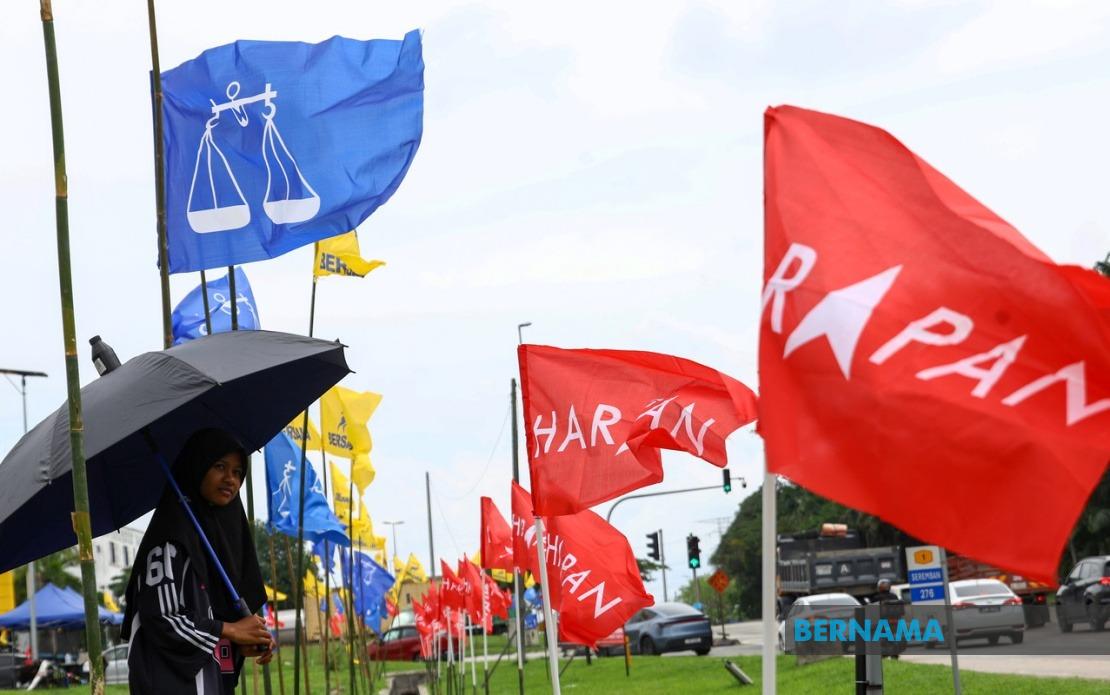
The 16th Johor State Election has entered its decisive phase with two major coalitions deploying starkly contrasting strategies to persuade voters across all 56 contested seats. Pakatan Harapan and Barisan Nasional, now into the second week of campaigning ahead of Saturday's polling, have each identified distinct competitive advantages they believe will resonate with the Johor electorate. The divergence in approach reflects deeper calculations about what voters genuinely care about and which messengers will prove most persuasive in a state that remains crucial to Malaysia's overall political balance.
Pakatan Harapan's campaign blueprint centres on translating policy substance into tangible improvements in everyday living conditions. Rather than relying principally on personality-driven messaging, the coalition has structured its outreach around concrete proposals addressing the interconnected challenges that preoccupy ordinary Johoreans: stagnant real wages, the spiralling cost of housing and basic services, job quality and skills development, and the perception that economic growth has not distributed its rewards fairly across society. The coalition's "Johor For All" manifesto frames state development not primarily through headline investment figures or GDP metrics, but through the lens of direct material benefits to households and individuals.
According to Dr Mohammad Tawfik Yaakub from Universiti Malaya's political science faculty, PH's strategy reflects a calculated pivot away from the assumption that voters respond mainly to broad prosperity narratives. Instead, the coalition is banking on voters' growing sophistication and their demand that government articulate how abstract economic indicators translate into higher incomes, more affordable homes, and genuine welfare improvements. This represents a significant recalibration from campaigns of previous electoral cycles, suggesting that PH strategists believe the Johor electorate has become increasingly sceptical of claims unaccompanied by detailed policy architecture.
The manifesto itself proposes integrated wage-enhancement initiatives and mechanisms to ensure that investor capital flows into tangible improvements rather than merely enriching shareholders or government coffers. By positioning the election around these material concerns, PH appears to be attempting to reframe the contest away from questions of political legitimacy or incumbency toward a more prosaic debate about which coalition can better improve household finances and security. This approach has particular salience in Johor, where Chinese and Indian voters—traditionally swing demographics—have become increasingly pragmatic in their voting calculus.
Barisan Nasional, by contrast, has adopted a strategy centred on leveraging organisational depth and the return of two prominent UMNO figures whose absence from frontline politics had been widely seen as damaging to the coalition. The rehabilitation and redeployment of Datuk Seri Hishammuddin Tun Hussein, formerly UMNO's number-two leader, and Khairy Jamaluddin, a former youth chief, through the "Rumah Bangsa" reconciliation initiative signals BN's belief that party networks and recognisable leadership faces remain potent electoral assets. Both figures bring substantial histories in Johor politics and continuing reservoirs of personal support within their traditional constituencies.
Hishammuddin's reactivation is particularly significant given his long association with the state and the likelihood that his participation could reignite enthusiasm among UMNO members and Malay-Muslim voters who had grown lukewarm towards the coalition in recent years. His presence on the campaign trail carries symbolic weight beyond any single policy announcement, signalling to traditional BN constituencies that the coalition remains competitive and commands the loyalty of figures they respect. Johor's Malay-majority interior districts, where BN faces pressure from competition further right, may respond to this reassertion of establishment credentials.
Khairy's prominence within the campaign apparatus addresses a separate vulnerability: BN's chronic difficulty in attracting and energising younger voters. The former youth leader has consistently polled well among voters under forty, a demographic that has proven increasingly resistant to traditional party loyalty structures and more attracted to individual political figures they perceive as modern, articulate, and genuinely connected to their concerns. By positioning Khairy as a key campaign voice, BN is attempting to arrest its erosion among voters entering their peak earning years and establishing households.
Yet Dr Mohd Yusry Ibrahim from Universiti Malaysia Terengganu's Ilham Centre cautions that contemporary voters—particularly younger cohorts—no longer respond predictably to celebrity campaigning divorced from substantive policy content. The electorate has become more demanding, evaluating not merely who delivers speeches at campaign events but whether campaigns articulate coherent policy responses to identifiable problems. Voters increasingly assess candidates themselves rather than simply deferring to party brand loyalty, reflecting a fundamental shift in how electoral coalitions must construct persuasive narratives.
This generational fracturing creates both risks and opportunities for BN's Khairy-and-Hishammuddin strategy. While these figures may galvanise sections of the traditional support base, particularly middle-aged and older UMNO loyalists and certain Johor Bumiputera constituencies, they cannot substitute for BN articulating policies that younger voters genuinely believe address their material circumstances. The coalition thus faces pressure to augment its personality-centred campaign with substantive policy offerings that compete credibly against PH's cost-of-living and economic-equity messaging.
The 172 candidates competing across the 56 seats will ultimately determine outcomes, but the broader campaign contest reflects contrasting premises about voter behaviour and political persuasion. PH has gambled that substantive policy content and reasoned argument about resource distribution will prove more persuasive than personality-driven messaging or incumbent advantages. BN has bet that organisational strength, recognisable leadership, and appeals to traditional constituencies remain decisive, while attempting to thread the needle by deploying youthful-seeming figures toward younger demographics. Early voting commenced on July 7, with the main poll scheduled for Saturday, providing the two coalitions their final opportunities to consolidate support through their chosen mechanisms of persuasion.

