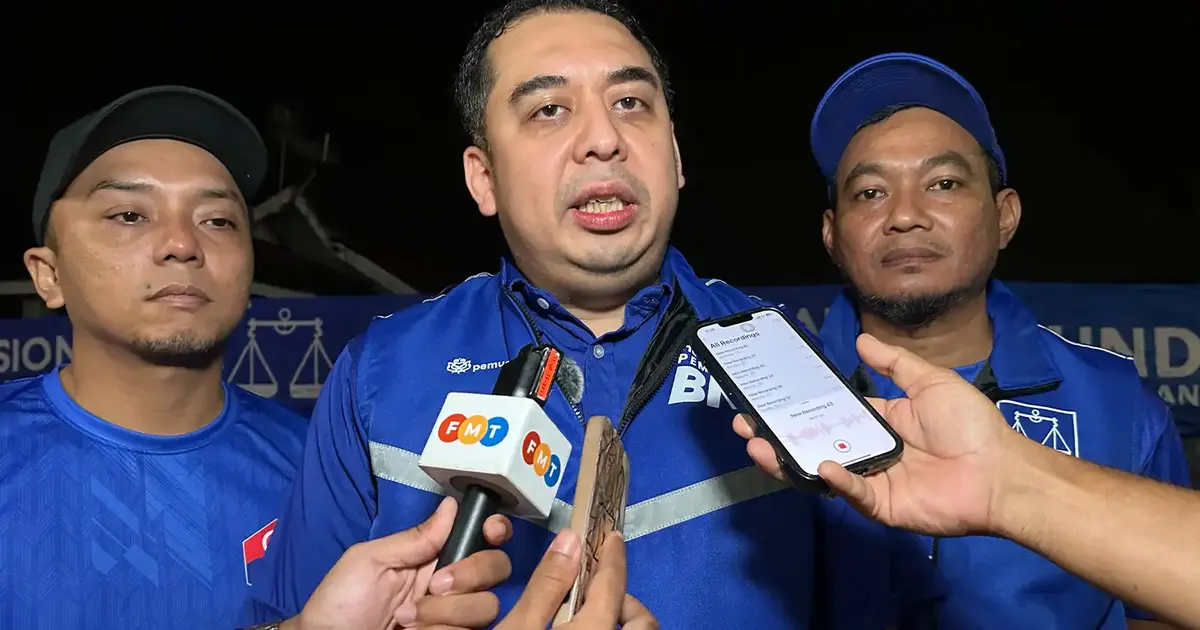
A substantial Barisan Nasional win in Johor would represent tangible public endorsement for a royal pardon for former Prime Minister Najib Razak, according to his son Nazifuddin, who framed electoral success as a potential mandate from voters on the contentious issue. The interpretation underscores the political calculation around Najib's ongoing legal predicament and suggests the family views electoral performance as a barometer of public sentiment regarding his situation.
Nazifuddin's framing reflects broader attempts to position Najib's circumstances within a political rather than purely judicial framework. By connecting electoral outcomes to popular will on the pardon question, the former premier's son appears to be building a narrative that significant voter support in Johor—traditionally a BN stronghold—could be cited as evidence of community backing for clemency measures. This rhetorical approach suggests the family remains attuned to using political legitimacy as leverage in discussions around Najib's future.
The statement notably includes a carefully calibrated acknowledgement that any pardon remains fundamentally within the sovereign prerogative of the Yang di-Pertuan Agong. This constitutional clarification serves multiple purposes: it demonstrates respect for the monarchy's role, forestalls accusations of undermining royal authority, and positions the family as respectful of institutional boundaries even while advocating for Najib's case. Such language reveals sophisticated political messaging designed to navigate Malaysia's constitutional framework while maintaining the family's public campaign.
Najib's legal position has remained precarious since his 2018 electoral defeat and subsequent investigations into financial mismanagement during his premiership. His conviction on corruption-related charges and the resulting prison sentence have made his case one of the most politically sensitive issues in Malaysian politics, touching on questions of accountability, rule of law, and the appropriate use of executive clemency. The possibility of a royal pardon has long circulated in political circles, though it remains unresolved.
Johor holds particular significance in this context, as it represents both a BN stronghold and a state where Najib retains considerable political influence and support among certain constituencies. A dominant electoral performance there would provide tangible evidence of voter backing, which the family appears keen to leverage in any future discussions about clemency. Conversely, a weaker BN result might complicate such arguments, making the electoral outcome consequential beyond conventional political calculations.
The timing of such statements reflects the ongoing political realignment in Malaysia following the 2022 election and subsequent government formations. As parties reposition themselves and rebuild their organisations, questions surrounding high-profile figures like Najib inevitably resurface, particularly when their relatives seek to maintain prominence within party structures. Nazifuddin's comments thus represent not merely personal sentiment but calculated political communication aimed at multiple audiences.
For Malaysian voters and observers, the statement raises fundamental questions about the relationship between electoral outcomes and executive prerogatives. While the family correctly notes that pardons represent a sovereign decision, the suggestion that electoral success should influence that decision invites scrutiny about whether legal consequences should be subject to political calculation. This tension between accountability and clemency remains unresolved in Malaysian constitutional practice and public discourse.
The international dimensions also merit consideration. Malaysia's governance standards and commitment to the rule of law carry implications for foreign investment, diplomatic standing, and regional confidence. How the nation resolves questions surrounding accountability and clemency affecting former leaders sends signals about institutional strength and predictability that extend beyond domestic politics into broader regional considerations affecting Southeast Asian stability and development.
Regional observers note that the question of how democracies treat former leaders who face corruption charges carries implications for institutional development across Southeast Asia. Malaysia's approach to Najib's situation contributes to broader regional patterns of accountability and political transition, influencing how other nations navigate similar circumstances involving former officials. The interplay between electoral mandates and executive clemency thus transcends Malaysia's borders.
Looking forward, Johor's electoral performance will likely feature prominently in subsequent discussions about Najib's legal status and any potential pardon applications. Whether voters prioritise other issues over the former premier's circumstances will determine whether BN's result can credibly be cited as popular endorsement for clemency. The framing by his son suggests the family will certainly attempt to use any strong electoral showing for precisely such purposes, continuing a pattern of translating political support into arguments for legal leniency.

