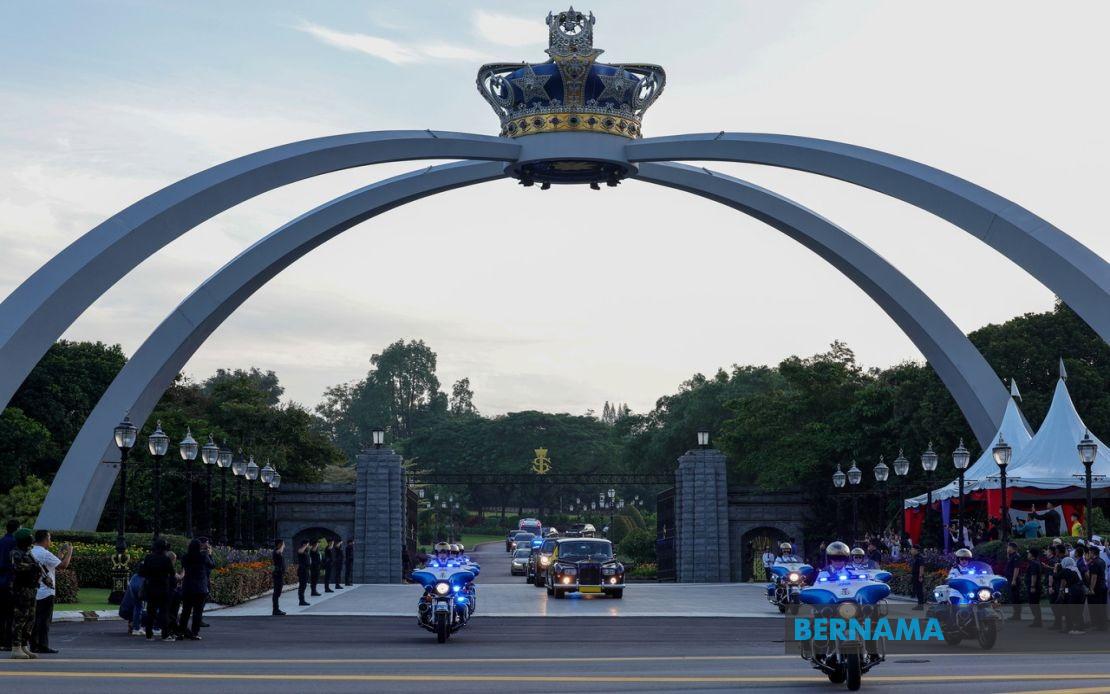
The swearing-in ceremony for Johor's State Executive Council has been postponed to Saturday, moving back one day from its originally scheduled Friday date at Istana Bukit Serene in Johor Bahru. The rescheduling was announced to members of the media on Friday morning, though no explanation was provided for the change in plans.
The ceremony was intended to be conducted before Tunku Mahkota Ismail, the Regent of Johor, and was expected to draw attendance from several senior state officials. Among those anticipated to be present were Menteri Besar Datuk Onn Hafiz Ghazi, Johor Royal Council president Datuk Dr Rahim Ramli, and State Secretary Datuk Mohammed Ridha Abd Kadir. The postponement affects the formal induction of the newly appointed executive team into their respective portfolios.
Datuk Onn Hafiz's ascension to the post of Menteri Besar for his second consecutive term marked a significant political moment for Johor following the state's recent electoral exercise. On the preceding Sunday, he underwent the formal swearing-in process after Barisan Nasional's commanding performance in the 16th Johor State Election, which took place the day before. The electoral victory demonstrated continued voter confidence in the BN-led administration's governance approach in the state.
The electoral mandate delivered by Johor voters was decisive and substantial. Barisan Nasional captured 48 of the 56 seats available in the Johor State Legislative Assembly, translating into a decisive supermajority that provides considerable legislative capacity for the government to pursue its agenda over the coming term. This outcome reinforces BN's traditional dominance in Johor, one of Malaysia's most politically significant states, and reflects the coalition's sustained appeal among the state's electorate despite national political headwinds and competition from opposition parties.
Datuk Onn Hafiz's retention of his position as Menteri Besar underscores his standing within Johor's BN structure and suggests continuity in the state's political leadership. As the assemblyman for Machap, he brings constituency-level representation alongside his executive responsibilities. His re-election as head of government signals voter and party confidence in his administration's record and future direction for the state's development and public service delivery.
The formation and swearing-in of the State Executive Council represents a crucial procedural step in establishing the formal governmental structure following elections. The council comprises state ministers and key office-holders who will lead various departmental portfolios and shape policy implementation across Johor's administration. The delay in formalising these appointments, while apparently minor, can have operational implications for departmental handovers and policy continuity.
The absence of any official statement regarding the postponement has prompted some speculation among observers about potential factors. Possible explanations might include scheduling conflicts, logistical adjustments, or administrative preparations requiring additional time, though such matters typically proceed as originally planned. The decision to shift the ceremony by merely a single day suggests the delay addresses a relatively straightforward coordination issue rather than indicating any more substantive complications.
For Malaysia's political landscape, developments in Johor carry outsized significance given the state's size, economic importance, and electoral weight. As one of the most populous states and a traditional BN stronghold, Johor's political trajectory influences national calculations and policy directions. The state's governance outcomes also carry implications for economic competitiveness, investment climate, and public service standards that extend beyond state boundaries, affecting regional development and cross-border cooperation with neighbouring regions.
The swearing-in ceremony's eventual completion will mark the formal commencement of the new administration's full operational mandate. Following the completion of this procedural step, the executive team will assume their ministerial duties and commence their legislative and administrative programmes for the coming term. The smooth progression of these foundational governance rituals establishes the framework within which Johor's government will pursue its policy objectives and respond to constituent demands.

