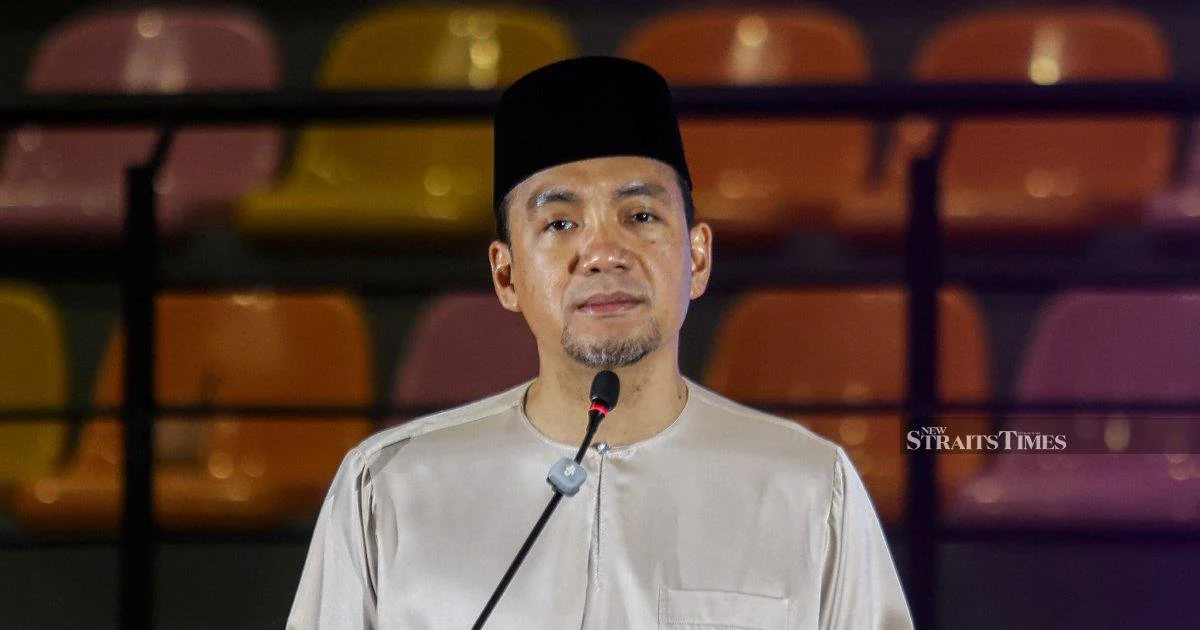
The Johor state government has moved to investigate Network School following mounting concerns about the institution's alleged connections to Israeli interests, marking an escalation in scrutiny over foreign ideological influence within the state's borders. The Menteri Besar has made clear that Johor will take decisive action against any entity using the state's jurisdiction to advance agendas that conflict with local governance, national sovereignty, or the broader interests of Malaysia's citizens and institutions.
This development reflects growing apprehension among Malaysian state administrators regarding the regulatory oversight of educational institutions and organisations operating within their jurisdictions. The emphasis placed by Johor's leadership on preventing ideological infiltration signals a broader commitment to protecting what officials view as fundamental pillars of national identity and stability. The government's stance underscores the heightened sensitivity surrounding foreign engagement in Malaysia's institutional landscape, particularly when such engagement involves entities or nations whose activities are perceived as contentious in a regional or international context.
Network School's operations have come under the spotlight as part of this investigation, with authorities keen to establish the nature and extent of any institutional relationships or financial arrangements that might connect the school to Israeli entities or organisations. The probe will likely examine the school's curriculum, funding sources, governance structures, and any partnerships with international bodies to determine whether operations align with Malaysian regulatory frameworks and educational standards. Such investigations typically involve cooperation between state education departments, federal authorities, and relevant intelligence bodies to build a comprehensive picture of an institution's activities and affiliations.
The Johor government's intervention carries particular weight given the state's strategic importance as a major educational hub in peninsular Malaysia, hosting numerous international and national schools that serve both local and expatriate communities. Any findings regarding Network School could influence how state authorities approach licensing, monitoring, and regulatory oversight of similar educational institutions. The investigation may also set a precedent for how other Malaysian states assess and manage institutions with international connections, particularly those perceived to have geopolitical dimensions.
This situation must be viewed within the context of Malaysia's long-standing foreign policy positions and its domestic political sensitivities regarding Middle Eastern affairs. The nation has historically maintained a position supportive of Palestinian causes and has been critical of Israeli policies, positions that resonate deeply within Malaysian society and inform government decision-making at federal and state levels. When state authorities raise concerns about Israeli-linked organisations, they are responding to what they perceive as potential incompatibility between such entities' existence and Malaysia's established diplomatic and ideological orientations.
The investigation will likely examine whether Network School has promoted any ideological content deemed inconsistent with Malaysian values or constitutional principles. Educational institutions in Malaysia operate under frameworks that emphasise national unity, respect for the monarchy, Islam's special position under the Federal Constitution, and adherence to Rukunegara principles. Authorities will assess whether the school's operations, whether through curriculum design, staff recruitment, extracurricular activities, or international partnerships, have deviated from these established parameters.
For parents and students enrolled at Network School, this development introduces uncertainty regarding the institution's future operations and regulatory status. Depending on investigation outcomes, the school could face operational restrictions, enhanced monitoring, financial penalties, or more severe consequences including potential closure. Such outcomes would have practical implications for educational continuity and parental choices regarding their children's schooling options in Johor.
The investigation also raises broader questions about institutional autonomy versus state oversight in Malaysia's educational sector. While private institutions enjoy operational independence, that independence remains contingent on compliance with national and state regulations. When authorities identify potential conflicts between an organisation's affiliations and national interests, the balance between institutional freedom and governmental authority necessarily shifts toward ensuring compatibility with constitutional principles and public policy objectives.
International schools operating in Malaysia often navigate complex terrain, balancing their international character and global curriculum standards with local regulatory requirements and political sensitivities. Network School's situation exemplifies the challenges institutions face when their international dimensions intersect with sensitive geopolitical questions. Schools seeking to maintain operations in Malaysia must demonstrate that their international connections enhance educational quality rather than advancing agendas viewed as incompatible with Malaysian sovereignty or national interests.
The Johor government's action reflects broader efforts by Malaysian authorities to exercise increased scrutiny over civil society organisations, educational institutions, and foreign engagement across various sectors. This approach aims to protect what officials perceive as vulnerable institutional spaces from external ideological pressure while maintaining Malaysia's established strategic alignments and constitutional frameworks.
As investigations proceed, stakeholders including parents, educators, civil society organisations, and international education bodies will be watching carefully to understand how Malaysian authorities balance concerns about foreign influence against principles of institutional freedom and educational pluralism. The investigation's outcome will likely influence how Johor and potentially other Malaysian states approach future assessments of international educational providers and organisations with overseas affiliations or connections.

