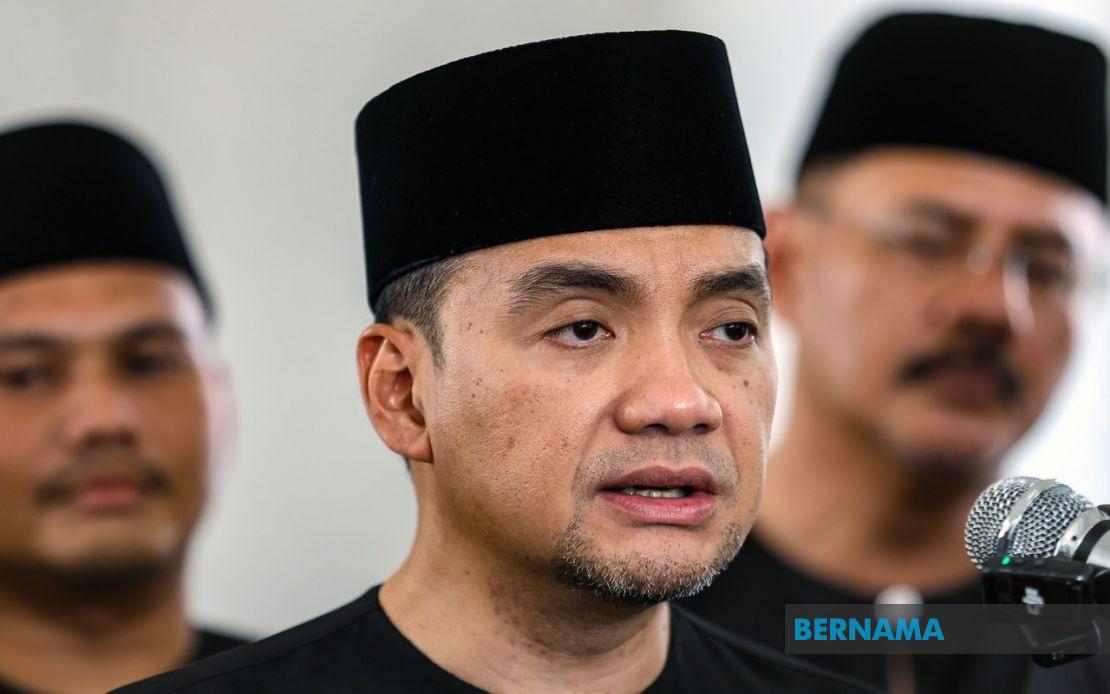
The Johor state government has rolled out a new initiative called Semarak Maghrib and Isyak, designed to invigorate congregational worship during evening prayer times across mosques throughout the state. Johor Menteri Besar Datuk Onn Hafiz Ghazi announced the programme as a strategic effort to cement the role of mosques as vital community institutions that serve multiple functions beyond worship, including knowledge dissemination and the cultivation of Islamic brotherhood among believers.
The programme represents a tangible commitment from the state administration to elevate religious observance while simultaneously strengthening social bonds within Muslim communities. By extending previous efforts that focused on promoting congregational Subuh prayers statewide, the government is now broadening its reach to encompass the Maghrib and Isyak prayer times, which represent crucial junctures in the Islamic daily schedule. This expansion signals a comprehensive approach to bolstering mosque attendance and religious engagement across all daylight hours.
Onn Hafiz framed the initiative within the broader context of the Barisan Nasional manifesto pledges made during the 16th Johor state election, underscoring that the programme constitutes a fulfilment of commitments made to the electorate. This positioning reveals how state-level religious and social programmes have become integrated into political campaign promises, reflecting the intersection of governance, religious affairs, and electoral accountability in Malaysian politics. The initiative thus serves dual purposes: advancing Islamic values while delivering on government mandates.
The inaugural gathering of the Semarak Maghrib and Isyak programme took place at Masjid Jamek As-Syakirin located in Bukit Saujana, establishing a template for how subsequent sessions might unfold across the state's mosque network. The event incorporated both practical and spiritual elements, demonstrating the government's holistic vision for mosque revitalization. Participants experienced a religious discourse session centred on 40 Hadith, with the particular theme of "Niat Penentu Perbuatan Hamba" (intention determines deeds), delivered by Johor Bahru district kadi Mohd Zaini Mohd Salleh, alongside a recitation of Surah Al-Mulk.
The inclusion of hadith discussions within the programme framework reflects an emphasis on deepening Islamic knowledge alongside increased prayer attendance. Rather than treating mosque engagement as a purely ritualistic endeavour, the initiative incorporates educational components that encourage Muslims to understand the theological and ethical foundations of their faith. This approach acknowledges that sustainable religious participation requires both spiritual motivation and intellectual comprehension, making the programme more substantive than mere attendance drives.
For Malaysian and Southeast Asian contexts, this Johor initiative carries particular significance given ongoing discussions about religious observance levels in urban and suburban communities. Like several jurisdictions across the region, Johor has grappled with the challenge of maintaining strong congregational cultures amid modernization, urbanization, and competing social demands on residents' time. The Semarak Maghrib and Isyak programme directly addresses these challenges by creating structured opportunities and generating collective momentum around evening prayer observance.
Onn Hafiz publicly appealed to Muslims throughout Johor to embrace the programme by maintaining regular mosque attendance and participating actively in religious activities. This call to action transforms the initiative from a top-down government programme into a collaborative endeavour requiring grassroots participation. The rhetorical positioning emphasizes shared responsibility between authorities and community members in revitalizing mosque culture, rather than presenting the government as solely responsible for religious outcomes.
The Menteri Besar situated the Semarak Maghrib and Isyak programme within the state government's overarching vision of advancing syiar Islam while maintaining progressive governance. This framing attempts to reconcile what some perceive as tension between Islamic promotion and contemporary development, suggesting that Johor aspires to guide progress through Quranic principles and the Prophet's teachings. Such language appeals to constituencies that value both religious authenticity and modern state capacity.
The programme's emphasis on mosque thriving encompasses not merely attendance figures but the broader vitality of these institutions as community hubs. By promoting congregational worship, hosting religious lectures, and facilitating spiritual activities, the initiative seeks to position mosques as indispensable social anchors. This multifunctional approach recognizes that contemporary mosque relevance depends on serving contemporary community needs, whether those involve religious learning, social connection, or community service.
For other Malaysian states and Southeast Asian jurisdictions facing similar challenges around religious participation, the Johor model offers a replicable framework emphasizing structured programming, educational integration, and government support for mosque-centred activities. The programme demonstrates how state resources and political will can be directed toward strengthening religious institutions and practices through systematic initiatives rather than ad hoc efforts. Success metrics would include sustained attendance increases, expanded mosque programming, and measurable strengthening of Islamic community bonds.
The Semarak Maghrib and Isyak programme ultimately represents an intersection of governance, religious affairs, and community development in contemporary Johor. By channelling state resources toward mosque revitalization and leveraging electoral mandates to justify religious initiatives, the programme exemplifies how Malaysian state governments integrate Islamic promotion with broader developmental agendas. Whether the initiative succeeds in substantially increasing congregational worship will depend on sustained implementation, community responsiveness, and the mosque network's capacity to deliver meaningful programming alongside worship opportunities.

