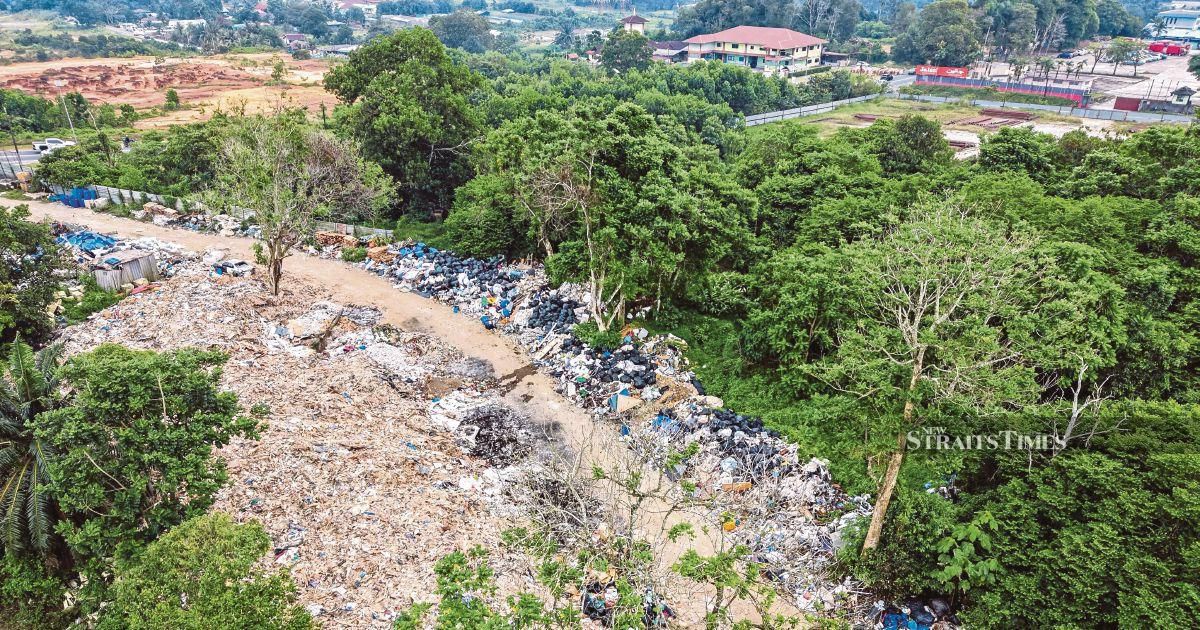
Authorities in Johor are mobilising a coordinated multi-agency effort to examine serious allegations that construction waste originating from Singapore has been systematically dumped across multiple locations in Pontian. The initiative represents an escalation in oversight mechanisms designed to prevent illegal cross-border waste trafficking, a persistent challenge for Malaysian states bordering Singapore.
The formation of a dedicated task force signals growing official recognition that managing transboundary waste disposal requires sustained inter-departmental coordination and enforcement. Pontian's proximity to Singapore—separated only by the Straits of Johor—makes it a natural flashpoint for such illicit dumping operations, which often exploit gaps between regulatory jurisdictions and rely on the proximity and ease of transport across borders. Construction waste, which includes debris from demolition and building projects, represents a bulky and costly disposal stream in densely developed Singapore, creating economic incentives for unscrupulous operators to seek cheaper and less scrutinised dumping grounds across the border.
The involvement of Solid Waste and Public Cleansing Corporation (SWCorp), the statutory body responsible for waste management compliance in Malaysia, underscores the scale and seriousness attributed to these allegations. SWCorp's role as an investigating party demonstrates that federal-level waste authorities view the matter as systematic rather than isolated, potentially involving organised logistics networks rather than opportunistic dumping.
Cross-border waste dumping has long plagued the Malaysia-Singapore border corridor. Environmental studies and local reports have documented recurring incidents in which construction debris, demolition rubble, and sometimes hazardous waste finds its way into Malaysian territory, burdening local councils and contaminating landfill sites designed with different waste composition standards. The cumulative environmental impact is significant, particularly as Pontian comprises sensitive freshwater and coastal ecosystems that support both agricultural and fishing livelihoods.
The regulatory environment in Singapore, marked by stringent waste management licensing and disposal fees, creates structural conditions favouring cross-border trafficking. Operators licensed to manage construction waste in Singapore face compliance costs and operational constraints that incentivise seeking informal, cheaper alternatives across the border. Meanwhile, enforcement capacity in Malaysian border areas is frequently stretched, with resource constraints limiting inspections and deterrence. The establishment of a task force suggests authorities recognise that traditional sector-specific oversight has proven insufficient.
Community concerns in Pontian have likely intensified the official response. Residents in areas adjacent to alleged dumping sites typically experience direct negative externalities—odours, dust, groundwater contamination risks, and aesthetic degradation—that eventually precipitate complaints to elected representatives and media scrutiny. Such local pressure builds political momentum for inter-agency action, particularly where incidents threaten agricultural zones or residential neighbourhoods.
The multi-agency approach likely encompasses environmental, public health, customs, local government, and law enforcement bodies, reflecting the complexity of the issue. Investigators will need to trace waste origins, identify transport routes, locate disposal sites, and establish liability chains. This work demands expertise spanning environmental auditing, logistics monitoring, customs procedures, and legal prosecution pathways. Without coordinated efforts across these domains, individual agencies lack the intelligence and enforcement leverage to halt operations effectively.
For Malaysia, the broader implications extend to the sustainable development agenda and regional environmental governance. Uncontrolled waste importation undermines domestic waste management planning, inflates disposal costs for legitimate operators, and erodes trust in regional environmental cooperation mechanisms. It also raises questions about border security and sovereignty, as systematic illegal dumping represents a form of environmental trespass that reflects inadequate bilateral enforcement protocols.
The task force's investigation may yield findings that inform future regulatory negotiations between Malaysia and Singapore on transboundary waste management. Both countries benefit from harmonised standards, joint monitoring arrangements, and expedited enforcement mechanisms that deter trafficking. Singapore's sophisticated economy and high development costs make it unlikely to unilaterally abandon low-cost disposal options without bilateral pressure and coordinated closure of loopholes.
For Johor state authorities, the investigation represents an opportunity to quantify the extent of illegal dumping, identify vulnerable zones, and recommend site remediation measures. Accumulated construction waste often requires specialised handling, and documenting volumes and composition will inform remediation strategies and budget requirements. Site restoration can be costly and lengthy, adding to the financial burden placed on Malaysian authorities by transboundary trafficking.
The enforcement outcome will depend significantly on resource allocation and political will. Past cross-border environmental incidents have sometimes languished due to competing priorities and budget constraints. A robust task force requires sustained funding, access to forensic and monitoring technologies, and coordination disciplines that extend beyond the initial investigative phase into prosecution and deterrence.
Ultimately, Johor's task force initiative signals that border management extends beyond conventional security concerns to encompass environmental protection and resource sovereignty. The investigation's results may influence how Malaysia structures future waste governance and bilateral environmental agreements, setting a precedent for neighbouring states facing similar challenges.

