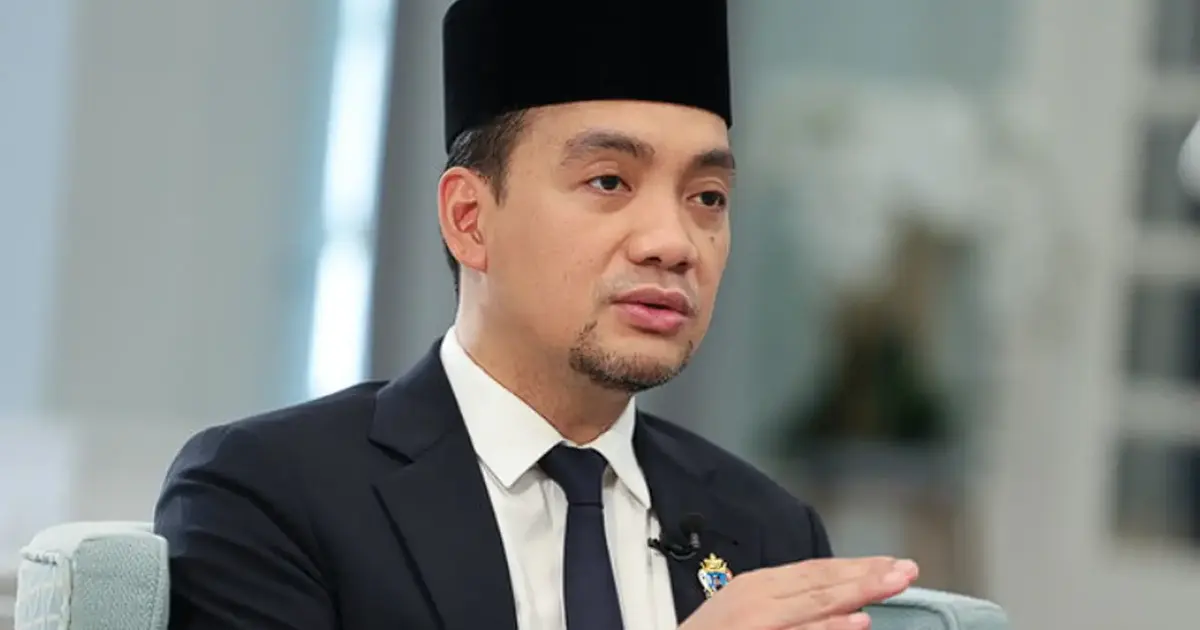
Johor's caretaker menteri besar Onn Hafiz has moved to dispel concerns about palace involvement in state politics, insisting that the Sultan's endorsement of the state assembly's dissolution represents nothing more than a formal constitutional obligation. The clarification comes as observers scrutinize the monarch's role in the procedural steps leading up to fresh elections in the southern state, with Onn Hafiz emphasizing that such approval is a standard feature of Malaysia's constitutional framework rather than an exercise of political discretion by the royal household.
The distinction Onn Hafiz draws is technically significant. Under Malaysia's constitutional arrangements, the dissolution of a state legislative assembly requires more than executive action alone; the reigning Sultan must formally assent to the decision, a safeguard that vests the institution with a ceremonial but constitutionally mandated function. By framing the Sultan's role as ministerial rather than discretionary, the caretaker menteri besar seeks to normalize what has become an increasingly contested aspect of state governance, particularly given heightened sensitivities around the boundaries between constitutional monarchy and executive decision-making in Malaysian politics.
The timing of this statement reflects deeper tensions within Johor's political landscape. The state has experienced considerable turbulence in recent years, with shifts in electoral fortunes and coalition alignments creating uncertainty about both governance and the palace's positioning within power struggles. When public figures rush to clarify the nature of royal involvement, it often signals that ambiguity about institutional roles has taken root, whether justified or not. Onn Hafiz's intervention suggests that some quarters have read the Sultan's assent as something more interventionist, prompting the need for careful reframing.
Malaysia's constitutional system places monarchs in a delicate position. While the Yang di-Pertuan Agong and state sultans are nominally vested with significant powers—including the ability to refuse assent to legislation or to decline dissolution requests—in practice they have historically operated within narrow constraints defined by convention rather than explicit legal prohibition. The principle of ministerial advice implies that a competent, constitutionally sound request for assembly dissolution should ordinarily be granted, even if the monarch possesses the technical power to withhold consent. This convention, rather than written law, governs most everyday interactions between the executive and the crown.
For Malaysian readers, the significance of Onn Hafiz's statement extends beyond Johor's borders. Across the federation, similar questions about royal prerogative and executive accountability have surfaced in recent years, particularly during periods of political instability. The 2020-2021 constitutional crisis at the federal level, for instance, brought intense scrutiny to the Agong's decision-making processes and the scope of advice that could properly be tendered. When state leaders now emphasize that royal actions are merely constitutional formalities, they are essentially reassuring both the public and the palace itself that constitutional boundaries remain clear and respected.
Yet the very need for such reassurance underscores a worrying ambiguity. In a healthy constitutional democracy, the monarch's role should be so clearly circumscribed that no clarification is necessary. The fact that Onn Hafiz felt compelled to explain that royal assent is not political interference suggests that either public understanding of constitutional roles is deficient or that recent political dynamics have genuinely blurred the lines between ceremonial approval and active participation in executive decision-making. Either scenario merits concern among observers of Malaysian governance.
The caretaker menteri besar's framing also carries implications for how future disputes might be resolved. If the executive can establish a prevailing interpretation that certain royal actions are purely ceremonial, it narrows the space for the crown to refuse such actions in future without appearing to breach convention. This represents a gradual shift in the practical balance of power toward the executive at the expense of the institutional independence of the monarchy. While this may suit the political objectives of current office-holders, it establishes precedents that could prove constraining should future monarchs or executives wish to resist established practice.
In the context of Southeast Asia more broadly, Malaysia's experience offers a cautionary lesson about the importance of transparent constitutional conventions. Neighbouring monarchies, including Thailand and Cambodia, have grappled with similar tensions between ceremonial roles and executive authority, often with consequences far more dramatic than what Malaysia has experienced. By contrast, Malaysia has managed to preserve both constitutional monarchy and democratic governance, though the balance remains subject to pressures.
Onn Hafiz's statement, while seemingly technical, reflects the ongoing negotiation between different branches of government over the contours of power and legitimacy in Malaysia. The caretaker menteri besar is not merely defending the Sultan's actions but is also working to establish a particular interpretation of constitutional limits that will shape governance in Johor and potentially influence how other state governments interact with their respective sultans. Whether his characterization of royal assent as a purely routine process will settle the matter or whether questions about the appropriate scope of monarchical involvement in state politics will resurface likely depends on how smoothly Johor's subsequent elections proceed and whether new grievances emerge.

