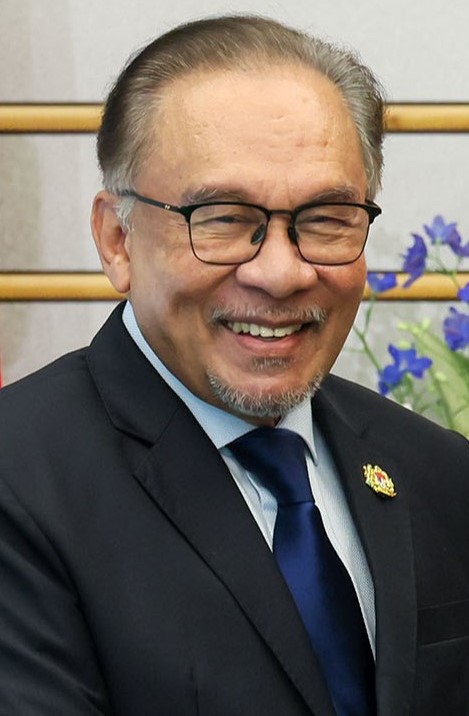
Prime Minister Datuk Seri Anwar Ibrahim has underscored the federal government's substantial financial commitment to Johor, revealing that the state received RM2 billion more in federal allocations than it contributed in revenue over the past three years. Speaking at a Pakatan Harapan candidate announcement ceremony in Tangkak on June 22, Anwar presented detailed figures showing Johor remitted approximately RM14 billion to federal coffers between 2023 and 2025, while the government channelled RM16 billion back into the state through development initiatives, operational funding and support programmes. The prime minister, who also holds the Finance portfolio, emphasised the importance of articulating this disparity to the public, arguing it demonstrates genuine governmental dedication to advancing Johor's interests.
The allocation increase reflects a broader shift in federal funding priorities under the MADANI Government compared to its predecessor. During the previous administration, Johor's annual operating expenditure allocations ranged between RM6 billion and RM7 billion. This figure has risen substantially to RM8.7 billion annually under the current administration, representing a meaningful boost to the state's capacity for delivering essential services and maintaining infrastructure. Anwar framed this elevation as tangible evidence of the government's resolve to maintain Johor's development and enhance living standards for its residents, positioning the increased funding as a reflection of heightened political commitment.
Beyond simple financial figures, the data reveals significant shifts in how development resources are being distributed. Operating expenditure to Johor climbed from RM7 billion in 2022 to RM8.7 billion in 2026, whilst development expenditure nearly doubled from RM2.3 billion to RM4.8 billion during the same period. These increases suggest a deliberate policy pivot toward capital investments that could reshape economic and social infrastructure across the state. The acceleration in development spending particularly signals an intention to modernise facilities and undertake strategic projects that address long-term growth, rather than merely sustaining existing operations.
In comparative terms, Johor now ranks as the third-largest beneficiary of combined operating and development expenditure allocations nationwide, trailing only Sabah and Sarawak. This positioning reflects the fiscal weight of the peninsula's southern industrial and commercial hub, yet also indicates that the federal government is sustaining resource allocation practices that acknowledge regional economic disparities. Johor's prominence in the funding hierarchy suggests recognition of its significance to the broader Malaysian economy, though the distribution pattern also raises questions about how other developing regions perceive their own allocations and priorities.
The state has also secured prominent standing in welfare assistance schemes. Data presented by Anwar shows Johor ranks second only to Selangor in receiving funds through Sumbangan Tunai Rahmah and Sumbangan Asas Rahmah programmes, the government's targeted cash assistance initiatives. This positioning reflects both Johor's substantial population and its economic profile, whilst simultaneously indicating that the federal government considers direct financial support to residents another critical component of its commitment to state-level welfare.
These revelations carry particular significance within the context of Johor state politics, delivered as they were during a campaign event announcing PH candidates for state elections. By presenting comprehensive financial data, Anwar sought to construct a narrative in which federal investment in Johor translates directly into tangible benefits for residents, potentially framing the upcoming elections as a choice between parties committed to resource allocation and those perceived as less favourable to the state's interests. The numbers themselves become political messaging tools, designed to demonstrate governmental effectiveness and foresight.
For Southeast Asian observers and those tracking Malaysian fiscal federalism, these figures highlight evolving dynamics in how the federal centre allocates resources across states. Johor's situation exemplifies how economic productivity and population scale influence funding distribution, yet also shows that political considerations—such as electoral competitiveness and coalition building—shape allocation patterns. The visible increase in development spending suggests policymakers are prioritising capital investment and modernisation, potentially positioning Johor as a testbed for larger developmental initiatives that might eventually extend to other regions.
The comparison between revenue contribution and federal returns also invites scrutiny of Malaysia's broader fiscal framework. Unlike some federal systems where subnational governments retain stronger control over revenues they generate, Malaysia's highly centralised structure means states like Johor remit significant funds to the federal centre in exchange for allocated disbursements. This dynamic creates dependency relationships and makes federal political favour critical to state development prospects, a reality that shapes electoral incentives and intergovernmental relations throughout the federation.
Anwar's emphasis on explaining these financial relationships suggests awareness that Malaysian voters increasingly demand transparency regarding how public funds flow between different governmental levels. By articulating specific numbers and comparisons, the prime minister attempted to preempt criticism that any state might be disadvantaged under the current administration, instead promoting the counter-narrative that federal resources are being deployed equitably and generously. However, residents in other states might scrutinise similar figures for their own regions, potentially fostering comparative discussions about whether their allocations match their contributions and population size.
Looking forward, the trajectory of Johor's allocations—particularly the doubling of development expenditure—suggests sustained federal investment in the state's economic infrastructure and capabilities. This sustained commitment could facilitate expansion of industrial capacity, enhancement of transportation networks, and modernisation of public facilities, all of which carry implications for Johor's competitive positioning within Malaysia and its appeal to domestic and foreign investors. The allocation pattern therefore extends beyond mere electoral politics, potentially reshaping economic geography and growth dynamics across the southern region.
The broader context matters considerably. Malaysia's fiscal pressures remain evident across multiple sectors, and the willingness to increase allocations to a single state demonstrates either exceptional confidence in Johor's economic prospects or political prioritisation of the state within federal strategic planning. Both interpretations carry weight, and observers should monitor whether similar increases flow to other states or whether Johor represents a special case reflecting unique political or economic circumstances. The sustainability of these funding levels also warrants attention, particularly if broader economic conditions constrain federal revenues in coming years.