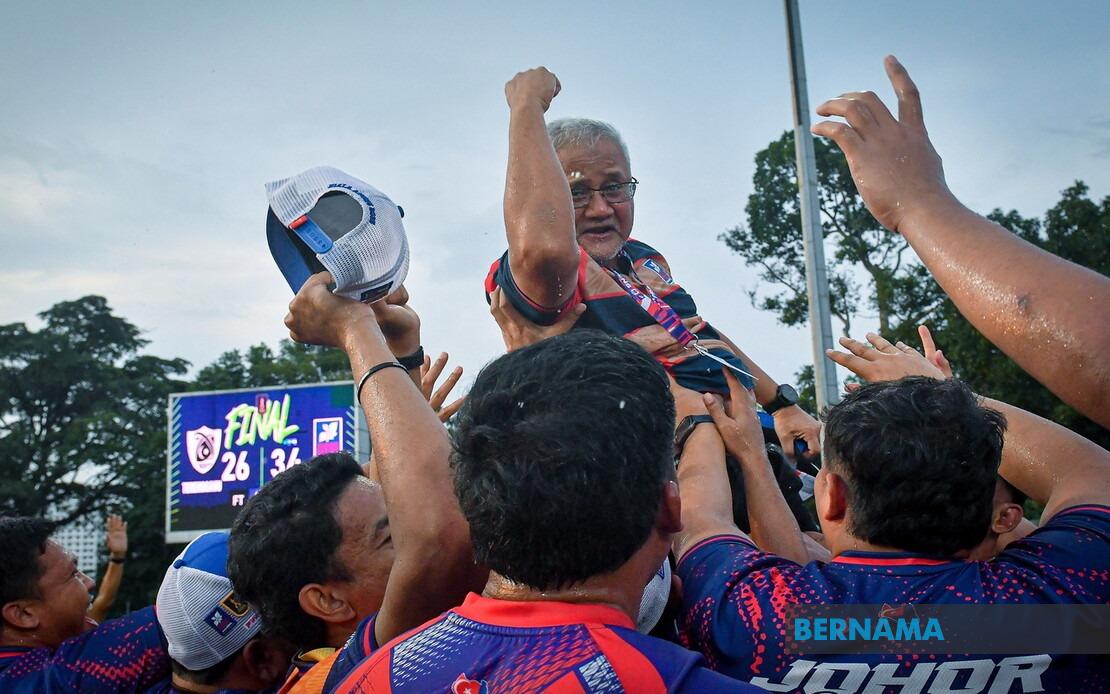
Johor has finally ended its nine-year trophy drought in Malaysian rugby's most prestigious domestic tournament, capturing the Agong's Cup with a commanding second-half display that proved decisive against Terengganu in the championship match held at Universiti Teknologi MARA Stadium in Shah Alam. The southern state's rugby contingent overcame a narrow first-half deficit to claim a 34-26 victory in the 42nd edition of the competition, marking a resurgence for a programme that last tasted success at the tournament level in 2017.
The final unfolded as a tale of two halves, with Terengganu establishing early dominance and holding an 19-17 advantage at the interval. However, the momentum swung decisively in Johor's favour after the resumption, as the state's squad demonstrated superior conditioning, tactical discipline, and attacking prowess to progressively pull away from their opponents. This comeback performance underscored Johor's quality depth in rugby and their capacity to execute sustained pressure when tournament pressure intensifies, characteristics essential for sustained success in the Malaysian rugby calendar.
The victory represents Johor's third championship crown in the Agong's Cup's history, having previously won the trophy in 2013 before their most recent triumph seven years ago. The state's rugby programme has invested considerable resources into player development and coaching infrastructure over recent years, investments that are now bearing fruit at the national competition level. This success signals that Johor's rugby management has effectively rebuilt the squad following years of relatively lean returns in the prestigious annual fixture.
Financial rewards for tournament participants reflected the prestige attached to the championship. Johor's victorious squad shared RM20,000 in prize money from their win, whilst the runners-up Terengganu received RM15,000 for their second-place finish. The financial incentives, whilst modest by international standards, remain significant motivators within the domestic Malaysian rugby circuit and contribute to the tournament's standing as a premier fixture in the national sporting calendar.
The third-place playoff proved to be an unexpectedly thrilling encounter, with Kelantan edging out the Royal Malaysia Police in a closely contested match that saw the teams accumulate 84 combined points. Kelantan's narrow 43-41 victory over PDRM demonstrated the competitive depth now present throughout Malaysia's rugby fraternity, as even the matches contested outside the championship final showcase elite athletic standards and entertaining play. The playoff also highlighted that multiple states possess the capacity to field competitive sides capable of progressing deep into major tournaments.
Kelantan's semi-final exit notwithstanding, their third-place finish and RM10,000 prize allocation provided valuable consolation and recognition for their efforts throughout the tournament. The PDRM side's fourth-place finish, whilst disappointing given their institutional resources and talent pool, nonetheless secured RM5,000 in prize money and valuable tournament experience. For a semi-governmental organisation like the police force, competitive participation in national rugby tournaments serves both sporting and institutional pride objectives, contributing to the broader ecosystem supporting Malaysian rugby development.
Individual accolades complemented the team honours, with Johor's Aqasha Daniel Irwan receiving the player of the tournament award in recognition of his standout contributions throughout the 42nd edition. Irwan collected RM1,000 in cash alongside a commemorative plaque, acknowledging his exceptional technical performance, game intelligence, and impact on match outcomes. Such individual recognition mechanisms within tournament structures serve important functions in motivating emerging talent and encouraging peak performances at the national level.
The Agong's Cup has maintained its status as Malaysian rugby's flagship domestic championship across four decades of competition, serving as the primary platform for states to showcase their rugby programmes and vie for national supremacy. The tournament structure, spanning preliminary rounds through to the climactic final, ensures comprehensive participation from Malaysia's rugby-playing states and provides developmental opportunities for players across varying experience levels. Success in the Agong's Cup frequently translates into opportunities for selected players to represent Malaysia in international fixtures, making the tournament a crucial proving ground for national team aspirants.
For Southeast Asian rugby observers, Johor's resurgence carries broader significance regarding Malaysian rugby's competitive trajectory. The domestic tournament structure remains foundational to the regional rugby ecosystem, generating local talent pipelines and maintaining competitive standards essential for Malaysia's performance in international Southeast Asian competitions. Johor's championship demonstrates that systematic investment in grassroots development, coaching quality, and player retention can yield tangible results, providing a template potentially applicable to other states seeking to elevate their rugby programmes.
Looking forward, Johor will seek to consolidate this championship triumph through sustained investment in squad development and retention of key personnel like Irwan. The nine-year interval between triumphs underscores how rapidly competitive advantage can dissipate without consistent programme management and resource allocation. Other states will inevitably adjust their rugby strategies in response to Johor's success, intensifying competition for the next edition of the Agong's Cup and ensuring the tournament maintains its position as Malaysia's premier rugby battleground.

