The race to determine Johor's next state government reached its crescendo on July 10 as the 16th Johor State Election campaign officially concluded. With voting set for the following day, rival political coalitions deployed their heaviest artillery in a final scramble to secure voter support across the state's 56 contested seats. The frantic energy that characterised the two-week campaign period crystallised into a series of high-profile events designed to mobilise supporters and reach uncommitted voters in the closing hours.
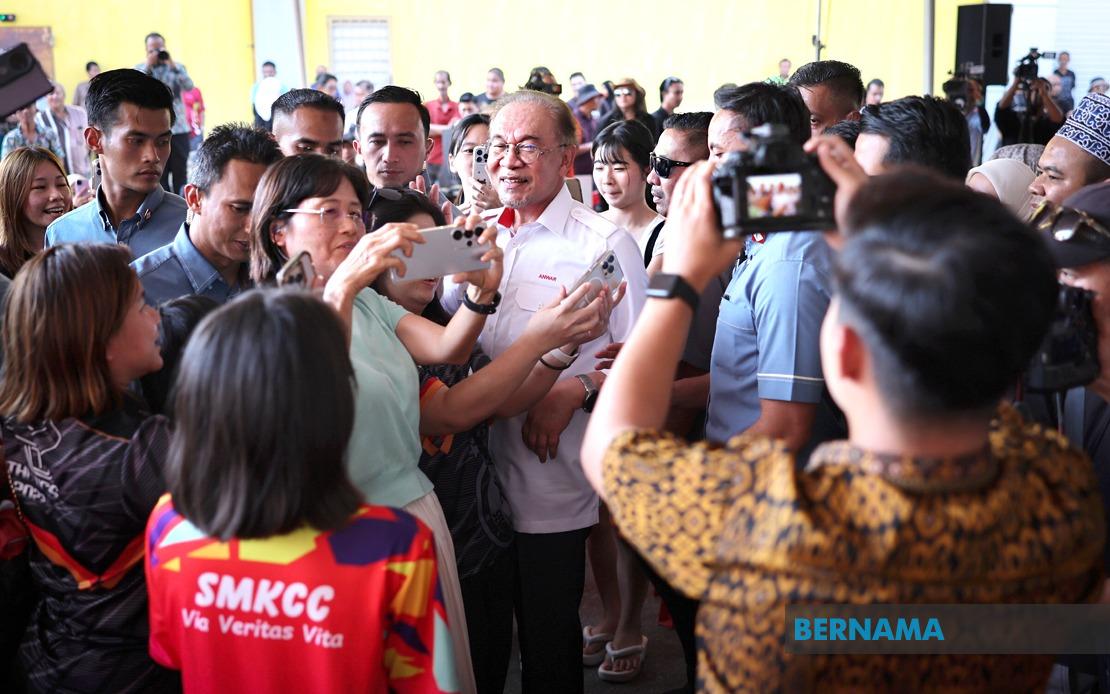
Pakatan Harapan's campaign machinery, led by Prime Minister Datuk Seri Anwar Ibrahim, executed an ambitious tour spanning five crucial constituencies in a deliberate strategy to energise candidates and reinforce the coalition's message in strategic areas. The tour began in Bukit Gambir before moving through Bukit Batu and Layang-Layang, culminating in a grand finale programme at Pasir Gudang billed as the 'Johor Ke Depan, Undi Harapan' event. This geographical spread reflected PH's recognition that victory in Johor would require strength across diverse areas rather than concentration in traditional strongholds. Through social media, Anwar took a moment to express hope that the coalition's endeavours would be smoothed by fortune, striking a tone that blended political confidence with spiritual humility.
Within the broader PH framework, Parti Amanah Negara contributed its own ground-level tactics through its Vice President Datuk Seri Dr Dzulkefly Ahmad, who accompanied PH's Larkin candidate Suhaizan Kaiat through a shopping mall walkabout. This departure from stadium-style rallies demonstrated an appreciation for retail politics, where personal interaction with ordinary voters in everyday settings often proves more impactful than grand public gatherings. Suhaizan articulated the philosophy underlying this approach, characterising the accumulation of public feedback throughout the campaign as a binding responsibility should voters bestow him with office. This language of stewardship and accountability suggested PH's framing of the election as a contract between elected representatives and constituents.
Barisan Nasional's leadership pursued a notably different closing strategy, with its Chairman Datuk Seri Dr Ahmad Zahid Hamidi choosing a spiritual emphasis by hosting a 'BN Grand Supplication & Doa Selamat' gathering in Kulai. The Deputy Prime Minister's decision to frame the final campaign push in religious terms reflected a recognition that many Johor voters, like Malaysians more broadly, view electoral participation through an ethical and spiritual lens. This approach competed directly with secular messaging by positioning BN as the choice aligned with moral and spiritual values. Meanwhile, Datuk Onn Hafiz Ghazi, the incumbent Menteri Besar contesting the Machap seat under BN's banner, adopted an unusually vulnerable posture by publicly apologising for perceived shortcomings in his administration. Rather than merely defending his record, Ghazi's humility signalled recognition that voter sentiment had shifted and that authenticity—including acknowledgement of limitations—might prove persuasive in the final hours.
Tan Sri Muhyiddin Yassin, leading Bersatu as a member of the BN coalition, sought to influence voters through a clarion call for rational deliberation. His video message to Johoreans encouraged electors to synthesise the information gathered over the campaign period and make selections based on substantive comparison rather than emotion or habit. This appeal to voters' analytical capacity represented a common thread across multiple coalitions: the notion that elections should pivot on policy differentiation and demonstrated competence. Muhyiddin's framing subtly suggested that voters possessed the sophistication to distinguish between genuine governance proposals and mere populism.
Bersama, an emergent political force in Malaysian politics, concluded its campaign with a finale featuring prominent figures Datuk Seri Rafizi Ramli and Nik Nazmi Nik Ahmad. Rafizi's concluding remarks telegraphed an intention to synthesise accumulated grievances and counter-narratives throughout the campaign in a final speech, suggesting that Bersama's campaign had been structured around systematic rebuttal of competing parties' claims rather than solely promoting its own vision. This defensive posture, while common in competitive elections, hinted at the uphill struggle faced by relative newcomers attempting to dislodge entrenched political establishments.
MUDA, the youth-oriented reform movement, staged its pinnacle gathering as the 'Puteri Wangsa Grand Finale Lecture,' underscoring the party's positioning as an intellectual and values-driven alternative. President Amira Aisya Abd Aziz's closing message centred on voter empowerment, reminding Johor's citizens of their ultimate sovereignty in determining governmental direction. This emphasis on citizen agency resonated with MUDA's broader narrative of decentralising political power and expanding democratic participation beyond traditional power brokers.
The meteorological forecast for polling day—clear mornings with afternoon thunderstorm potential—added a practical dimension to campaign strategies, as parties weighed whether anticipated weather patterns might dampen or accelerate voter turnout. Political strategists across the spectrum typically view weather as a variable affecting participation rates, with implications for which voter segments might be advantaged. The Malaysian Meteorological Department's prediction invited speculation about whether good morning conditions might attract early voters before afternoon rain potentially suppressed turnout among less committed electors.
The 172 candidates contesting the 56 state legislative assembly seats represented a consolidation compared to Malaysia's federal elections, reflecting the relatively smaller scale of state-level politics. This candidate pool encompassed representatives from major coalitions—Pakatan Harapan, Barisan Nasional (incorporating BN members and Bersatu), and smaller parties including Bersama and MUDA—each bringing distinct visions for Johor's governance and development trajectory. The demographic and geographic distribution of these candidates suggested contests ranging from secure strongholds to genuinely competitive three-way or four-way battles.
From a broader Southeast Asian perspective, the Johor election carried implications extending beyond state boundaries. Johor's economic significance as Malaysia's industrial heartland and strategic southern gateway meant that governance quality and policy clarity would reverberate throughout regional trade networks and cross-border economic relationships. The electoral outcome would also influence dynamics within Kuala Lumpur's federal coalition politics, potentially shifting internal power balances and affecting policy trajectories at the national level.
The concluding campaign period revealed how Malaysian electoral politics operationalises multiple modes of persuasion simultaneously—religious appeals, technocratic rationalism, grassroots engagement, and appeals to democratic values. Rather than converging around shared policy substantively, rival coalitions offered competing visions of what represented legitimate political authority and effective governance. This pluralism of campaign approaches reflected the diversity of Johor's electorate and the complexity of building electoral coalitions in a heterogeneous democracy.
As voters prepared to exercise their franchise the following day, the intensity of final campaign activities underscored what remained genuinely undetermined about Johor's direction. While institutional analysts and polling specialists offered predictions, the actual distribution of voter preferences remained shrouded in uncertainty that no amount of campaign activity could fully penetrate. This epistemic humility—the recognition that ultimate outcomes remained contingent on millions of individual decisions—explained why coalitions continued their mobilisation efforts right until the formal campaign closure at 11:59 pm. In elections, as in politics more broadly, the possibility of surprise ensures that final moments retain genuine significance.

