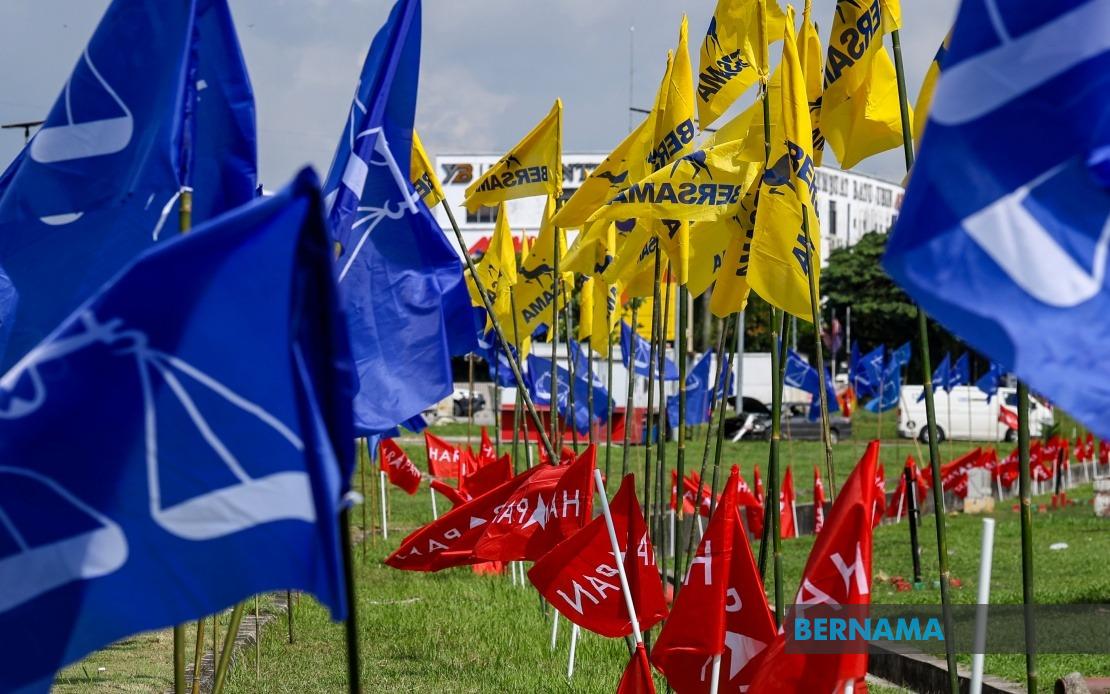
The opening week of campaigning for Johor's 16th state election has unfolded with measured intensity, marking a deliberate departure from the traditional high-decibel rallies that once defined Malaysian electoral contests. Rather than mobilising mass gatherings, the competing political coalitions and parties have chosen to concentrate their efforts on direct, one-on-one voter engagement through house visits, intimate community meetings, and localised outreach programmes. This strategic recalibration reflects broader shifts in how contemporary Malaysian politics operationalises its ground machinery, adapting to both technological change and voter expectations.
Political scientists tracking the campaign have identified this quieter opening as a calculated foundation-building exercise rather than a sign of dampened competition. According to Prof Datuk Dr Sivamurugan Pandian, a Senior Lecturer in Political Sociology at Universiti Sains Malaysia, the first week's emphasis on targeted, personalised approaches serves a dual strategic purpose. Candidates gain invaluable face-to-face opportunities to identify voter concerns and grievances, while simultaneously allowing party organisations to stress-test their organisational capacity and deploy campaign resources with greater efficiency. The professor characterised this initial phase as establishing the skeletal structure upon which subsequent campaign intensity would build, with major escalation expected once senior national leaders intensify their presence and grassroots organisations synchronise their messaging.
The methodological evolution reflects deeper changes in how Malaysian political campaigns now operate. Dr Azmi Hassan, a geostrategist and Senior Fellow at the Nusantara Academy for Strategic Research, observes that modern electoral competitions have become increasingly sophisticated in their data application, moving beyond the broad-brush approach of open-air rallies toward granular voter segmentation. Organisations now deploy trained teams to conduct direct engagement with carefully categorised voter segments—identifying core supporters requiring mobilisation, neutral undecideds requiring persuasion, and opposition supporters requiring counter-messaging. This approach maximises the return on campaign investment by concentrating persuasive effort where electoral outcomes remain genuinely contested.
Central to this campaign's architecture has been the thematic framework advanced by competing parties. Mujibu Abd Muis, a political science lecturer at Universiti Teknologi MARA and researcher at the Ilham Centre, identifies three recurring narrative strands: appeals to past performance and achievement, promises of future policy delivery, and claims to represent stability and competent governance. Yet these framings, while consistent across the competitive landscape, have not yet crystallised into dominant narratives powerful enough to reshape the campaign's overall character. This represents both opportunity and vulnerability for contesting parties—the campaign remains fluid, with narrative dominance still available to those who can connect abstract campaign messaging to tangible voter concerns regarding cost-of-living pressures, employment security, and service delivery.
The geographic distribution of campaign effort during the opening week reveals telling strategic calculations. Northern Johor—encompassing constituencies such as Muar, Tangkak, Segamat, and portions of Batu Pahat and Kluang—has absorbed disproportionate campaign attention, suggesting that party operatives view these areas as genuinely competitive terrain where electoral outcomes remain uncertain. This geographic concentration signals sophisticated resource allocation, with parties concentrating leadership visibility and ground machinery where contests appear most tightly balanced. The underlying assessment appears to be that controlling northern Johor's clusters of competitive constituencies will prove decisive in determining which coalition secures sufficient seats to form government.
The two major coalitions—Barisan Nasional and Pakatan Harapan—have each identified distinct geographic strongholds while recognising zones of vulnerability requiring defensive effort. BN enters the contest with expected strength in eastern coastal districts, particularly Mersing and Kota Tinggi, areas where the coalition retains established organisational presence and community ties. Conversely, PH projects greater influence in southern and western Johor, regions where the coalition achieved notable gains in previous contests. This geographical division means both coalitions face similar strategic imperatives: securing their baseline constituencies while aggressively contesting competitive zones where voter allegiance remains genuinely uncertain. Associate Professor Dr Mazlan Ali of Universiti Teknologi Malaysia emphasises that campaign machinery deployment patterns directly reflect each coalition's assessment of electoral vulnerability and opportunity across Johor's 56 state assembly seats.
Voter turnout has emerged as a critical variable that analysts across the political spectrum recognise as potentially determinative of final outcomes. The relatively quiet opening week's emphasis on grassroots persuasion rather than mass mobilisation underscores that bringing voters to polling stations remains the fundamental campaign challenge. Parties confront the task not merely of persuading voters to support their candidates, but of convincing millions of eligible voters that participating in the electoral process merits their time and attention. This dual challenge becomes particularly acute in constituencies where demographic shifts, economic disruption, or political cynicism have eroded participation rates. The 172 candidates contesting across 56 constituencies will attempt to overcome this resistance through the intimate, relationship-based campaign approaches that have characterised the opening phase.
The structural parameters of the Johor election create distinct competitive conditions that influence campaign strategy. With polling day scheduled for July 11 and early voting permitted on July 7, the overall campaign window compresses activity into a brief, intense period. This compressed timeline means the measured opening week likely represents a temporary equilibrium, with campaigns expected to escalate substantially during week two as national leadership involvement increases and digital campaign efforts intensify. The relatively modest opening may also reflect campaign managers' assessment that an extended, gradual persuasion process best serves parties' long-term interests, building deep community connections rather than attempting to engineer manufactured enthusiasm through staged spectacles.
The campaign's trajectory into subsequent weeks will test whether the grassroots, data-driven approach sustains competitive intensity or whether parties revert to mass mobilisation as polling day approaches. Political strategists acknowledge that different voter segments respond to different campaign approaches—older voters may maintain preference for visible leadership presence and rally participation, while younger, digitally-native voters engage more readily through social media persuasion and targeted messaging. The most sophisticated campaigns recognise this differentiation and calibrate their outreach accordingly, running multiple simultaneous campaign streams tailored to distinct demographic cohorts. Whether Johor's competing parties can execute this level of campaign sophistication during the compressed campaign window will substantially influence electoral outcomes.
For Malaysian observers and regional analysts, the Johor election serves as a testing ground for evolving electoral methodology and campaign innovation. The state's economic significance, demographic diversity, and status as a swing state render it politically consequential beyond its 56 assembly seats. How parties successfully navigate the tension between broad coalition-building and laser-focused voter persuasion, between mass mobilisation and targeted engagement, and between traditional organisational strength and digital innovation will offer instructive lessons for subsequent electoral contests throughout the region. The campaign's opening week has signalled that Malaysian political parties increasingly recognise that contemporary electoral success depends upon organisational discipline, sophisticated voter analysis, and genuine community-level engagement rather than the spectacle-driven campaigns of previous electoral eras.

