The 16th Johor state election entered its crucial nomination phase on June 27 without disruption, as the Electoral Commission's machinery processed candidate registrations across all 56 nomination centres throughout the state. The smooth execution of the day's proceedings underscored the logistical coordination required to manage a state-level election involving dozens of constituencies and hundreds of candidates vying for parliamentary and state assembly seats.
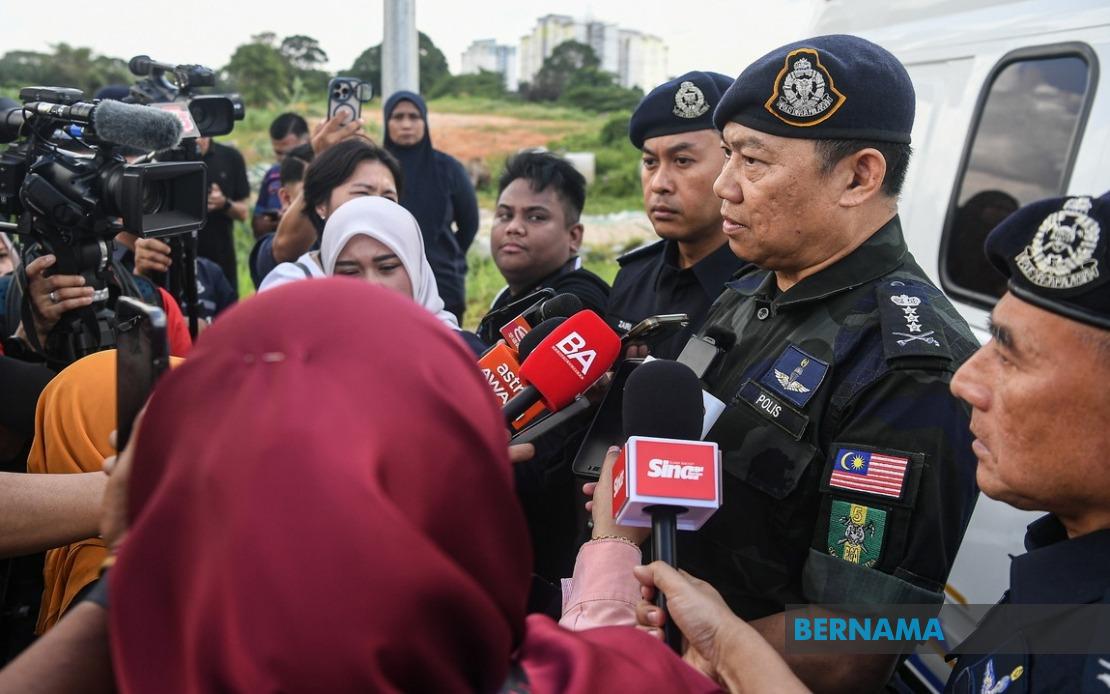
Johor police chief Datuk Ab Rahaman Arsad confirmed that law enforcement had registered no untoward incidents during the nomination process. His observation came after conducting a walkthrough of the nomination centre at Sekolah Menengah Kebangsaan Bandar Dato Onn, where candidates for the Puteri Wangsa seat were being processed. The absence of disruptions reflected the maturity of Johor's electoral processes and the compliance of competing political parties with established protocols during this critical phase.
The security apparatus deployed for the nomination day revealed the magnitude of resources dedicated to ensuring orderly elections in Malaysia's third-largest state by population. Datuk Ab Rahaman disclosed that 4,832 police officers and personnel were positioned across nomination centres, representing a substantial mobilisation of personnel intended to prevent clashes between rival camps and maintain public confidence in the electoral process. This deployment level demonstrates how elections in Malaysia necessitate considerable law enforcement coordination, particularly in competitive constituencies where tensions may run high.
Beyond nomination day itself, the police leadership outlined progress on campaign regulation. The Johor contingent had already approved 26 campaign permits with expectations that additional permits would be issued as political parties formalised their campaign schedules and event plans. These permits function as crucial administrative tools for managing campaign activities, establishing designated spaces for rallies, and preventing campaigns from spilling into prohibited areas. The permit system allows authorities to maintain sight lines on campaign activities while respecting parties' constitutional rights to solicit voter support.
Datuk Ab Rahaman's remarks to media also carried warnings directed at political participants. He emphasised that all contesting parties and individual candidates bore responsibility for conducting campaigns within legal boundaries and in accordance with established electoral regulations. This messaging, though routine, carries importance in contested electoral environments where passion for candidates or parties can occasionally translate into conduct that breaches acceptable norms. The chief's reminder served as a calibrated signal that while competition would be tolerated, the state would not countenance activities threatening public order or violating electoral law.
The police chief further telegraphed readiness to respond to any situations that might materialise during the campaign period proper. This assurance addressed potential concerns among voters and candidates about the state's capacity to manage the weeks between nomination and polling day. Election campaigns invariably produce tensions as rivals deploy increasingly aggressive rhetoric, and constituencies with tight races often witness elevated political activity. The police posture of preparedness was designed to deter potential troublemakers while reassuring law-abiding citizens that the contest would proceed under orderly conditions.
From the Electoral Commission's perspective, the smooth nomination day positioned the election campaign on schedule. The Commission had fixed July 7 for early voting, providing an opportunity for voters unable to cast ballots on the main polling day to participate in advance. This mechanism, now standard in Malaysian elections, widens the franchise by accommodating shift workers, the elderly, the infirm, and others with legitimate scheduling conflicts. Early voting also distributes the administrative burden across multiple days, reducing congestion at individual polling stations.
Polling day itself was scheduled for July 11, furnishing a campaign window of roughly two weeks from nomination to the main electoral contest. This timeline is relatively compressed compared to federal elections, reflecting the focused nature of state-level contests and the presumed lower campaign infrastructure requirements for state assembly elections compared to parliamentary contests. The fourteen-day campaign period nonetheless provides candidates with sufficient opportunity to conduct door-to-door canvassing, hold public forums, and mount media campaigns to establish their presence among voters.
For Malaysian observers and the broader Southeast Asian context, the Johor election demonstrates the institutional capacity of Malaysia's electoral system to manage competitive multiparty contests in large, heterogeneous states. Johor's economy and demographic diversity mirror patterns found across developed Southeast Asian polities, and the ability to conduct peaceful elections with minimal security incidents reflects positively on both electoral administration and the political culture of the state's residents. In a region where electoral irregularities or disruptions occasionally surface as concerns, the routine execution of electoral mechanics in Johor provides reassurance about institutional stability.
The election itself carried significance beyond Johor's boundaries. As Malaysia's third-most-populous state, Johor's electoral result would signal broader trends in Malaysian politics, whether concerning the durability of Barisan Nasional support in traditionally reliable constituencies, the appeal of Pakatan Harapan messaging among urban and rural voters, or the performance of Perikatan Nasional in states where the coalition has sought to establish footholds. The campaign period commencing after nomination day would clarify the competitive terrain and reveal which parties and candidates had succeeded in mobilising support.

