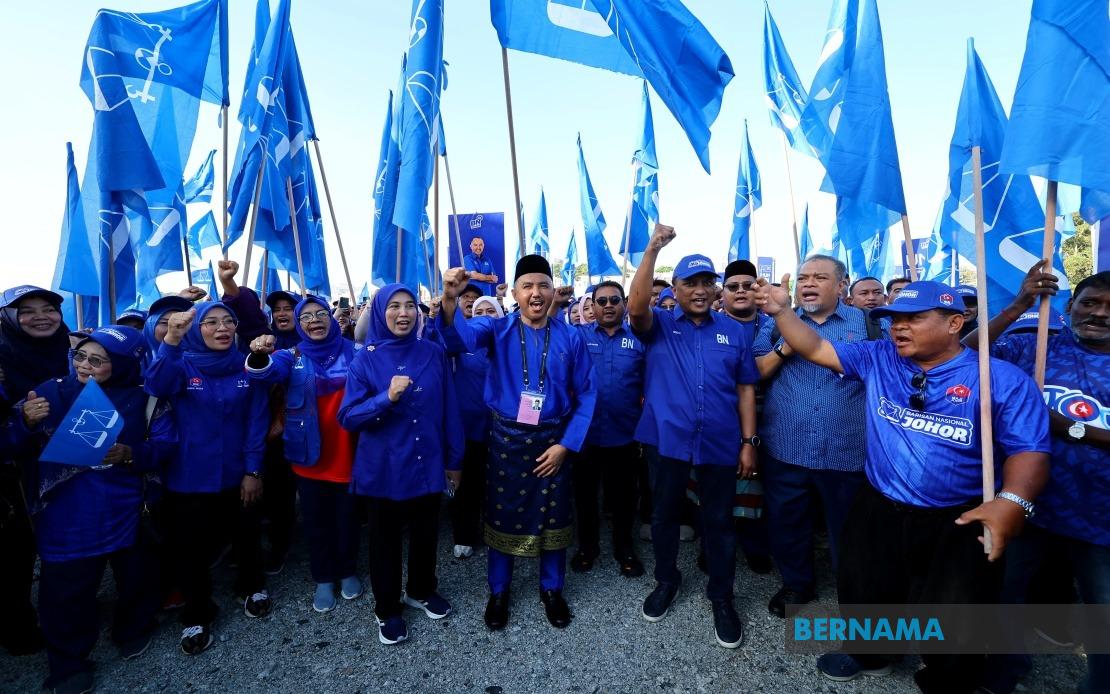
The nomination phase for Johor's 16th state election concluded smoothly on Wednesday morning when all 56 nomination centres across the state locked their doors at 10am, signalling the official end of candidate registration. The one-hour submission window that opened at 9am allowed returning officers to process final paperwork before announcing closures at their respective centres, moving the state election machinery into its next critical phase.
The orderly completion of nominations represents a significant milestone in Johor's electoral calendar. Election Commission officials now face the task of verifying candidate eligibility and compiling the definitive list of contenders for each state seat. This administrative phase will determine not only which candidates can proceed but also the actual number of contestants in each electoral division, information crucial for voters and political parties alike as they prepare for the campaign sprint ahead.
With nominations formally concluded, attention immediately shifts to the intensely competitive 14-day campaign period, which the Election Commission has scheduled to run from today until 11.59pm on July 10. This fortnight represents the formal campaigning window during which political parties will mobilise supporters, conduct rallies, distribute campaign materials, and attempt to sway voter sentiment before polling day arrives. The compressed timeline means party machinery across Johor will face an unusually demanding schedule as they attempt to maximise their reach across diverse voter demographics and geographical regions.
The nomination centres themselves remained remarkably calm throughout the morning, with police and volunteer security personnel maintaining order without incident. Party supporters accompanied their respective candidates to the submission venues, creating visible displays of political enthusiasm while security forces kept proceedings orderly. The absence of confrontation or provocation stands in contrast to some previous Malaysian elections, suggesting either improved coordination among rival camps or community fatigue with electoral tensions, or perhaps both factors operating simultaneously.
Johor's electorate stretches across a substantial population base, with 2,727,926 registered voters eligible to participate in the July 11 poll. This figure comprises 2,703,175 ordinary voters casting ballots at standard polling stations, alongside 12,041 military personnel and their spouses voting at designated centres, and 12,710 police personnel and their spouses exercising their franchise through special arrangements. The inclusion of security force voters reflects constitutional provisions recognising their participation rights while maintaining operational efficiency.
The Election Commission has structured the voting process across multiple dates to accommodate different voter categories. Early voting has been scheduled for July 7, allowing those with valid reasons to cast ballots ahead of the main polling day. This staggered approach reflects lessons learned from previous elections and aims to reduce queue congestion at voting stations while ensuring maximum participation across the state. The Sunday polling date of July 11 follows standard Malaysian practice, traditionally scheduled for weekends to facilitate voter turnout.
Johor's election assumes particular significance within Malaysia's broader political landscape. As one of the country's largest states by population and economic output, electoral outcomes here often influence national political dynamics and serve as indicators of voter sentiment on contemporary issues. The state's historical political traditions, demographic diversity spanning urban and rural constituencies, and economic interests ranging from manufacturing to agriculture create a complex electorate reflecting microcosms of national concerns.
The nomination closure now initiates the campaign phase where political narratives crystallise and voter preferences begin taking shape. Candidates will disseminate manifestos, engage in debates, and respond to constituents' concerns across diverse platforms. Media coverage will intensify, social media campaigns will proliferate, and political analysts will begin forecasting outcomes based on emerging trends. The campaign period essentially transforms the state into a laboratory of political contestation where Malaysian voters witness democracy in action.
Security arrangements throughout the nomination process underscore the Election Commission's commitment to maintaining electoral integrity and public order. The visible police presence combined with RELA volunteers demonstrated coordinated institutional capacity to manage large gatherings and candidate movements without heavy-handedness. This balanced approach demonstrates confidence in community cooperation and electoral maturity among Johor's population, allowing democratic processes to unfold without excessive state apparatus intrusiveness.
The transition from nominations to campaigning represents more than administrative procedure. It crystallises political choice, moving from theoretical candidate eligibility to concrete electoral competition. Johor voters will now encounter specific individuals advancing distinct policy platforms, forcing engagement with actual alternatives rather than abstract political possibilities. The next two weeks will determine whether campaigns generate meaningful policy discussion or descend into personality-driven contests, a distinction carrying implications for how voters ultimately evaluate their choices.

