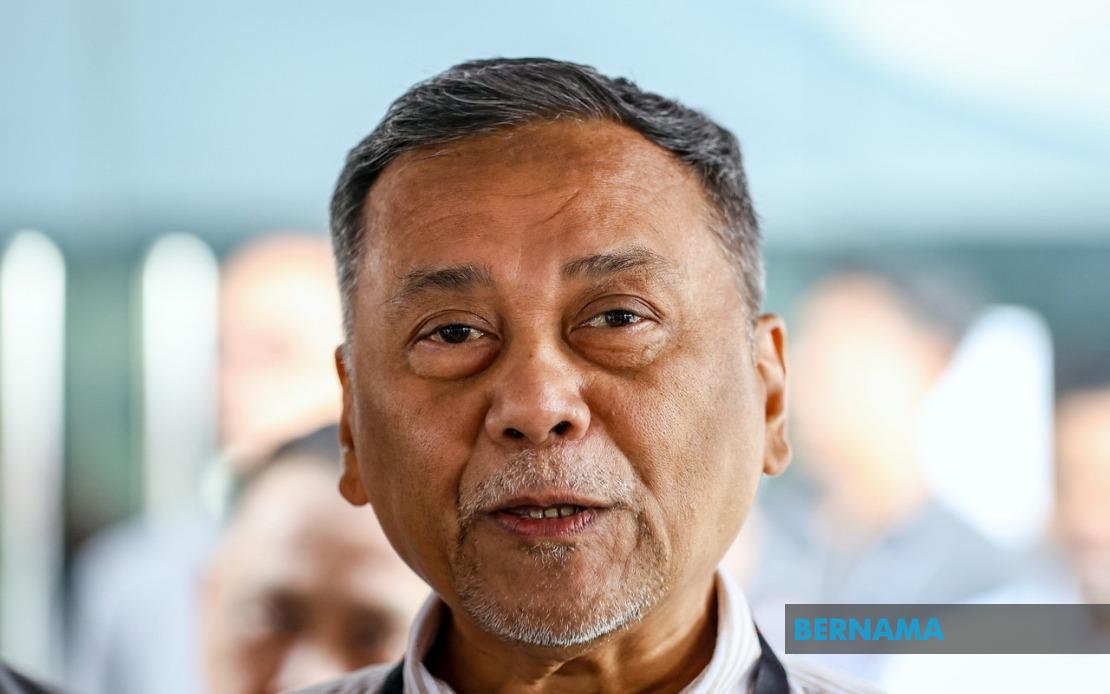
The Election Commission of Malaysia is bracing for a significant electoral exercise in Johor, projecting that roughly 70 per cent of the state's registered voters will cast their ballots in what appears to be shaping up as one of the more participatory state elections in recent memory. EC chairman Datuk Seri Ramlan Harun outlined this expectation while addressing reporters in Pontian on the eve of polling day, signalling that widespread enthusiasm for the electoral process has translated into concrete indicators of strong voter intention to participate.
The projection rests on observable trends documented throughout the campaign period, during which the EC monitored levels of public engagement and voter consciousness. Rather than relying solely on historical voting patterns, commission officials have assessed current attitudes towards participation in the democratic system, finding that citizens are displaying notably elevated interest in exercising their franchise. This enthusiasm extends beyond merely understanding the mechanics of voting to encompassing a broader appreciation for the civic importance of democratic participation, a distinction that Ramlan emphasised when noting the elevated consciousness about the electoral process itself.
With approximately 2.7 million registered voters eligible to participate, the potential 70 per cent turnout figure would translate into nearly 1.9 million completed ballots. This scale of engagement would represent a substantial mobilisation of the Johor electorate and would necessitate considerable logistical coordination to process such volume efficiently across multiple polling venues. The sheer numbers involved underscore why the EC has invested considerable planning effort into ensuring that voting infrastructure can accommodate this anticipated level of participation without creating bottlenecks or delays that might discourage voters from remaining in queues.
The commission has structured voting schedules across Johor's diverse geography with precision aimed at balancing accessibility with operational efficiency. Polling centres will open uniformly at 8 am, but closing times have been differentiated according to geographical and logistical considerations. Remote island locations such as Pulau Besar, situated approximately half an hour from Mersing, will close earliest at 11 am, reflecting the constraints of servicing isolated communities. Two island polling venues—Pulau Aur and Pulau Pemanggil—are scheduled to close at noon, establishing a staged transition from island to peninsular voting centres. The graduated closing schedule continues with 17 centres shutting down at 2 pm and 42 additional centres at 4 pm, whilst the vast majority of 1,114 polling locations will remain open until the standard 6 pm closure time.
This tiered approach demonstrates sophisticated planning designed to accommodate Malaysia's archipelagic geography whilst maintaining electoral integrity across all constituencies simultaneously. Such geographical differentiation is particularly relevant for Johor, which comprises numerous island communities dependent on water transport for connection to mainland polling infrastructure. By staggering closures, the EC ensures that logistics personnel responsible for retrieving ballot boxes and transporting them to central counting facilities can do so sequentially rather than simultaneously, reducing coordination complexity and the risk of transport delays compromising the electoral timetable.
The commission has deployed substantial human resources to execute this electoral exercise, mobilising 43,036 election workers who will staff polling stations, oversee voting procedures, manage voter registration confirmation, and handle ballot distribution and collection. This workforce represents a significant investment of trained personnel and reflects the complexity involved in administering simultaneous voting across multiple constituencies with different closing times and logistical requirements. Beyond polling day operations, the EC has also issued 24,677 postal ballot papers to voters unable to cast ballots in person, imposing a 6 pm deadline for these votes to reach the commission to ensure they can be processed and counted as part of the official results.
Logistical planning has extended to the critical challenge of retrieving completed ballots from geographically dispersed and, in some cases, remotely located polling stations. The commission has assured the public that transportation arrangements, particularly for ballot boxes originating from island polling centres, have been meticulously designed with contingency measures incorporated throughout. This planning has benefited from coordination with both the Royal Malaysian Police and the Malaysian Armed Forces, organisations whose resources and expertise enable the EC to address potential complications arising from weather disruptions, transport delays, or other unforeseen circumstances that might disrupt normal electoral logistics. For island constituencies especially, this inter-agency collaboration is essential given the dependence on maritime transport and the unpredictability that weather patterns can introduce into such operations.
The confidence expressed by the EC regarding the anticipated 70 per cent turnout reflects broader dynamics within Johor's political landscape that have motivated heightened public engagement with this state election. Malaysian voters across the peninsula and East Malaysia have in recent years demonstrated cyclical patterns of electoral participation, with state elections sometimes drawing lower participation rates than federal parliamentary elections. However, the Johor electoral context appears to have mobilised voters across both rural and urban constituencies, suggesting that the specific political dynamics particular to the state have captured public attention and motivated citizens to view this election as consequential for their interests and concerns.
This elevated participation, should it materialise as the EC projects, carries implications for how the election outcome is interpreted and the legitimacy with which the resulting government will be viewed. Elections characterised by strong turnout generally produce mandates perceived as more representative of voter sentiment, as larger portions of the electorate have actively participated in the selection process. Conversely, turnout patterns can also reveal geographical variations in engagement that may indicate differential levels of political interest or satisfaction across constituencies, information that analysts will examine closely once results are available.
The 16th Johor state election thus emerges as a potentially significant democratic exercise not merely for the immediate implications of which coalition secures state power, but also for what patterns of voting and participation reveal about the political temperature within one of Malaysia's largest and most economically important states. The EC's projection of 70 per cent turnout, if realised, would provide quantitative evidence of the extent to which Johor voters have engaged with this electoral moment and the seriousness with which they have approached their democratic responsibilities.

