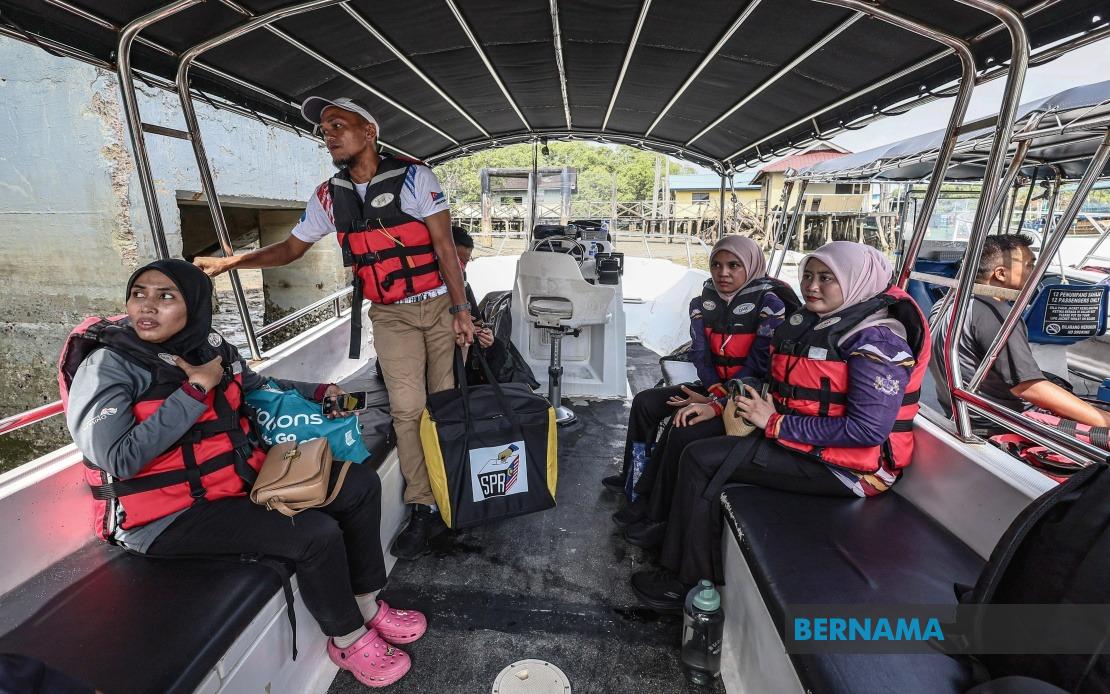
The 16th Johor State Election delivered more than just democratic participation on July 11. For small business operators across the state, polling day created a windfall of economic activity that underscored how electoral events, despite their administrative complexity, generate genuine commercial opportunities for grassroots entrepreneurs. From speedboat operators ferrying voters to distant islands to food vendors positioned near polling centres, the election cycle injected cash into local economies that typically operate on razor-thin margins.
Mustakim Shafie, owner of Island Eagle Boat Services & Island Hopping, witnessed his booking calendar fill dramatically as voters requiring transport to cast ballots across Johor's archipelago sought reliable maritime operators. His fleet of six speedboats encountered unprecedented demand, with nearly 50 voter groups contracting his services alongside the electoral commission personnel and logistics movements that dominated the first day of operations. The company's charter packages, ranging from RM4,000 to RM4,500 for three-day, two-night island trips, proved attractive to coordinated voter groups, while single-journey fares at approximately RM2,500 for up to eighteen passengers generated consistent revenue throughout the day.
The doubling of bookings compared to ordinary operational days reflects how election logistics create temporary but tangible spikes in demand for maritime services. However, the maritime sector's gains came with inherent challenges. Unpredictable weather patterns and volatile sea conditions posed persistent risks that operators like Mustakim had to navigate while ensuring passenger safety and timely delivery. These environmental variables transformed what might seem like routine transport into logistically demanding operations that required both technical expertise and meticulous planning.
Veteran boat operator Hasrul Azmin Jumaat brought two decades of accumulated experience to the challenge, emphasizing how established maritime professionals leveraged their accumulated knowledge during high-stakes election operations. His routes, including the demanding two-hour, seventy-six-kilometre passage to Pulau Aur, demanded precise navigation and extensive familiarity with local waters. For operators like Hasrul, election day represented not merely increased income but validation of their professional credentials and the irreplaceable value of long-term maritime expertise in a region dependent on sea transport.
Beyond the waters, terrestrial business benefited equally from the electoral cycle. Ismail Mad Hasim and Faradila Fairuz Mohd Affandi, a husband-and-wife partnership operating a food stall adjacent to Sekolah Kebangsaan Taman Sutera, experienced a surge in customer traffic beginning at eight o'clock in the morning. Early voters particularly gravitated toward their establishment, creating sustained demand throughout the day. Their experience during the concurrent General Election had provided them valuable insight into polling-day consumer patterns, allowing them to stock appropriately and maximize sales during the concentrated window of opportunity.
The positioning of food vendors near polling centres reflects an organic economic ecosystem that develops around electoral activity. Voters queuing to cast ballots constitute a captive market with limited alternative dining options and immediate food preferences. For small vendors operating with limited capital, polling days represent exceptional earning opportunities that can materially improve monthly revenues. The couple's decision to sell through their operating hours before casting their own votes afterward demonstrated the balancing act that small business operators perform between commercial opportunity and civic responsibility.
The scale of this election amplified economic multiplier effects across Johor's service sectors. With more than 2.6 million registered voters participating across the state, the sheer volume of electoral activity created numerous auxiliary opportunities for transportation providers, food vendors, logistics operators, and hospitality businesses. Each voter journey, each meal purchase, and each transport booking represented a transaction that filtered through local supply chains and communities.
For Malaysia's broader small business ecosystem, the Johor election outcome illuminated how political events, while fundamentally about governance and representation, also function as economic stimuli for ground-level entrepreneurs. Unlike large-scale commercial events that require extensive planning and municipal coordination, elections generate economic activity almost spontaneously through their inherent logistical requirements and voter movements. This suggests that understanding electoral cycles as economic phenomena, not merely political ones, provides insight into how Malaysia's informal economy operates and adapts to circumstantial opportunities.
The maritime transport sector's particular prominence in this story reflects Johor's geographic composition, where island communities and archipelago voters depend absolutely on boat operators for electoral participation. This dependency converts what might appear as specialist maritime services into essential democratic infrastructure. Election officials cannot reach voters; voters cannot reach polling stations without reliable boat operators. This symbiotic relationship between electoral administration and maritime commerce ensures that boat operators occupy a uniquely valuable position during state and federal elections affecting island constituencies.
Looking forward, the Johor election experience offers lessons for regional policymakers considering how to support informal sector businesses and recognize their contributions to both democratic participation and economic activity. The modest earnings captured by vendors and operators during a single day, when aggregated across thousands of small businesses, represent significant income flows that impact household finances, local spending patterns, and community economic resilience. Supporting infrastructure that enables such businesses to operate efficiently during elections—whether improved dock facilities for boats or designated vendor zones near polling centres—represents smart inclusive economic policy.
The human narratives emerging from polling day also reveal the character of Malaysia's entrepreneurial culture. Small business operators like Mustakim, Hasrul, Ismail, and Faradila do not present themselves as victims of difficult economic circumstances or as resentful about competition. Instead, they demonstrate pragmatic commercial thinking, leveraging their existing assets and expertise to capture available opportunities while maintaining their commitment to democratic participation. Their willingness to serve both electoral logistics and voter needs reflects broader Malaysian values around community contribution and economic self-reliance.

