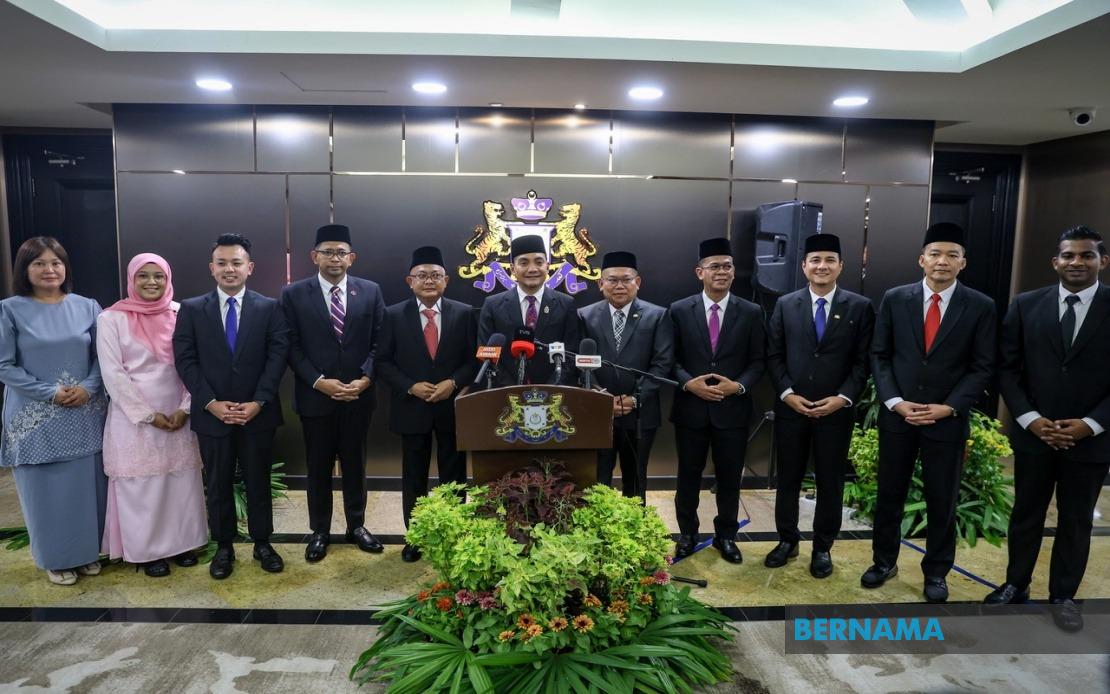
Johor is restructuring its executive leadership by appointing 10 deputy committee chairmen to its State Executive Council, a move announced by Menteri Besar Datuk Onn Hafiz Ghazi at Kota Iskandar on July 22. The expansion reflects the growing administrative demands facing Malaysia's southernmost peninsula state as it pursues ambitious economic and social development targets over the next six years.
The rationale behind the appointments centres on enhancing governmental capacity as Johor grapples with increasingly complex policy challenges. Officials tasked with these newly created roles will be expected to work alongside their committee counterparts to accelerate issue resolution, streamline project delivery, and ensure government programmes penetrate into communities across all districts. By distributing responsibility more broadly, the state government believes it can achieve faster turnaround times on public grievances while maintaining oversight of ongoing development initiatives.
These appointments hold particular significance within the context of two major strategic frameworks guiding Johor's future. The 'Maju Johor 2030' roadmap sets out the vision for the state to attain developed status within the current decade, while the Johor Economic Transformation Plan (JETP) charts specific pathways for economic modernisation and competitiveness. Both initiatives demand sustained administrative focus and coordinated execution across multiple departments and agencies, making the reinforcement of committee structures a logical response to mounting operational requirements.
Onn Hafiz characterised the appointments as both a significant responsibility and an expression of institutional trust, suggesting that those selected bring demonstrable capability to their roles. He emphasised that deputy committee chairmen would function as critical connective tissue within the state bureaucracy, linking senior leadership with field-level implementation teams and ensuring that strategic directives translate into tangible community outcomes. This intermediary positioning is particularly important in a state where geographical spread and demographic diversity require tailored approaches to service delivery.
The appointments have received formal endorsement from the Regent of Johor, Tunku Mahkota Ismail, adding constitutional legitimacy to the administrative restructuring. This procedural compliance underscores the measured approach being adopted, ensuring that governance changes operate within established institutional frameworks rather than representing ad hoc administrative adjustments. Such adherence to constitutional niceties reflects the formal expectations governing state-level executive action in Malaysia's constitutional monarchy system.
The responsibilities assigned to these deputy committee chairs are notably comprehensive. Beyond attending meetings and voicing opinions, they are expected to monitor project implementation on the ground, coordinate operational activities across disparate agencies, and serve as conduits through which grassroots feedback flows back into decision-making processes. This multi-directional accountability model assumes that closer contact between leadership and implementation staff will identify bottlenecks and inefficiencies more rapidly than traditional hierarchical structures allow.
For Malaysian readers, this development illustrates a broader pattern of state governments attempting to improve service quality through administrative refinement. Rather than seeking wholesale structural overhauls, Johor's approach involves strategic layering of supervisory positions designed to enhance coordination and reduce implementation delays. Whether this proves effective will depend on the calibre of individuals appointed and their capacity to exercise genuine influence within committee dynamics, a variable not addressed in the announcement itself.
The timing of this restructuring is significant. As Southeast Asian economies navigate post-pandemic recovery and intensifying regional competition, states must demonstrate administrative agility and responsiveness. Johor's manufacturing base, port infrastructure, and role as Malaysia's gateway to Singapore make governance efficiency directly consequential for regional economic dynamics. The state's capacity to execute development projects efficiently affects not only local prosperity but regional supply chain resilience and foreign investor confidence.
Onn Hafiz's invocation of teamwork and cross-departmental collaboration suggests recognition that siloed government operations produce suboptimal outcomes. By explicitly requiring deputy committee chairs to liaise with counterpart committee heads, departmental officials, and field agencies simultaneously, the state is attempting to break down traditional bureaucratic compartmentalisation. Whether such exhortations translate into actual institutional behaviour change remains an open question, as structural incentives and informal power dynamics often prove more determinative than formal directives.
The practical implications for Johor's residents will gradually emerge as these deputy chairs assume their roles. Faster resolution of licensing applications, quicker turnaround on infrastructure maintenance complaints, and more efficient coordination of development projects would represent tangible benefits. Conversely, if the appointments merely add another administrative layer without meaningfully accelerating decision-making, the restructuring risks becoming a costly expansion of the state payroll without corresponding service improvements.
From a policy perspective, this move reflects a philosophy of incremental administrative improvement rather than radical governmental reimagining. Rather than undertaking comprehensive public sector reform, Johor is using targeted personnel appointments to address specific capacity constraints. This approach minimises disruption to existing operations while attempting to achieve measurable performance gains, though sceptics might question whether such marginal adjustments sufficiently address deeper systemic challenges affecting Malaysian governance more broadly.
As Johor progresses toward its 2030 development aspirations, the effectiveness of this administrative restructuring will become increasingly evident. If the state successfully delivers on infrastructure projects, economic diversification, and quality-of-life improvements, the appointment of these deputy committee chairs will be viewed as a sensible capacity-building measure. If progress stalls despite the expanded leadership team, questions will inevitably arise about whether administrative structural changes alone can overcome institutional or resource constraints.

