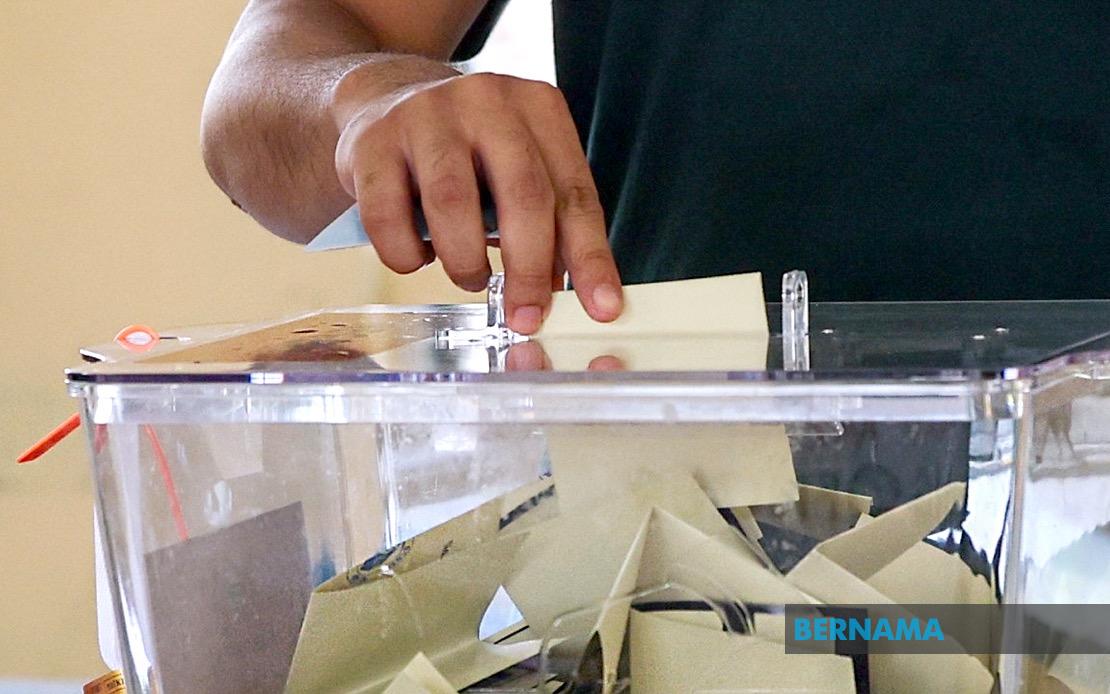
A journey of more than 120 kilometres ended in profound disappointment for Rahmat Shukor, a 57-year-old self-employed businessman, who was denied the opportunity to cast his ballot in Johor's 16th state election after crossing the finish line at the polling centre just 60 seconds too late. Having travelled from Sri Medan in Batu Pahat to SJK (C) Foon Yew 4 in Johor Bahru, Rahmat found himself unable to participate in the democratic process on what turned out to be the most frustrating day of his political life.
The circumstances surrounding Rahmat's plight reveal the considerable challenges faced by voters in a state as geographically dispersed as Johor. His original plan had been to return to the state capital on Friday, aligning with the rest of his family who managed to vote without incident. However, exhaustion from ongoing plantation and contract work prompted him to spend the night at his late mother's residence in Sri Medan, a decision that would ultimately prove consequential. While his wife and other family members successfully cast their votes and departed, Rahmat remained to complete his work, setting the stage for what would become a cautionary tale about the intersection of personal circumstances and electoral participation.
The primary culprit in Rahmat's electoral misfortune was the exceptionally congested traffic that gripped the North-South Corridor on polling day. Starting from the Simpang Renggam Rest and Recreation Area and extending all the way to Sedenak, the roads experienced unusually severe congestion that paralysed movement along the main Skudai route. In an attempt to salvage his voting plans, Rahmat experimented with multiple alternative roads, hoping to circumvent the bottlenecks that had materialised seemingly without warning. Despite these strategic manoeuvres, the traffic delays proved insurmountable, and he found himself running against the clock as he approached the polling centre.
When Rahmat finally arrived at SJK (C) Foon Yew 4, the clock had already struck the closing time. Having documented his predicament with photographs and armed with evidence of the traffic jam that had delayed him, he attempted to explain his situation to election officials. His efforts to validate his circumstances and demonstrate that his lateness was beyond his control fell on unmoved ears, as the strict adherence to the 6 pm closure time left no room for exceptions. The rules, immutable and unforgiving, rendered his supporting documentation irrelevant.
When speaking to media representatives outside the polling centre, Rahmat's tone mingled frustration with pragmatic acceptance. He articulated his journey with precision, detailing his non-stop drive from Batu Pahat and the specific locations where traffic had overwhelmed his progress. He produced evidence of the congestion, hoping that transparency about his circumstances might somehow alter the outcome. Yet despite his clear articulation of events and tangible proof of the obstacles he had encountered, the decision stood irrevocable. The one-minute margin between his arrival and the closure of polls represented an unbridgeable gap in the electoral system's application of its rules.
The broader implications of Rahmat's experience extend beyond his personal disappointment and touch upon questions of voter accessibility and equity in Johor's electoral process. The state, spanning from Johor Bahru in the south to the expansive northern districts, presents logistical challenges for voters who do not reside in close proximity to their designated polling centres. Individuals in outlying areas like Batu Pahat face substantially greater burdens in reaching their assigned locations, particularly when unexpected traffic disruptions occur. Such circumstances disproportionately affect rural and semi-rural voters who may lack the infrastructure advantages of urban residents.
Traffic management on polling day emerged as a critical factor that Rahmat's experience brought into sharp relief. The unusually heavy congestion that developed along major routes suggested that traffic flow planning may not have adequately anticipated the volume of vehicles on the North-South Corridor during the 16th Johor state election. For voters travelling significant distances, such congestion transformed manageable journeys into race-against-time scenarios, with the stakes being their fundamental right to participate in democratic processes. This raises questions about whether election management authorities should coordinate with traffic authorities to ensure smoother vehicular movement on polling days.
Despite the bitterness of his situation, Rahmat adopted a philosophical stance that many observers might find remarkable. Rather than engaging in acrimony or demanding special treatment, he explicitly stated his acceptance of the outcome while expressing hope that the electoral process would continue unfolding smoothly for others. His measured response reflected a deep respect for democratic institutions, even as those same institutions had prevented him from exercising his rights through a matter of mere seconds. This gracious acceptance, while demonstrating civic maturity, also highlights the vulnerability of individual voters within rigid electoral frameworks.
The 16th Johor state election proceeded to its conclusion with all 1,076 polling centres across the state closing punctually at 6 pm. Across the sprawling state, thousands of voters successfully cast their ballots and participated in the democratic exercise. The election machinery operated as designed, with strict adherence to timelines and procedures maintained throughout. Yet for Rahmat, the system's precision in enforcing its closing time proved simultaneously its greatest strength and most significant vulnerability—the very reliability that ensures electoral integrity also created the immovable barrier that prevented his participation.
Rahmat's experience serves as a poignant reminder of the assumptions embedded within electoral systems. The assumption that all voters have equal ability to reach their designated polling centres within the allotted timeframe does not account for the geographic realities of a large, sprawling state like Johor. Voters in peripheral areas face inherent disadvantages that extend beyond their control, whether through distance, traffic patterns, or unforeseen congestion. His case exemplifies how even a single minute's delay—itself a consequence of circumstances largely beyond individual control—can effectively disenfranchise a motivated voter.
For Malaysian electoral administrators, Rahmat's disappointment presents a case study worthy of consideration. While maintaining the integrity and security of electoral processes remains paramount, there may be value in exploring mechanisms that accommodate voters facing genuine obstacles beyond their control. Perhaps provision for statutory declarations or affidavits from voters who can document unavoidable delays might offer a pathway forward. Alternatively, extended voting hours or alternative voting arrangements for those with documented evidence of traffic-related delays could represent potential solutions worth exploring in future electoral cycles. The challenge lies in implementing such mechanisms without compromising the security and orderliness of the voting process itself, a balancing act that election management authorities continue to grapple with across democratic systems globally.

