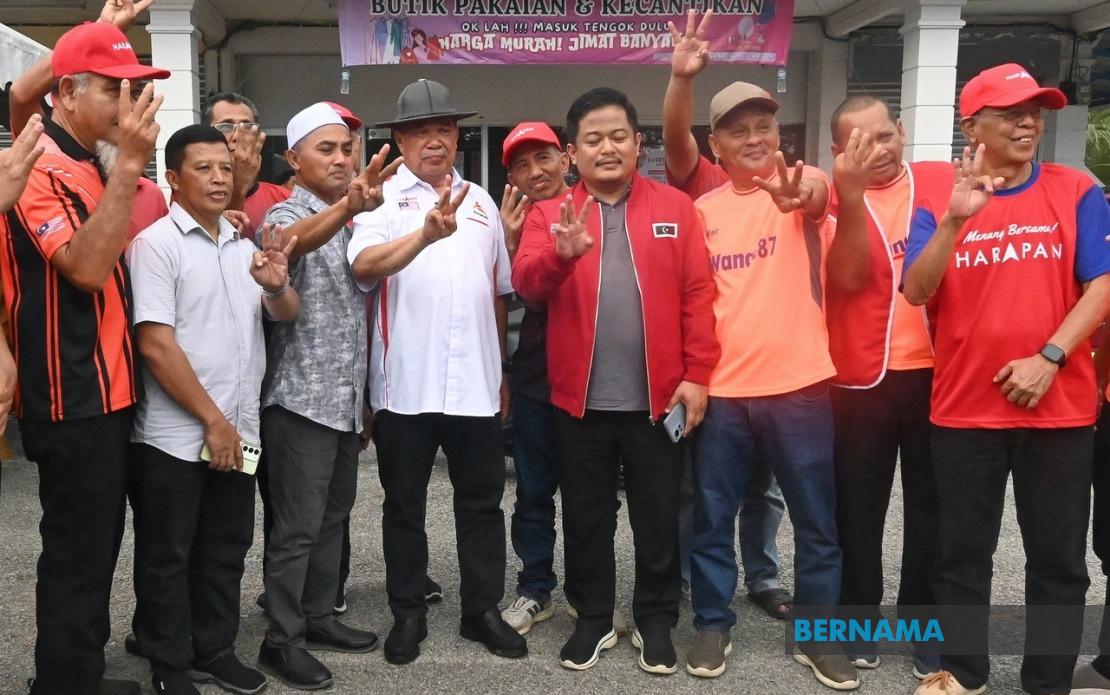
Amanah president Datuk Seri Mohamad Sabu has made an urgent appeal to Johor voters ahead of this Saturday's state election, contending that only by voting for Pakatan Harapan candidates can the electorate enable the coalition to transform its campaign commitments into tangible outcomes. Speaking in Rengit after the Johor Tour with Bang Mat programme, Mohamad Sabu, who also serves as Minister of Agriculture and Food Security, articulated a core argument that has become central to PH's electoral pitch: the manifesto is not merely aspirational rhetoric but a roadmap grounded in extensive community engagement.
The timing of Mohamad Sabu's remarks underscores the pressure on PH as polling day approaches. The coalition faces accusations from competing parties that its election promises amount to little more than recycled pledges, a charge the Amanah leader directly refuted. According to him, the foundation of PH's manifesto lies in months of field work during which party representatives systematically documented voter grievances and concerns across Johor. This framing attempts to reposition the manifesto from an abstract political document to a document reflecting authentic public demand, thereby inverting the opposition's criticism by positioning implementation—rather than mere promises—as the true measure of credibility.
Crucially, Mohamad Sabu stressed that the difference between writing a manifesto and executing it remains profound. He acknowledged that any party can draft campaign pledges, but he argued that the substantive test lies in whether a government possesses both the political will and parliamentary majority required to deliver. This distinction carries particular resonance in Malaysian politics, where voters have grown increasingly sceptical of unfulfilled promises, particularly following state and federal transitions in recent years. By framing the election as a choice between words and action, PH attempts to shift the debate away from the specifics of individual policies toward a broader question of governmental capacity and intent.
The Minister provided a specific timeline for implementation should PH prevail, committing that changes would commence from July 12, immediately following the polls. This promise of swift action addresses a common voter concern that newly elected governments often delay meaningful reform. The symbolic significance of beginning implementation within twenty-four hours of polling day serves as a commitment device, publicly binding PH to rapid delivery and creating accountability through publicly stated expectations.
PH's perceived campaign performance in rural constituencies appears to have strengthened considerably since the 2018 general election, according to Mohamad Sabu's assessment. He noted a marked contrast between PH's standing then—when the coalition remained relatively unfamiliar across Johor's rural markets and villages—and the present reception. The party now reports that voters spontaneously greet PH campaigners and seek photographs, indicators that the coalition has achieved greater name recognition and possibly improved brand perception in areas traditionally considered strongholds for established parties. This shift, if genuine, suggests PH has successfully penetrated demographic segments that previously remained outside its electoral base, a development with significant implications for the state result.
The contrast Mohamad Sabu drew between 2018 and the present campaign reflects broader dynamics affecting Malaysian electoral politics. In the intervening period, PH has governed nationally, providing voters with a basis for assessing the coalition's actual performance rather than relying solely on campaign promises. This creates both opportunities and vulnerabilities: voters who have experienced PH administration can evaluate whether the coalition's earlier pledges translated into meaningful change, while voters dissatisfied with specific PH-led policies now possess concrete grievances beyond abstract policy disagreement. Johor's electoral contest thus occurs within a context where voters possess considerably more information about PH's track record than they did seven years ago.
The manifesto itself, developed through this claimed extensive consultation process, represents PH's attempt to differentiate its vision for Johor from competing offers. Rather than adopting a comprehensive platform covering all policy domains, the party has ostensibly focused on issues Johor residents identified as priorities. This targeted approach, emphasising responsiveness to constituent concerns rather than top-down imposition of party ideology, forms part of PH's broader strategy to position itself as fundamentally distinct from entrenched political establishments. Whether this positioning resonates will depend partly on whether voters believe that extensive consultation occurred and whether the resulting manifesto genuinely reflects community preferences rather than merely incorporating popular-sounding rhetoric.
The early voting scheduled for July 10, allocated for security personnel, introduces logistical elements into the campaign's final days. This compressed timeline before the July 11 polling date means campaigns must achieve maximum impact over shrinking intervals, placing premium on messaging clarity and voter mobilisation efficiency. For PH, the remaining period required consolidating apparent gains in rural support while maintaining momentum in urban constituencies where the coalition has traditionally performed more strongly. Mohamad Sabu's public statements serve partly to sustain campaign energy during this crucial final phase.
For Malaysian observers and regional political analysts, the Johor election holds significance extending beyond state-level implications. The result will provide the most substantial indicator since the 2022 general election of whether PH can sustain or expand its electoral coalition, or whether the party's governing performance has eroded support compared to its 2020 peak. Johor's status as Malaysia's second-largest state by population means the electoral outcome will carry weighting in assessments of PH's national political trajectory. If the coalition performs strongly, particularly among rural voters as Mohamad Sabu suggests, the result would vindicate strategies emphasising grassroots engagement and claims of responsiveness to constituent concerns. Conversely, underperformance would raise questions about whether PH can convert apparent campaign advantages into electoral victories or whether voter sentiment remains volatile despite improved brand recognition.

