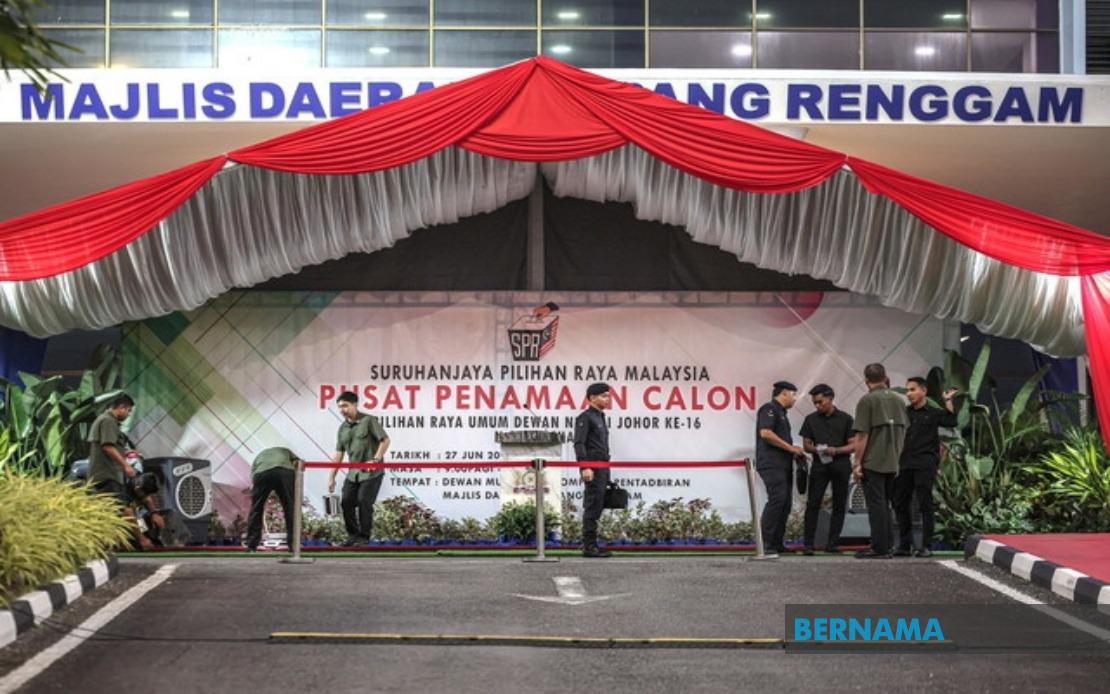
The 16th Johor State Election entered its formal nomination phase on June 27, with all 56 designated nomination centres commencing operations at 9am across the state. This marks the beginning of the official electoral process, setting in motion a tight timeline that will culminate in polls on July 11. The simultaneous opening of centres statewide ensures uniform administration and fairness in the candidate registration process, a critical safeguard in state elections that determine the composition of the Johor State Assembly.
Candidates had a precisely defined one-hour window, concluding at 10am, to lodge their nomination papers with returning officers stationed at their respective centres. This compressed timeframe, while brief, follows established electoral protocols designed to maintain administrative efficiency and reduce the window for procedural disputes. The nomination papers must be submitted by the candidate personally, along with their proposer and seconder, though the Election Commission's regulations permit flexibility where any combination of these three individuals may present the documents on behalf of the aspirant.
The enthusiasm from supporters was evident from the early hours, with party activists and backers gathering from 6.30am to demonstrate solidarity with their candidates. This grassroots mobilisation reflects the competitive nature of Johor politics, where state-level elections carry substantial implications for party positioning and governance priorities. The visible show of strength by various political factions underscored the significance attached to this electoral contest, particularly given Johor's historical importance as a political powerhouse within the Malaysian federation.
Weather presented a variable backdrop to the nomination proceedings. The Malaysian Meteorological Department had forecasted scattered rain in several Johor districts including Johor Bahru, Muar, Batu Pahat, Kota Tinggi, Pontian, Tangkak and Kulai during the morning hours, while predicting clear conditions in Segamat, Kluang and Mersing. The forecast also indicated afternoon thunderstorms were likely across most districts, potentially complicating activities for candidates and supporters moving between nomination centres. Such weather disruptions, while routine in Malaysia's tropical climate, can influence voter registration drives and campaign logistics in the lead-up to polling.
Security arrangements were notably prominent, with police forces working alongside the People's Volunteer Corps (RELA) to establish perimeters around nomination centre locations. Their dual mandate encompassed both stringent access control and comprehensive traffic management to prevent congestion and maintain public order. This coordinated security posture reflects the Election Commission's commitment to ensuring that the nomination process proceeds without incident, protecting the integrity of the electoral framework while maintaining the safety of all participants.
Once the verification process concludes and eligible candidates are officially announced, the Election Commission will initiate a 14-day campaign period extending until 11.59pm on July 10. This fortnight represents the formal campaigning window during which registered candidates and their parties will canvas voters, present manifestos, and mobilise support. The timing allows for intensive grassroots engagement while providing voters sufficient opportunity to evaluate competing platforms and candidates before casting ballots.
The electoral register for this contest is substantial, encompassing 2,727,926 eligible voters across Johor. This voter base comprises 2,703,175 ordinary citizens, supplemented by 12,041 military personnel and their spouses, and 12,710 police personnel and their spouses. The inclusion of security personnel and their families within the voting population underscores the comprehensive nature of Malaysia's democratic framework, though their representation through special voter categories reflects operational security considerations. The magnitude of the eligible electorate—nearly 2.8 million—suggests a highly competitive electoral landscape where margin of victory may be determined by thin differentials and turnout patterns.
The Election Commission has structured the final weeks around two key dates preceding the main poll. Early voting is scheduled for July 7, a facility that accommodates voters with mobility challenges, occupational constraints, or other circumstances preventing participation on polling day proper. This early voting mechanism represents an increasingly important component of modern elections, improving accessibility and potentially boosting overall participation rates. The main polling day of July 11 will determine which candidates successfully secure seats in the Johor State Assembly.
For Malaysian observers and regional analysts, the Johor state election carries significance extending beyond local governance. As one of Malaysia's most economically developed and politically consequential states, Johor's electoral outcome influences broader political dynamics at the federal level and sets precedent for neighbouring states. The competitive tenor evident in the early mobilisation suggests this contest will generate meaningful insights into shifting voter preferences and the effectiveness of various political strategies in the post-pandemic electoral environment.

