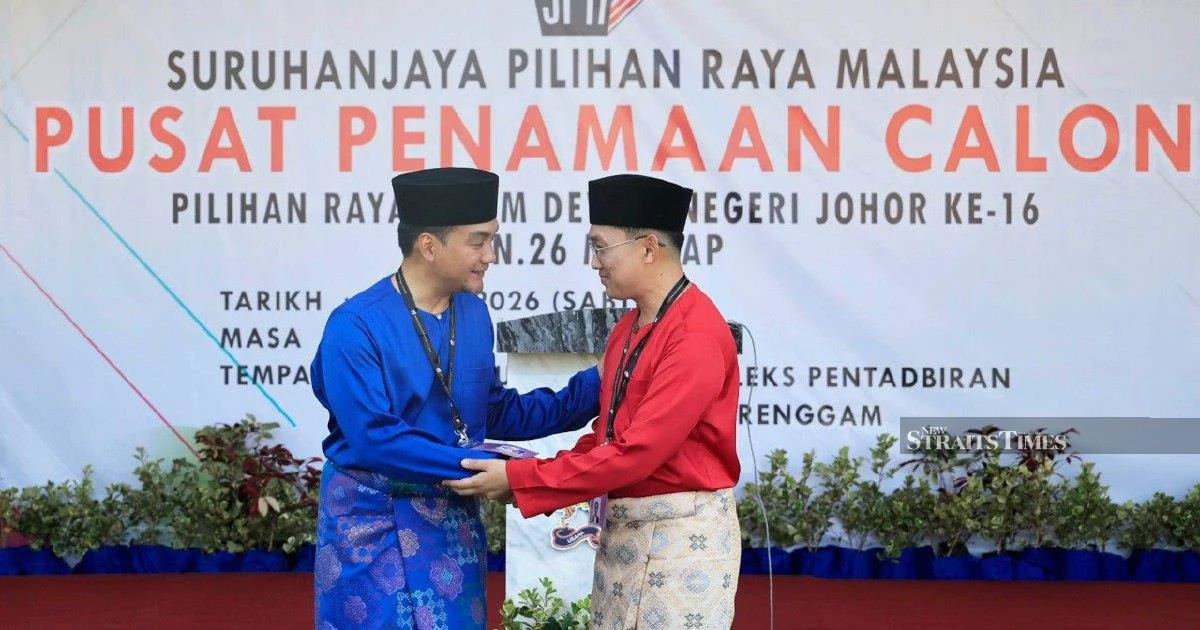
Johor's caretaker Menteri Besar Datuk Onn Hafiz Ghazi has struck a notably cautious tone as campaigning intensifies ahead of the state's July 11 election, declaring that political fortunes in the hotly contested Machap seat are far from predetermined. Speaking in Simpang Renggam, the leader made clear that despite his administration's efforts and track record, the electoral outcome defies easy prediction, underscoring the volatility that continues to characterise Malaysian state-level politics even in constituencies where an incumbent holds institutional advantages.
The remark from Onn Hafiz reflects a broader reality in Johor's political landscape, where demographic shifts, voter sentiment, and the complex inter-party dynamics between the major coalitions have created genuinely competitive conditions across multiple seats. Rather than projecting confidence based on administrative incumbency alone, the caretaker leader's acknowledgement that "anything can happen" suggests a recognition that voters are increasingly unpredictable and that traditional political calculations may no longer apply with the certainty they once did. This pragmatism, whether strategically deployed or genuinely felt, contrasts with the more bullish rhetoric sometimes heard from political camps confident of victory.
Machap, one of Johor's 56 state constituencies, has assumed particular significance as a bellwether for broader trends within the state. The seat's demographic composition, economic conditions, and historical voting patterns make it emblematic of the swing constituencies that will ultimately determine whether any coalition achieves the 29 seats necessary for an outright majority in the state assembly. The fact that the caretaker Menteri Besar has chosen to address the Machap race directly, rather than assume its safety, indicates that internal assessments within his administration view the contest as genuinely contested ground.
For Malaysian observers accustomed to state elections delivering outcomes skewed heavily toward incumbency, the cautious framing offers a refreshing deviation. It acknowledges the maturation of voter expectations and the willingness of constituencies to hold sitting governments accountable rather than reflexively return them to office. The July 11 election, therefore, represents not merely a routine renewal of the state assembly but potentially a moment of genuine democratic reckoning across Johor's urban, suburban, and rural constituencies.
The broader context matters considerably. Johor has long been regarded as a politically significant state, historically serving as a stronghold of UMNO and government coalitions more broadly. However, the state has experienced substantial shifts in recent election cycles, with opposition parties making inroads into traditional ruling coalition strongholds. Understanding that even a seat the ruling administration would ordinarily expect to hold represents contested territory indicates that the political centre of gravity in Johor continues to move, with voters demonstrating a willingness to consider alternatives based on performance and policy rather than party affiliation alone.
Onn Hafiz's public acknowledgement of electoral uncertainty also carries implications for how political parties and observers should assess the competitive landscape heading into July 11. If an incumbent caretaker Menteri Besar signals caution about a single constituency, the implication is clear: nowhere in Johor can any coalition take victory for granted. This realignment of expectations could influence voter turnout, campaign intensity, and the strategic allocation of resources by competing parties as they attempt to mobilise their supporters in what appears to be an authentically open contest.
From a regional Southeast Asian perspective, Johor's election offers insights into voter behaviour across a mature electoral democracy where economic development, rising education levels, and access to diverse information sources have combined to create more discerning electorates. The phenomenon of unpredictability that Onn Hafiz identifies reflects not instability or weakness in democratic institutions but rather their maturation and the genuine empowerment of voters who increasingly make decisions based on specific local conditions rather than inherited partisan loyalty.
The timing of the July 11 election, coming amid broader national discussions about economic management, cost of living pressures, and governance standards, adds another layer of complexity. Voters in Johor are making their decisions not in isolation but within the context of their experiences navigating a Malaysian economy facing inflationary pressures and questions about public service delivery. The Machap contest, therefore, becomes a referendum not just on the state administration but on whether the ruling coalition at state level adequately addresses the concerns that animate voter behaviour more broadly.
As polling day approaches, the significance of Onn Hafiz's candid assessment lies not in any dramatic revelation but in what it signals about contemporary Malaysian political competition. The admission that "anything can happen" in a particular contest validates the instincts of voters and observers who sense that state elections have become genuinely competitive affairs where electoral outcomes depend on campaign execution, local issues, candidate appeal, and voter engagement rather than demographic determinism or inherited electoral advantages. The Johor state election on July 11 will test these dynamics across multiple constituencies, with Machap serving as a particularly illuminating case study for understanding how Malaysian democracy continues to evolve.

