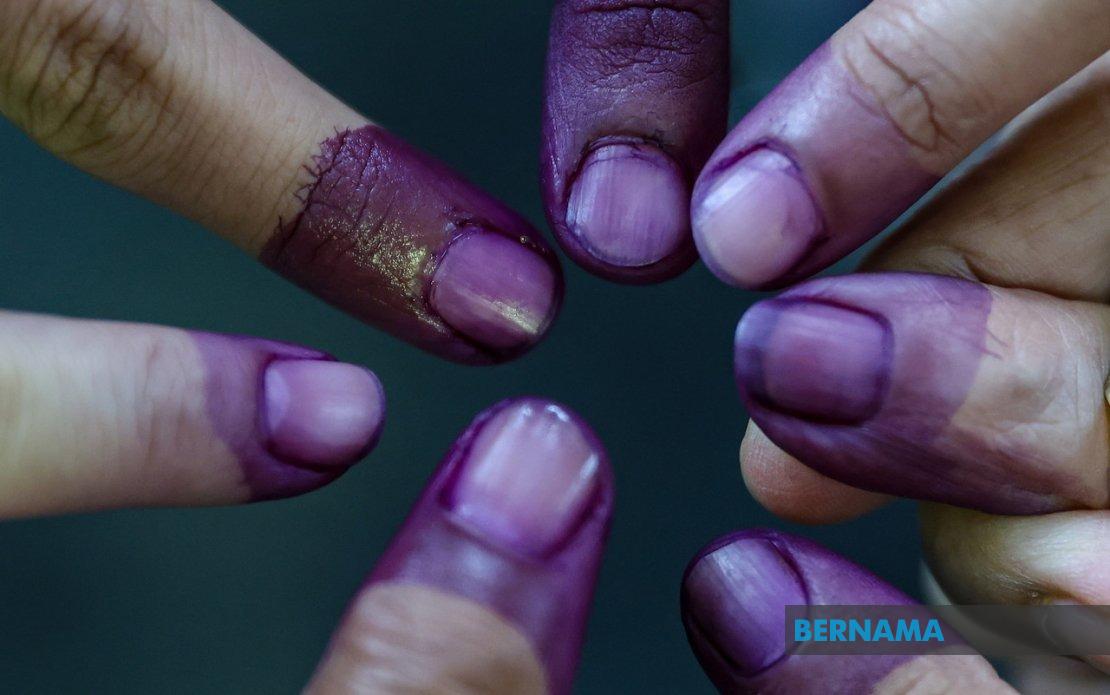
Johor's 16th state election turned into an unexpected celebration of civic participation as major food and beverage brands transformed the simple indelible ink mark on voters' fingers into a gateway for special treats and discounts. Across the state, popular chains jumped at the opportunity to recognise and reward those who took time out of their day to cast ballots, creating an unusual fusion of democratic duty and consumer incentives that captured widespread social media attention throughout the polling day.
The purple stain that marks a voter's participation in Malaysia's electoral system has long served a practical purpose — preventing multiple voting and maintaining the integrity of the democratic process since its introduction by the Election Commission during the 2013 Kuala Besut by-election. Yet on this particular Saturday in July, that same marking became something far more celebratory, with merchants recognising it as evidence of civic engagement worthy of celebration. The phenomenon reflects a broader cultural shift in how Malaysians view electoral participation, transforming what might otherwise be seen as a routine civic duty into a community-wide acknowledgment of democratic involvement.
The Coffee Bean & Tea Leaf led the promotional charge by offering 20 per cent discounts on selected purchases throughout the day, while Krispy Kreme provided its Original Glazed doughnuts for just RM2 to voters presenting their inked fingers at participating Johor outlets, supplies permitting. Burger King extended its offering through the following day, providing complimentary Soft Serve Cone ice cream with any set meal purchase, while Marrybrown added a savoury option to the mix with free fried chicken pieces accompanying MB Combo purchases when customers displayed their indelible mark. These offers, though individually modest in monetary value, collectively created a patchwork of incentives that encouraged newly-engaged voters to celebrate their democratic participation.
The timing and coordination of these promotions proved remarkably well-executed, with information spreading rapidly across social media platforms as voters documented their post-ballot reward visits. Many Johoreans shared photos of their inked fingers alongside the treats they had acquired, inadvertently creating a visual narrative of democratic engagement intertwined with consumer culture. This organic amplification transformed what might have been routine promotional activities into a trending topic that reached far beyond Johor's borders, generating conversation about how commerce and civic responsibility might productively intersect.
For a state election of Johor's significance, such grassroots commercial enthusiasm carried symbolic weight beyond the immediate discount value. More than 2.6 million eligible voters were eligible to participate in selecting representatives for the 56 seats in the State Legislative Assembly, making this a major electoral event that would shape the state's political trajectory for years to come. The commercial recognition of voters seemed to reflect a broader societal appreciation for participation in democratic processes, particularly in an era when voter turnout concerns have periodically troubled Malaysian political observers.
The electoral contest itself presented a complex competitive landscape, with 172 candidates representing eight different political entities vying for assembly seats. Pakatan Harapan and Barisan Nasional each fielded 56 candidates, representing the traditional centre of Malaysian electoral competition, while Perikatan Nasional presented 33 candidates in what has become an increasingly significant third force in Malaysian politics. Smaller parties and independent candidates rounded out the ballot, offering voters a historically diverse range of political options from which to choose their representatives.
The decision by established commercial brands to participate in election day festivities suggested a calculation that consumer goodwill generated through such engagement would outweigh any perception of political neutrality being compromised. None of the participating chains appeared to target their promotions toward specific political allegiances or candidates, instead framing their offers as rewards for the simple act of voting itself. This approach allowed them to celebrate democratic participation while maintaining equanimity across the political spectrum, a delicate balance that many Malaysian businesses attempt to maintain during contentious electoral periods.
The phenomenon also highlighted how contemporary Malaysian consumer culture has become intertwined with civic occasions and national moments. Where previous generations might have marked election days primarily through quiet participation or neighbourhood discussion, voters in 2024 could add a commercial element to their democratic engagement, documenting and sharing their experiences through digital platforms. This represented neither corruption of the electoral process nor purely cynical commercialism, but rather an interesting adaptation of how modern retail and food service sectors engage with significant community events.
The indelible ink itself carried historical weight that extended beyond electoral mechanics. Since its adoption over a decade ago, the marking system had become one of the most visible and tangible symbols of Malaysian electoral participation, a physical manifestation of democratic engagement that citizens carried with them throughout the day. By converting this symbol into a promotional tool, businesses essentially validated and celebrated a fundamental component of Malaysia's democratic infrastructure, even as they sought to drive customer traffic and build brand loyalty.
For Johor specifically, the combination of the election event with these spontaneous commercial incentives created an atmosphere that transcended the ordinary political contest. The state's 2.6 million eligible voters found themselves not merely choosing representatives but also participating in a broader recognition of democratic values that extended into the commercial sphere. This organic alignment of political participation with consumer rewards suggested that even in Malaysia's competitive and occasionally fractious electoral environment, there existed common ground around the appreciation of democratic engagement itself.

