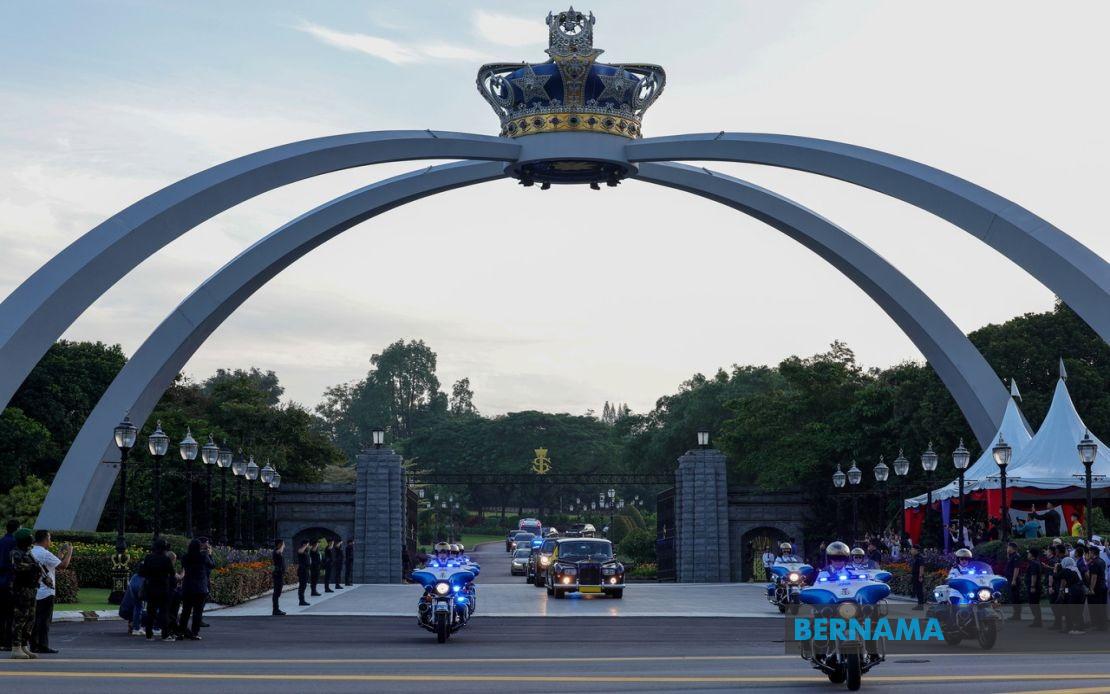
Johor will inaugurate its new Menteri Besar this afternoon in a formal ceremony at the royal palace, marking a decisive transition of power following the state's recent election. The swearing-in is scheduled for 3 pm at Istana Bukit Serene, with proceedings set to take place in the presence of the Sultan and state dignitaries. The Johor Palace conveyed the ceremony details through an official invitation distributed to media organisations, confirming that journalists would be granted access to cover the event from the Crown Arch entrance of the palace.
While the palace announcement confirmed the timing and venue, the identity of the incoming Menteri Besar was not disclosed in the formal notice. This deliberate withholding of information was consistent with constitutional protocols, which typically see the reigning Sultan make the final appointment decision only after formal consultations with political leaders. The uncertainty surrounding the appointment had generated considerable speculation among political observers throughout the day, with various factions within the ruling coalition weighing their respective claims to the top state position.
Media presence at key government locations reflected the significance of the occasion. Since midday, journalists and photographers had positioned themselves at the Menteri Besar's official residence in Saujana as well as at the gates of Istana Bukit Serene, awaiting developments and attempting to capture any indications of the succession arrangement. The heightened media activity underscored the intense political interest surrounding the appointment, given its implications for factional dynamics within Johor's Barisan Nasional component parties.
The royal audience that Sultan Ibrahim Iskandar granted earlier in the day to BN national chairman Datuk Seri Ahmad Zahid Hamidi appeared to be a crucial moment in the appointment process. The meeting at Istana Pasir Pelangi lasted approximately one hour and included Johor BN's state chairman Datuk Onn Hafiz Ghazi, suggesting that both federal and state BN leadership were directly engaged in the transition deliberations. Such high-level engagement indicated that the appointment carried significance beyond mere ceremonial protocol, likely encompassing discussions about government formation and legislative support.
Barisan Nasional's commanding performance in the Johor state election provided the political foundation for today's swearing-in. The coalition secured 48 of the 56 contested state seats in the election held the previous day, representing a decisive electoral mandate that substantially exceeded the 29 seats required for a simple majority in the state assembly. This landslide victory gave BN enormous flexibility in determining its leadership and governance arrangements, as the coalition command such a substantial legislative supermajority that internal party maneuvering could occur without threatening overall government stability.
The timing of the swearing-in ceremony, scheduled for mid-afternoon, allowed for media briefings and public announcements to potentially follow the formal oath-taking. The arrangement also aligned with conventional practice in Malaysian state governance, where the Sultan witnesses the appointment and investiture of senior executive officials. Such ceremonial formality reinforces the constitutional role of the monarchy in state administration and legitimises the new administration through royal endorsement.
For Malaysian observers, particularly those in Johor, the swearing-in represented more than a routine administrative transition. It symbolised the consolidation of BN's political dominance in the southern state and signalled which faction within the coalition's Johor structure would lead the government for the coming term. The composition of the cabinet and the distribution of ministerial portfolios following the swearing-in would provide further clarity on how the coalition intended to govern and allocate resources among its various component parties and regional interests.
The decision to restrict advance disclosure of the appointee's identity, despite confirming the ceremony's logistics, reflected deliberate constitutional restraint. The Sultan, as the supreme authority in state matters, retained the prerogative to make the final appointment announcement without prior public commitment. This approach preserved the crown's independence and allowed for any last-minute consultations or adjustments that might arise from the earlier meetings with BN leadership. It also maintained an element of formality and gravitas to the afternoon's proceedings.
The swearing-in ceremony at Istana Bukit Serene would add ceremonial weight to what was essentially a political outcome shaped by electoral results and BN's internal calculations. Once the new Menteri Besar took office, the administration would face the immediate task of forming its state cabinet, establishing committee structures in the state assembly, and articulating its governance priorities. Given BN's substantial majority, the new government would enjoy considerable latitude in pursuing its legislative agenda without needing to negotiate with opposition members or depend on independent assemblymen for passage of bills.

