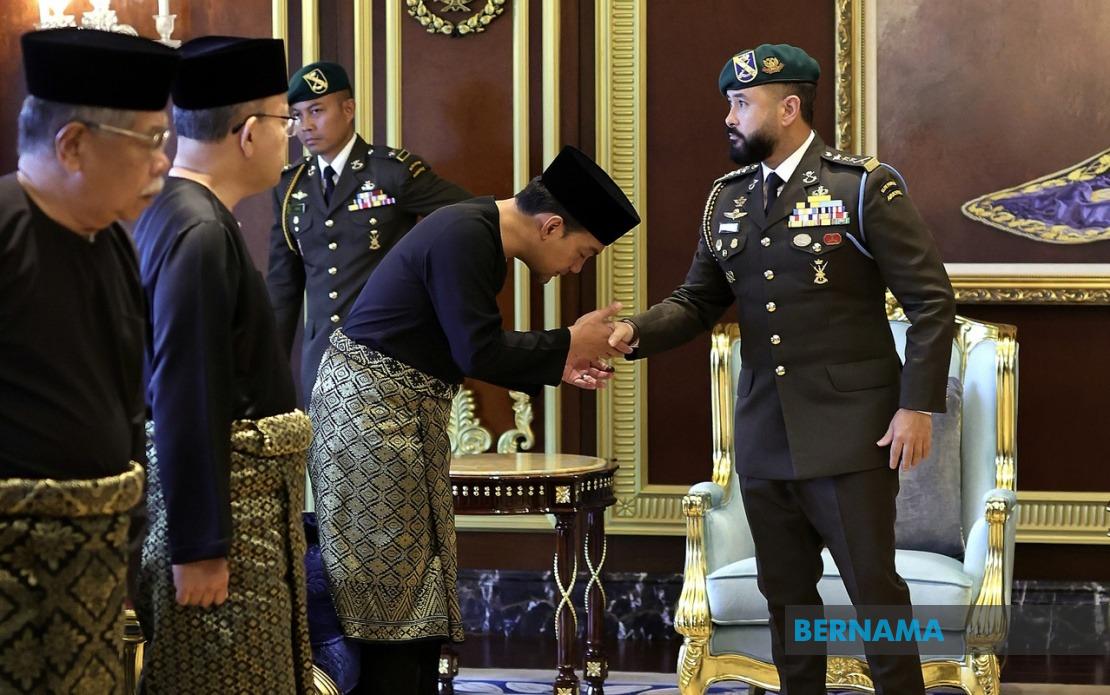
The new Johor State Executive Council will be officially inaugurated tomorrow at Istana Bukit Serene in a formal swearing-in ceremony presided over by the Regent of Johor, Tunku Mahkota Ismail. The event marks the final ceremonial step in establishing the state administration following the decisive electoral outcome that redefined Johor's political landscape just days earlier.
Menteri Besar Datuk Onn Hafiz Ghazi, who was sworn in for his new term on July 12, will lead the newly constituted executive council. His presence at tomorrow's ceremony, alongside other senior state officials including Johor Council of Royal Court president Datuk Dr Abdul Rahim Ramli and state secretary Datuk Mohammed Ridha Abd Kadir, underscores the continuity of leadership in Malaysia's second-largest state by population.
The swearing-in represents a significant moment for Johor's political establishment. The state has long been viewed as a bellwether for national politics, and the recent electoral outcome demonstrated the electorate's confidence in the Barisan Nasional coalition's governance model. With 48 of 56 state seats secured in the 16th Johor State Election, BN achieved a commanding majority that provides substantial political capital for implementing its agenda across the full five-year term.
The scale of BN's victory is particularly noteworthy given Malaysia's volatile political environment in recent years. Johor, as a traditional BN stronghold, has historically been crucial to the coalition's national calculations. This decisive mandate signals voter satisfaction with established governance structures, even as other states have experimented with alternative political arrangements. For observers tracking Kuala Lumpur's political trajectory, Johor's endorsement of BN carries implications beyond its borders.
The ceremony itself reflects the formalities embedded in Malaysia's constitutional monarchy system. The Regent's presence is not merely ceremonial but constitutionally significant, as state rulers play a direct role in the appointment and swearing-in of executive council members. This institutional arrangement ensures that state administrations operate within the framework of constitutional governance, a principle that has been tested but ultimately reaffirmed across Malaysia's electoral cycles.
Access to the swearing-in ceremony begins at 9.30 am from both main palace entrances, with media representatives invited to document the proceedings. This transparency in state ceremonial functions reflects evolving standards of democratic practice in Malaysian governance, where formal events are increasingly open to public scrutiny through media coverage. The arrangement allows citizens to witness the transition of power and the formal assumption of office by newly appointed state officials.
The timing of the ceremony, coming four days after Onn Hafiz Ghazi's personal swearing-in, allows for administrative preparation and the finalisation of the complete executive council composition. State governments typically use this interim period to complete portfolios allocation and departmental assignments. The separate ceremonial occasions for the Menteri Besar and the full exco reflect constitutional protocols that distinguish between individual appointment and collective executive authority.
For Johor, this moment crystallises the state's political direction for the coming years. The executive council will be tasked with managing a range of portfolios critical to the state's development, from economic growth initiatives to social welfare programmes. As one of Malaysia's economic engines, Johor's governance decisions ripple through regional supply chains, affecting businesses in neighbouring states and across Southeast Asia.
The electoral mandate that precipitated this swearing-in ceremony reflects broader patterns in Malaysian politics where state-level contests serve as intermediate tests of public confidence in political parties and their platforms. Voters in Johor had opportunities to express preferences between competing visions for development, security, and economic policy. The decisive outcome suggests alignment between the electorate's priorities and BN's campaign messaging, though implementing that mandate will require navigating complex federalism considerations and resource constraints.
As the newly sworn executive council members assume their positions, they inherit both opportunities and challenges. State governments operate within a federal system where economic policy, security operations, and major infrastructure decisions often require coordination with Putrajaya. The Johor council's effectiveness will depend not only on internal cohesion but also on constructive centre-state relations. With BN controlling both federal and state levels in Johor, such coordination should be smoother than in states where different coalitions govern.
The formal inauguration ceremony tomorrow will complete the constitutional machinery required to establish Johor's new administration as a fully legitimate and empowered government. Once council members take their oath, they assume legal and moral obligations to discharge their duties according to the Federal Constitution and state laws. This moment of transition, though ceremonial in appearance, carries real significance for how state power is exercised and legitimated within Malaysia's constitutional framework.

