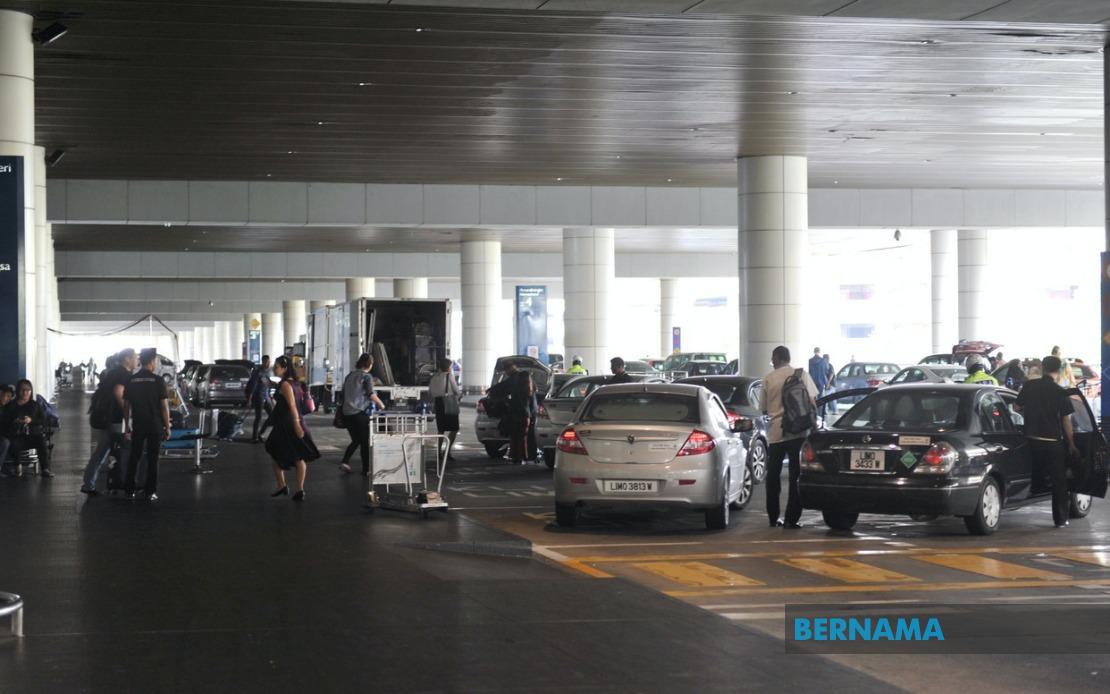
The Road Transport Department (JPJ) is moving to substantially expand its enforcement capacity at Kuala Lumpur International Airport, launching an intensified campaign to eliminate illegal taxi touts—locally termed 'ulat'—that have long plagued the country's busiest aviation hub. Director-General Datuk Aedy Fadly Ramli announced that the department will station more personnel across KLIA Terminal 1 and Terminal 2 to conduct continuous monitoring and patrols, acting on instructions from the Ministry of Transport to tackle what has become an enduring problem affecting airport users and Malaysia's international reputation.
Currently, the scale of JPJ's presence at the airport is minimal and operationally constrained. Only 17 personnel are permanently stationed at KLIA Terminal 1, working shifts that operate solely between 7 am and midnight—a critical gap that leaves the facility unmonitored during early morning arrival hours when aircraft begin landing from 4 am onwards. More significantly, KLIA2, which handles a substantial portion of the airport's passenger traffic, has no dedicated JPJ personnel assigned to it at all. This skeletal staffing arrangement has evidently allowed illegal tout networks to operate with relative freedom during off-peak hours and in areas with minimal official presence.
The department's response involves a structural overhaul of its airport operations. Beginning next week, JPJ will implement a three-shift staffing model providing full 24-hour coverage across both terminals. Beyond simply increasing headcount, the reinforcement strategy includes deploying senior-ranked officers to lead enforcement teams at each terminal, ensuring that operations benefit from experienced decision-making rather than relying solely on junior personnel. This hierarchical restructuring reflects recognition that combating organized illegal transportation networks requires supervisory oversight and coordinated tactical responses rather than ad-hoc patrols.
The initiative addresses a persistent vulnerability in Malaysia's gateway to the world. Illegal taxi touts—individuals offering unofficial and unmetered passenger transport services—have historically congregated at airport terminals, approaching arriving travelers unfamiliar with local transportation options. These operators undercut legitimate licensed taxis and ride-hailing services while operating without proper insurance, regulatory oversight, or accountability mechanisms. The activity particularly damages perceptions among international visitors during their first hours in the country, creating an impression of disorder and lack of governance at what should be a controlled, professional facility.
Beyond enforcement alone, the JPJ is pursuing a complementary awareness strategy in partnership with Malaysia Airports Holdings Bhd (MAHB). The collaboration will expand passenger communications through enhanced signage and announcements throughout airport terminals, emphasizing the importance of using only licensed and legitimate transportation services. This educational component recognizes that many illegal tout transactions occur because arriving passengers lack clear information about approved alternatives or are uncertain about distinguishing between legitimate and unlicensed operators. Better information infrastructure can reduce demand for informal services by making compliance easier and safer for travelers.
The crackdown reflects broader concerns about Malaysia's international competitiveness and soft power. As a major regional aviation hub and the entry point for hundreds of thousands of annual visitors, KLIA's operational standards—including freedom from street-level illegal activity—influence perceptions of Malaysia as a modern, well-governed destination. Illegal touts undermine not only the airport's professional image but also the interests of legitimate transportation operators, regulated taxi companies, and technology-enabled ride-hailing platforms that comply with licensing requirements. By tolerating such activity, authorities inadvertently subsidize non-compliant operators at the expense of legitimate businesses.
The timing of this announcement, delivered at a dedicated press conference marking the formal launch of 'KLIA Ops Ulat,' signals that tackling airport touts has been elevated to senior policy priority. Datuk Aedy Fadly's explicit pledge that JPJ will maintain zero tolerance toward middlemen and tout operatives indicates that enforcement will be sustained rather than episodic. The department's assurance against compromising with any parties involved suggests that previous enforcement efforts may have been inconsistent or insufficiently resourced, with the new framework designed to prevent backsliding.
For airport users and the broader Malaysian travel ecosystem, the implications are significant. Passengers will encounter more official presence and clearer guidance, reducing vulnerability to exploitation and confusion. Legitimate taxi operators and ride-hailing services benefit from competitive fairness as illegal providers face consistent enforcement pressure. The airport itself gains operational credibility and professional standing, elements increasingly important as Southeast Asia develops competing aviation infrastructure and luxury terminals in regional rival hubs.
Implementing the expanded operation will require sustained commitment beyond the initial deployment. Maintaining 24-hour three-shift coverage across two large terminals demands considerable resource allocation and ongoing training to ensure personnel can effectively identify and intercept illegal operators without harassment or bias toward legitimate travelers. Coordination with MAHB and other airport stakeholders will be essential to ensure that enforcement operations integrate smoothly with regular passenger flow and that reporting mechanisms allow security and management to respond to emerging patterns of illegal activity.
The struggle against airport touts reflects a wider challenge facing developing and middle-income nations working to professionalize airport operations and eliminate informal-economy activities that undermine regulated commerce. Southeast Asia's rapid growth in air travel, including through expanding secondary hub status for regional and international carriers, has created pressure points where governance capacity lags behind demand. Malaysia's KLIA Ops Ulat campaign, while focused on one specific location, represents an attempt to reassert regulatory authority and professional standards in a competitive international aviation marketplace.

