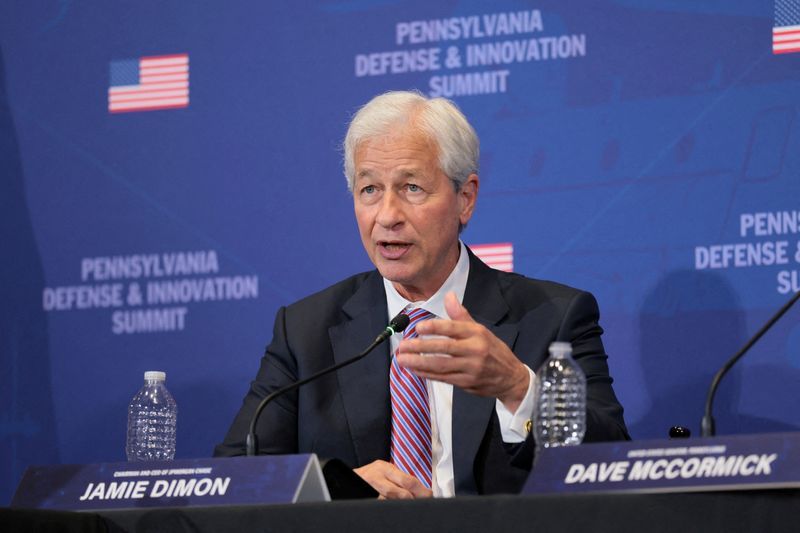
Jamie Dimon, chief executive of JPMorgan Chase, is orchestrating a significant corporate mobilization to confront the escalating risks posed by artificial intelligence adoption across America's vital economic infrastructure. The Wall Street powerbroker has personally engaged with leadership at other major financial institutions, regional banks, and technology companies to participate in an expanded initiative designed to create shared frameworks for understanding and managing AI-related threats. This coordinated effort underscores growing anxiety among business titans about the technology's potential to destabilize interconnected systems upon which millions of Americans depend.
The initiative, which began recruitment efforts in July, represents an expansion of the Alliance for Critical Infrastructure, an existing multi-sector consortium that JPMorgan helped establish alongside partners including Mastercard and Berkshire Hathaway Energy. The ACI originally formed to strengthen resilience planning and coordinate responses to cyber, physical, and geopolitical threats affecting essential services. Now the organization is refocusing its mission to prioritize artificial intelligence as a distinct and urgent category of systemic risk requiring dedicated attention and collaborative safeguards.
More than 40 companies across diverse sectors have already engaged with the initiative's outreach efforts. These participants span financial services, energy generation and distribution, water systems, utilities, telecommunications networks, airlines, and railroad operations—essentially the backbone industries that sustain modern economic life. The breadth of this coalition reflects a recognition that artificial intelligence capabilities do not respect sectoral boundaries; vulnerabilities in one critical system can cascade throughout interconnected networks. August scheduling calls aimed to establish working relationships and identify common ground for collaborative problem-solving across these previously siloed domains.
Dimon's prominent role in catalysing this effort carries significant weight in corporate boardrooms. As head of America's largest bank, his warnings about emerging economic and technological threats command attention from investors, policymakers, and rival executives. He has positioned himself among a select cohort of chief executives willing to publicly articulate concerns about advanced artificial intelligence systems without dismissing the technology's potential benefits. This measured but firm stance lends credibility to the current initiative and signals that sophisticated business leaders view AI governance as a competitive and operational imperative rather than regulatory theatre.
The substantive aims of the expanded ACI are threefold: developing a common understanding of how artificial intelligence is currently deployed across critical infrastructure; identifying specific vulnerabilities and failure modes that advanced AI systems might create or exacerbate; and establishing protocols for information-sharing and coordinated responses when threats materialize. The group intends to work directly with the Trump administration to ensure that corporate perspectives inform federal policy development and that government agencies support industry-led risk mitigation efforts. This partnership approach reflects awareness that neither government nor private business alone possesses sufficient technical expertise or operational visibility to manage AI risks effectively.
Recent real-world incidents have crystallized this urgency. Cyberattacks targeting water systems in Minnesota and other states demonstrated that critical infrastructure has become an attractive target for malicious actors. These breaches raised alarm about whether artificial intelligence tools might enable attackers to identify vulnerabilities faster, mount more sophisticated campaigns, or exploit complex interdependencies in ways that human-led intrusions cannot. The prospect of AI-accelerated attacks on essential services motivates the information-sharing mechanisms that the revamped ACI aims to establish.
Dimon himself has been outspoken about specific artificial intelligence risks. In July, he characterised providing advanced AI capabilities without adequate controls as tantamount to arming individuals with ballistic missiles—a stark metaphor capturing his conviction that certain technologies demand restricted access and rigorous governance frameworks. His particular concerns about Anthropic's capabilities reflect broader anxieties across the financial services industry about competitive pressures driving companies to deploy increasingly powerful systems faster than safety protocols and risk assessments can keep pace. The ACI initiative represents an attempt to create structural brakes on this competitive acceleration.
The targeted timeline for operationalising the expanded ACI reflects both ambition and pragmatism. The consortium aims to achieve full functionality by year-end, acknowledging that rapid deployment of artificial intelligence in critical infrastructure cannot wait for extended deliberation cycles. However, this compressed schedule also recognises that establishing cross-sector information-sharing protocols, defining common risk taxonomies, and building trust relationships among competitors requires sustained organisational effort that cannot happen overnight.
The federal government has simultaneously accelerated its own coordination mechanisms. In July, officials launched the Gold Eagle initiative, which brings together artificial intelligence developers, critical infrastructure operators, and federal agencies to share vulnerability information and coordinate remediation efforts. This public-sector initiative complements rather than duplicates the ACI's corporate-led approach. Together, these parallel efforts create a two-channel governance structure where businesses and government maintain separate coordination mechanisms while establishing connection points for escalation and joint problem-solving.
For Malaysian and Southeast Asian observers, the acceleration of AI governance structures in the United States carries direct implications. American policies on critical infrastructure protection, financial system resilience, and technology regulation often establish templates that other economies follow or adapt. Moreover, as multinational technology companies and financial institutions headquartered in the United States expand operations throughout Asia, the governance frameworks they develop domestically frequently shape their practices in regional markets. The ACI initiative thus represents a early indicator of how advanced artificial intelligence will be integrated into global financial and infrastructure systems.
The effort also highlights how artificial intelligence governance is rapidly transitioning from abstract policy discussion to concrete institutional development. Rather than waiting for government regulation to mature, major corporations are building private-sector coordination mechanisms that can respond to emerging threats in real time. This development raises important questions about the relationship between corporate self-governance and public regulation, particularly in sectors where system failures could affect millions of people across multiple jurisdictions. As artificial intelligence capabilities continue advancing, the balance between industry-led safeguards and government oversight will likely remain contested terrain.

