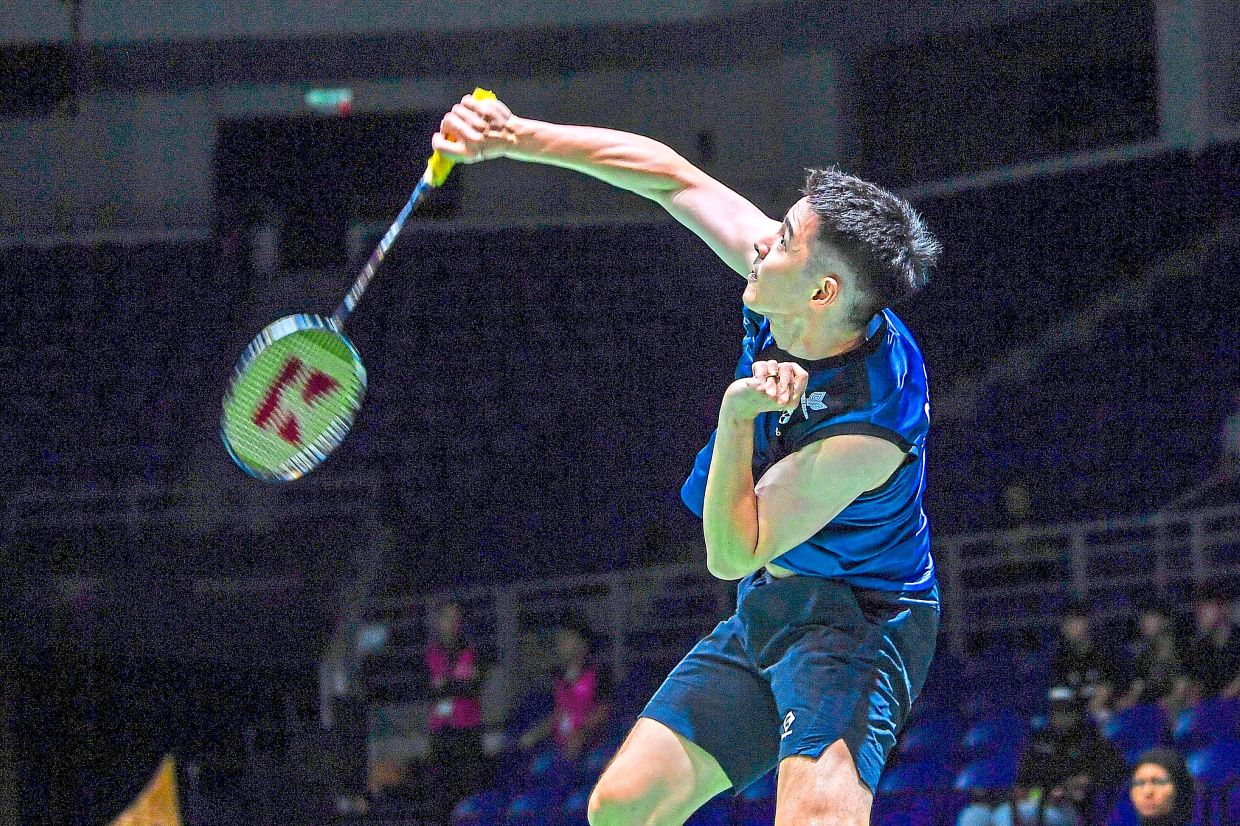
Cheam June Wei's breakthrough tournament at the Korean Masters gathered fresh momentum on Friday when the Malaysian shuttler dispatched Taiwan's Su Li-yang in a competitive quarterfinal encounter at the Asan Yi Sun-sin Gymnasium. The independent player secured a 23-21, 10-21, 21-18 victory over the seventh-seeded opponent to punch his ticket to the semifinals, extending an already impressive run that has captured the attention of Southeast Asian badminton circles.
June Wei's progression at this level represents a significant moment for Malaysian badminton beyond the immediate tournament context. His path through the draw has involved dismantling higher-ranked opposition, beginning with an opening-round upset of Jason Teh, then world number 29, followed by a second-round dispatch of Dong Tianyao of China, who ranked 49th globally at the time. These victories underline June Wei's capacity to handle pressure situations and convert opportunities against established competitors, a quality that remains relatively rare among emerging Malaysian men's singles players competing internationally.
The match against Li-yang exemplified June Wei's tactical maturity and resilience. The opening set demonstrated the tightness of the contest, with both players locked in an extended struggle before June Wei edged ahead 23-21. The Malaysian appeared to capitalize on momentum in the second set, dominating proceedings to take it convincingly 21-10. However, Li-yang's response in the decider illustrated the seventh seed's fighting spirit, forcing June Wei into another tense encounter that ultimately saw the Malaysian prevail 21-18. Such back-and-forth patterns characterize matches between evenly matched opponents and speak to June Wei's growing composure under sustained competitive stress.
Speaking after his victory, June Wei reflected a mindset focused on process rather than outcome. He acknowledged the improbability of his semifinal appearance given his ranking and profile, yet emphasized his satisfaction with the quality of competition he was delivering on court. His commentary about managing rallies point by point, one after another, reveals a deliberate approach aimed at maintaining concentration and avoiding the mental fatigue that often accompanies extended matches against seeded players. This perspective suggests maturation beyond what his previous tournament records might indicate.
Malaysia's performance in doubles disciplines added further depth to the country's Korean Masters showing. The men's doubles pair of Man Wei Chong and Soh Wooi Yik progressed smoothly through their quarterfinal, dismissing India's Krishna Prasad Garaga and Pruthvi Krishnamurthy Roy with a dominant 21-7, 21-8 scoreline that left little doubt about the outcome. The lopsided nature of this victory indicated the Malaysian pair's superior court control and rhythm-setting capabilities throughout the contest.
An all-Malaysian men's doubles clash produced another advancement as Tee Kai Wun and Yap Roy King outclassed the combination of Aaron Chia and Aaron Tai with a convincing 21-12, 21-15 display. This quarterfinal meeting highlighted the depth of Malaysian men's doubles talent, with multiple pairs demonstrating the capacity to compete at Korea's challenging tournament environment. Such internal competition often strengthens the overall standard of the sport domestically, as players continuously adapt to facing different partner combinations and tactical approaches.
The mixed doubles category proved considerably more challenging for Malaysia's representatives at the Korean Masters. Jimmy Wong and Cheng Su Yin fell short against South Korea's second-seeded Kim Jae-hyeon and Jang Ha-jeong, losing 17-21, 18-21 in a quarterfinal matchup where the hosts' seeding appeared justified. The Korean pair's superior court positioning and coordination proved difficult for the Malaysian combination to counter over the match's duration.
Loo Bing Kun and Noraqilah Maisarah Ramdan encountered third-seeded Chinese opponents Gao Jiaxuan and Wu Mengying in their quarterfinal, suffering a 14-21, 15-21 defeat that suggested a significant gap in performance levels between the teams. The magnitude of the score in both sets indicated that Malaysia's pair struggled to establish the rhythm and pressure-building sequences necessary to trouble a higher-ranked combination. Similarly, Chen Tang Jie and Clarissa San experienced elimination after facing Japan's Haruki Kawabe and Kokona Ishikawa, losing 20-22, 17-21 in a more competitive encounter that indicated Malaysia came closer to progressing in this pairing.
The mixed doubles results highlight an area where Malaysian badminton faces ongoing challenges compared to the country's traditional strengths in men's and women's singles as well as men's doubles. The mixed format requires distinct tactical coordination and positioning principles that not all Malaysian pairs have yet mastered at the international elite level. The tournament's outcome in this category may prompt strategic reviews regarding player selection and training methodologies for mixed doubles combinations heading into future tournaments.
June Wei's continued advancement toward the final stages of a prestigious international tournament carries significance for Malaysian badminton's broader competitive landscape. His success suggests that pathways exist for emerging players to challenge established figures and that tournament environments such as Korea's Masters can serve as important development stages for athletes building their international profiles. As he prepares for his semifinal encounter, June Wei's tournament offers hope that consistent international competition can unlock potential in players who might otherwise remain in the shadow of Malaysia's more celebrated shuttlers.

