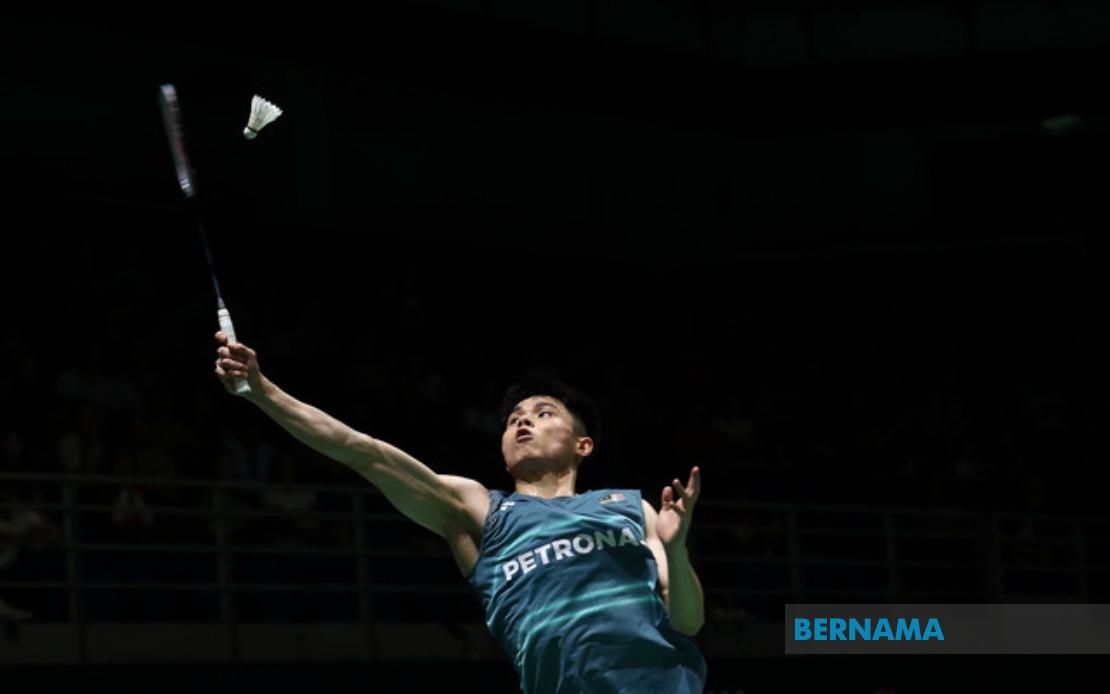
National men's singles shuttler Justin Hoh is approaching his maiden appearance at the 2026 BWF World Championships in New Delhi with pragmatic determination, emphasizing thorough preparation over dwelling on potential obstacles at the prestigious tournament running from August 17 to 23. The 22-year-old Kuala Lumpur-born player has adopted a measured mindset ahead of the competition, focusing his energy on optimizing his readiness rather than speculating about conditions he may encounter at the venue.
Speaking after a training session at the Academy Badminton Malaysia in the capital, Justin underscored the importance of adaptability in international competition, particularly when competing in unfamiliar environments. His approach reflects a maturity beyond his years, recognizing that elite athletes must prepare for multiple scenarios rather than hoping for ideal circumstances. The young shuttler acknowledges that uncertainty is inherent in travelling to different countries for major tournaments, and that successful competitors develop contingency strategies rather than relying on favorable conditions materializing naturally.
Drawing from his previous experiences competing in India, Justin has developed practical insights into what players need to do to navigate the logistical realities of tournaments in the country. He emphasized the importance of self-sufficiency, particularly regarding nutrition and dietary needs, recommending that athletes bring their own food supplies to mitigate potential issues during the championship. This pragmatic advice speaks to real challenges that Malaysian and other international badminton players have faced when competing in Indian venues, where supply chains and food safety standards may differ from what they are accustomed to at home.
India's badminton infrastructure came under significant scrutiny earlier this year when the India Open drew widespread criticism over sanitation conditions at the Indira Gandhi Sports Complex. Reports documented severe issues including bird droppings on practice courts and monkeys freely roaming the facility, incidents that raised questions about venue management and preparedness for international events. These concerns highlight the legitimate challenges that players like Justin must consider when preparing for tournaments in certain locations, though they also reflect broader infrastructure and management issues that extend beyond badminton to Indian sports facilities more generally.
Despite these documented concerns, Justin expressed cautious optimism that organizers would implement improvements before hosting the World Championships, one of badminton's most prestigious events. His balanced perspective acknowledges past shortcomings without assuming they will necessarily recur, reflecting both healthy skepticism and a willingness to give venue organizers the benefit of doubt. This measured tone suggests that Justin and his support team have communicated with tournament officials or other players about anticipated improvements, though he remains prepared for scenarios where conditions may prove challenging.
Regarding the competitive draw and potential opponents, Justin adopted an unbothered stance about the possibility of facing higher-ranked players in early rounds. This psychological approach is crucial for debut appearances at major championships, where unseeded or lower-ranked players often benefit from confidence and freedom from excessive pressure when encountering established competitors. By explicitly stating he is not overly concerned about the draw, Justin signals that his focus remains on his own performance rather than comparative rankings, a mindset that can paradoxically improve outcomes against favored opponents.
The young shuttler also reflected candidly on the unique pressures facing Malaysian men's singles players, acknowledging the constant public scrutiny and commentary—both constructive and critical—that accompanies their performances. Rather than viewing this as a burden, Justin frames public attention as motivational, channeling the intensity of expectations into a desire to prove himself capable. This perspective speaks to the broader context of Malaysian badminton, where the men's singles category has historically struggled to produce champions at the world level, placing particular pressure on emerging talents to revitalize the nation's competitiveness in this category.
When asked about medal prospects, Justin demonstrated appropriate calibration of expectations for a first World Championships appearance. While not discounting the possibility of winning a medal, he characterized the tournament primarily as a learning experience rather than setting unrealistic performance benchmarks. This balanced outlook reflects coaching guidance and maturity; players who overestimate their readiness at debut major championships often experience psychological setbacks, whereas those who approach events as developmental opportunities tend to perform better and gain valuable experience for future tournaments.
The strategic importance of the 2026 World Championships extends beyond Justin's individual performance to broader implications for Malaysian badminton. The tournament in New Delhi provides an opportunity to assess the current generation of Malaysian male singles players and to identify talent that can contribute to the national program's long-term development. Justin's participation, preparation methods, and performance will offer insights into whether Malaysia's badminton infrastructure and coaching systems are effectively nurturing competitive players capable of eventually contending for medals at world level.
For Southeast Asian badminton more broadly, the New Delhi World Championships will serve as a benchmark for regional competitiveness. Malaysia has historically been a badminton powerhouse, particularly in men's doubles and mixed doubles categories, but the men's singles division has proven more challenging to dominate. Justin Hoh and his generation of players represent efforts to rebuild Malaysia's presence in this category, with success dependent on factors ranging from training quality and injury management to psychological resilience and competitive experience at progressively higher levels of international competition.
Justin's preparation narrative also highlights practical considerations that often receive insufficient attention in sports commentary. Issues such as dietary consistency, venue logistics, climate adaptation, and psychological readiness are often overlooked when analyzing competitive outcomes, yet they frequently distinguish successful international competitors from those who falter. By openly discussing these considerations, Justin and Malaysia's badminton community demonstrate a realistic understanding of what elite international competition demands, moving beyond romanticized notions of athletic talent to embrace the unglamorous preparation that underlies top-level performance.

