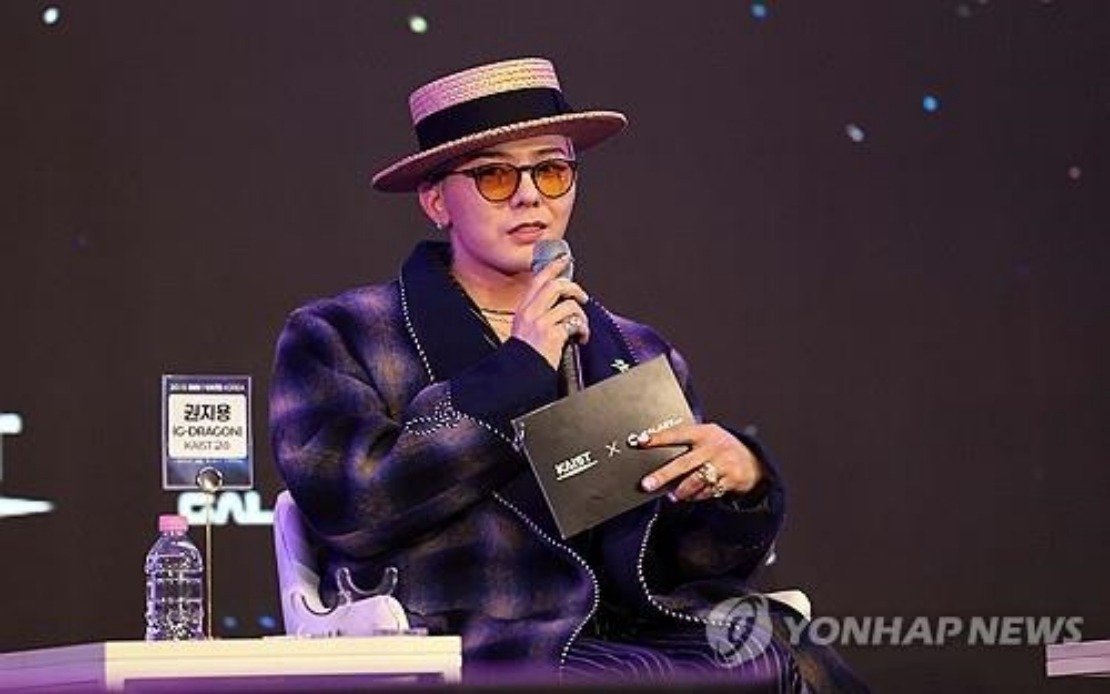
South Korea has chosen K-pop superstar G-Dragon as the public face of a landmark international gathering that will showcase the country's commitment to cultural preservation. The 37-year-old musician, whose legal name is Kwon Ji-yong, has been appointed honorary ambassador for the 48th UNESCO World Heritage Committee session scheduled to take place in Busan from July 19-29, marking a significant moment as the country hosts this prestigious gathering for the first time in decades.
The Korea Heritage Service justified the appointment by highlighting G-Dragon's substantial influence across multiple cultural domains that extend well beyond the boundaries of commercial pop music. Officials emphasised that his profile as an artist encompasses broader contributions to contemporary arts discourse, combined with his increasing involvement in philanthropic work and social advocacy. The agency characterised him as an "ideal partner" for elevating global understanding of the World Heritage Committee's crucial mandate, which determines how the world's most significant cultural and natural sites are formally recognised, protected, and managed under UNESCO auspices.
This appointment carries particular symbolic weight given South Korea's long engagement with international heritage frameworks. The nation formally joined the World Heritage Convention in 1988 and has subsequently accumulated multiple inscribed sites reflecting its rich cultural legacy. By hosting the committee session for the first time since joining the convention nearly four decades ago, South Korea demonstrates its maturation as a steward of global heritage initiatives. The choice of G-Dragon reflects how the country seeks to marry cultural diplomacy with contemporary soft power strategies that resonate with younger, globally-connected audiences.
G-Dragon's credibility for this role has been substantially strengthened by his recent pivot toward public-interest work. In 2024, he transferred his music copyrights to establish the JusPeace Foundation, a charitable organisation whose distinctive name deliberately blends "justice" and "peace" to articulate its dual focus. The artist currently holds the position of honorary chairman, signalling his active commitment beyond ceremonial involvement. This foundation represents a deliberate repositioning of his career legacy, moving from entertainment revenue generation toward using his cultural capital for social benefit and advocacy.
The ambassadorial duties will include promoting a joint initiative titled "Heritage in Peace," which the JusPeace Foundation and UNESCO will jointly launch coinciding with the Busan session. This campaign represents a strategic effort to broaden participation in heritage protection beyond government bodies and institutional actors to encompass individuals, private enterprises, and municipal authorities. By framing heritage preservation as a collective responsibility requiring diverse stakeholders, the campaign acknowledges contemporary challenges to world heritage sites that no single entity can adequately address alone.
The financial dimension of the campaign underscores its practical ambitions. Revenue generated through the "Heritage in Peace" initiative will be channelled directly into the World Heritage Fund, a dedicated financial mechanism that supports protection and restoration efforts at inscribed sites. This funding proves particularly critical given the mounting threats confronting global heritage. Armed conflicts in various regions have destroyed or endangered irreplaceable sites, while climate change and extreme weather events increasingly jeopardise the physical integrity of culturally significant locations requiring urgent intervention and resources.
G-Dragon's involvement will materialise through multiple promotional channels, including specially produced video content and participation in campaign events. His public messaging will emphasise the philosophical connection between cultural preservation and broader peace initiatives, positioning heritage protection as integral to conflict resolution and social cohesion. This framing resonates with contemporary discourse about culture's role in diplomacy and understanding across divided communities.
The artist's prior experience in high-profile ambassadorial roles demonstrates his capability for such responsibilities. He previously served in a similar capacity during the Asia-Pacific Economic Cooperation summit held in the southeastern city of Gyeongju last year, where he not only lent his name but actively performed at an official welcome reception for participating national leaders. Such direct participation distinguished him from purely nominal ambassadors, indicating genuine commitment to representative duties beyond publicity value.
For regional observers, particularly those in Southeast Asia, G-Dragon's appointment illustrates broader trends in how East Asian nations leverage popular culture as diplomatic tools. The strategy reflects recognition that celebrities with substantial international followings can communicate complex institutional messages to demographic groups that might otherwise disengage from heritage and conservation discussions. This approach proves especially effective in reaching younger generations whose engagement with cultural preservation initiatives may otherwise remain limited.
The Busan session carries significance for the entire Asia-Pacific region, as the committee's decisions affect heritage recognition and protection standards that influence member states throughout the region, including Southeast Asian nations. The UNESCO body determines which sites achieve World Heritage status, a designation that brings international visibility, tourism opportunities, and access to global funding mechanisms. The committee's work directly impacts how countries throughout Asia approach cultural preservation strategies and compete for international recognition of their heritage assets.
G-Dragon's selection also reflects evolving perceptions about celebrity activism and public intellectual roles in Asian contexts. Rather than viewing entertainment figures as separate from serious policy discourse, South Korean authorities have embraced the notion that cultural ambassadors can meaningfully advance institutional agendas when properly aligned with substantive missions. The appointment suggests confidence that his personal credibility, philanthropic commitments, and artistic credentials provide sufficient foundation for meaningful contribution to heritage advocacy.
Looking ahead, the campaign's success may influence how other international organisations approach ambassador recruitment, potentially establishing precedents for strategic partnerships between UNESCO and cultural figures possessing both significant platforms and demonstrated commitment to public service. For Malaysian and Southeast Asian readers following these developments, the initiative demonstrates how heritage protection increasingly operates as a collaborative enterprise spanning government, international bodies, private foundations, and celebrated cultural figures working toward shared conservation objectives.

