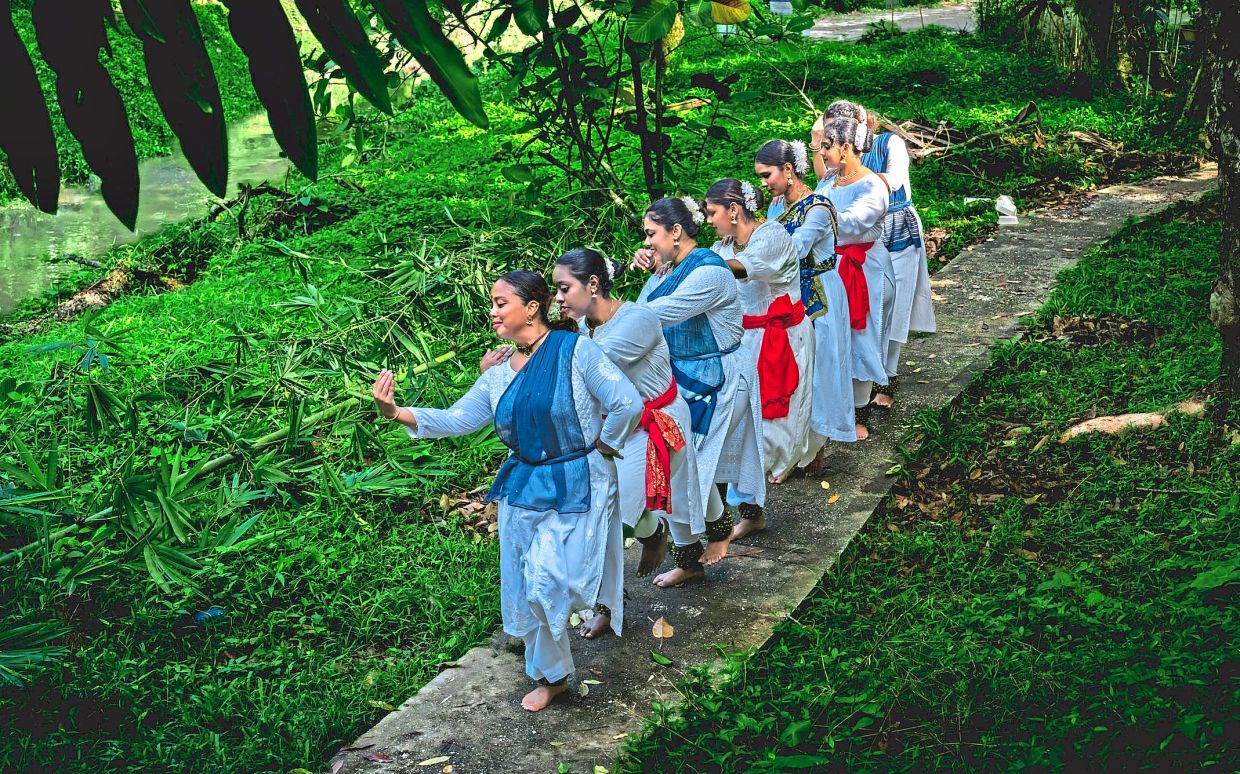
Three decades of artistic persistence have positioned Kalpana Dance Theatre (KDT) as a fixture in Malaysia's performing arts landscape, navigating financial uncertainties and industry volatility much like a river carving through terrain. The Kuala Lumpur-based company reaches this significant milestone by combining its classical art form with contemporary environmental consciousness, reflecting founder-director Shangita Namasivayam's philosophy that artistic survival demands constant evolution. This approach has enabled KDT to remain relevant across generations while maintaining the integrity of bharatanatyam dance, a classical Indian tradition rooted in South Indian temple culture.
Shangita's vision for the anniversary production centres on two of India's most spiritually and economically vital waterways—the Ganga in northern India and the Kaveri in southern India. Beyond their religious significance in Hindu tradition, these rivers function as lifeblood systems for surrounding communities, sustaining agriculture, power generation and trade networks while inspiring centuries of folk and classical artistic expression. The choice to spotlight these specific rivers allows Shangita to weave mythology, regional cultural practices and philosophical depth into a narrative framework that speaks to contemporary audiences. By grounding the performance in recognizable geographical and spiritual references, the production creates a bridge between timeless cultural wisdom and urgent modern concerns.
The conceptual framework transcends simple artistic homage. Shangita deliberately selected the river theme to address what she identifies as critical neglect of planetary water resources among younger generations. Her articulation—"The Ganga is the shore of compassion, the Kaveri is the mother of prosperity"—positions these waterways as metaphorical repositories of human values and ecological necessity. This philosophical approach transforms the performance from cultural exhibition into consciousness-raising exercise, challenging audiences and participants alike to recognize water not merely as a utilitarian resource but as essential to spiritual and physical wellbeing. The production thus functions simultaneously as art, education and advocacy.
To operationalize this environmental dimension, KDT entered into partnership with The Alliance of River Three (ART!), a Malaysian volunteer-led conservation organization founded in 2018 by Kennedy Michael. ART! focuses on rehabilitating the Klang River through community-developed River Three Parks, routine clean-up initiatives and systematic ecosystem restoration efforts. The organization's recognition as a Golden Hearts Awards winner in 2020 affirmed its credibility and impact within Malaysian civil society. Through this collaboration, KDT dancers have engaged directly in fieldwork at Taman Melawati River Three SDG Park and Mid Valley River Three SDG Park since January, experiencing firsthand the consequences of river degradation and the labour involved in environmental remediation.
This hands-on involvement represents a pedagogical innovation within classical dance training. Rather than confining instruction to studio settings, Shangita has integrated environmental activism into the dancers' artistic development. Young performers between six and 62 years old—including dancers with disabilities—have gained tactile understanding of water pollution and restoration work typically absent from traditional bharatanatyam curricula. Shangita's observation that this generation lacks experience with manual labour and environmental engagement underscores how arts organizations can expand their social contribution beyond entertainment. The experience transforms dancers into environmental ambassadors who internalize ecological responsibility not through lectures but through embodied participation.
The production itself features 54 performers across an unusually wide age range and ability spectrum, deliberately rejecting the convention of featured soloists or technical virtuosos. This egalitarian approach to casting reflects contemporary thinking about inclusive performance while honouring the collective dimensions of classical Indian dance traditions. The 90-minute presentation incorporates Tamil-language script with English narration, accommodating Malaysia's multicultural audience and acknowledging the linguistic diversity of bharatanatyam practitioners. This bilingual approach facilitates cross-cultural comprehension without diluting the authenticity of the source tradition.
The international creative team—comprising choreographer PT Narendran, musician OS Arun and scriptwriter Dr Va Ve Subramanian, all based in Chennai—brings decades of collaborative history with Shangita. This longstanding relationship enables what she describes as a "comfort in familiarity" that accelerates artistic decision-making and deepens conceptual coherence. Rather than importing entire creative teams to Malaysia, the production strategically positions Malaysian dancers as apprentices and scene partners to international masters, creating mentorship opportunities that extend beyond technical refinement. Young Malaysian performers gain exposure to globally recognized artists, building professional networks and deepening their understanding of bharatanatyam's evolving possibilities and technical vocabularies.
The musical dimension involves 30 ensemble members, though logistical constraints prevent bringing the complete international music team to Kuala Lumpur. This pragmatic limitation has prompted creative solutions that simultaneously develop local musical capacity. Younger Malaysian musicians gain exposure to established professionals, expanding the country's pool of bharatanatyam accompanists at a time when classical Indian music traditions face generational transmission challenges throughout Southeast Asia. Such collaborations address a critical gap in Malaysia's arts infrastructure by creating pathways for emerging musicians to study alongside established practitioners.
Financial sustainability remains the persistent challenge underlying Shangita's work. Performing arts organizations throughout the region struggle with inadequate funding structures that force artists into perpetual fundraising cycles. Despite these constraints, Shangita prioritizes creating performance opportunities for her students, recognizing that stage experience constitutes non-negotiable pedagogical content. The distinction she draws between classroom instruction and performance contexts is pedagogically sound: students develop discipline, focus and emotional maturity through live performance in ways that studio training alone cannot replicate. This conviction compels her to overcome resource limitations repeatedly, channelling passion into problem-solving.
The August 8 performance at the Shantanand Auditorium within Temple of Fine Arts in Kuala Lumpur represents more than anniversary celebration or showcase of technical proficiency. It synthesizes three interconnected dimensions—artistic excellence grounded in classical tradition, environmental consciousness addressing planetary resource crises, and mentorship ecosystems connecting Malaysian performers with international practitioners. By positioning bharatanatyam as a vehicle for exploring contemporary ecological anxieties through ancient spiritual frameworks, Shangita demonstrates how classical performing arts retain relevance precisely when artists courageously adapt traditions to address current exigencies. The production models how cultural institutions can serve simultaneously as artistic laboratories, environmental advocates and educational platforms without compromising aesthetic integrity or traditional knowledge systems.
For Malaysian audiences accustomed to perceiving classical Indian arts as historically fixed or culturally insular, this production offers compelling counter-evidence. The collaboration between KDT, international artists and local environmental organizations illustrates how transnational artistic networks can strengthen rather than dilute cultural specificity. The active involvement of diverse-aged and differently-abled performers normalizes inclusive participation while the partnership with ART! demonstrates that artistic institutions can meaningfully contribute to environmental restoration beyond tokenistic acknowledgment. As Southeast Asian countries grapple with water scarcity, river pollution and ecosystem degradation, performances that seamlessly integrate cultural expression with environmental activism provide models for how arts sectors can contribute to urgent social and ecological challenges.

