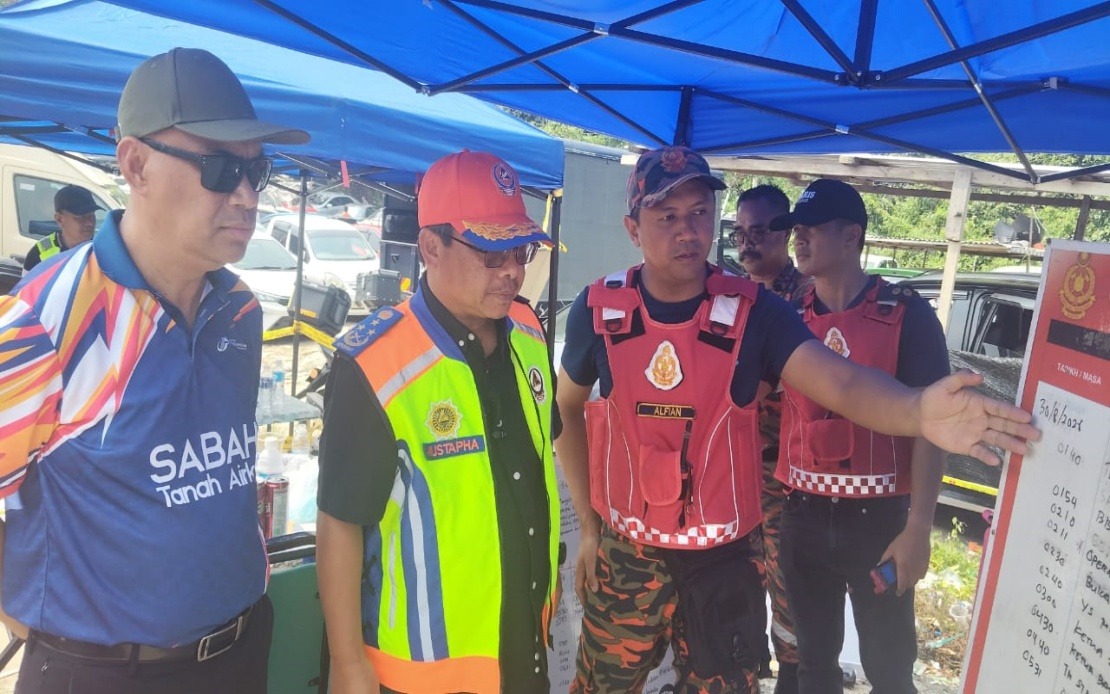
A major fire in Kampung Lok Buta, Kota Kinabalu, has prompted authorities to establish two temporary relief centres at Dewan Kampung Likas and Dewan Damai to accommodate and coordinate assistance for more than 200 displaced residents. The blaze, which erupted in the early hours of August 30, destroyed over 200 houses and claimed the lives of three children, marking one of the year's most serious residential fire incidents in Sabah.
Minister in the Prime Minister's Department (Sabah and Sarawak) Datuk Mustapha Sakmud announced the relief operations following a site inspection, emphasising that the centres would serve as vital coordination hubs for victim registration and donation distribution. The Kota Kinabalu City Hall (DBKK) has formally declared the affected area a disaster zone, a designation that unlocks access to emergency response protocols and streamlines resource allocation to those impacted.
The three victims have been identified as Nana Abdullah, aged 4, her brother Mohd Asrul Abdullah, aged 6, and their cousin Nurfarahdilah Mohd Tajihah, aged 8. The deaths occurred at approximately 1.40 am, and represent a tragic loss that extends beyond material destruction to affect the emotional and psychological wellbeing of the entire community. Such incidents underscore the vulnerability of densely populated residential areas, particularly those housing economically disadvantaged families in rapid urbanisation zones.
Mustapha, who represents the Sepanggar parliamentary constituency, has committed to liaising with the Ministry of Education to identify and support students from affected households who attend primary schools, secondary institutions, and technical and vocational training programmes. This multi-tiered educational support framework reflects recognition that displacement and trauma can derail academic progress and long-term prospects for young people already facing socioeconomic challenges.
During his visit, Mustapha was accompanied by DBKK Mayor Datuk Seri Dr Sabin Samitah, who chairs the District Disaster Management Committee. The presence of municipal leadership signals the severity with which local government is treating the incident and suggests that recovery planning will receive appropriate administrative priority and budgetary attention. Coordination between state and federal authorities will be essential in ensuring comprehensive assistance reaches vulnerable households.
A significant development in the response involves plans to brief Prime Minister Datuk Seri Anwar Ibrahim and Sabah Chief Minister Datuk Seri Hajiji Noor during an upcoming Malaysia Agreement 1963 (MA63) Implementation Action Council meeting. This forum will enable the DBKK mayor to present detailed assessments of the fire's impact and outline medium and long-term reconstruction requirements. Elevating the issue to federal-state leadership levels indicates that disaster response will transcend routine municipal management and receive high-level political oversight.
Mustapha has announced that initial financial assistance will be extended to families of the three deceased children, though specific amounts and disbursement timelines remain to be clarified. Such immediate support addresses urgent immediate needs while longer-term rehabilitation frameworks are developed. The gesture also acknowledges the disproportionate trauma experienced by bereaved families amid the broader community disaster.
The establishment of relief centres at designated community facilities demonstrates a structured approach to crisis management. These physical spaces serve multiple functions: they centralise information dissemination, prevent duplication of aid efforts, facilitate needs assessment, and provide secure environments where vulnerable individuals, particularly children and elderly residents, can access basic services. The centres will operate as intersectional points where government agencies, non-governmental organisations, and community volunteers coordinate their activities.
For Malaysia and the broader Southeast Asian region, the Kampung Lok Buta incident exemplifies ongoing vulnerabilities in informal settlements where fire safety infrastructure remains inadequate and population density creates rapid spread scenarios. Urban planning and building code enforcement in rapidly expanding cities like Kota Kinabalu require substantial strengthening to prevent similar tragedies. The disaster also highlights how displacement disproportionately affects the most economically vulnerable populations, potentially exacerbating existing inequalities unless recovery support is carefully targeted and sustained.
The coordinated response involving multiple government levels and agencies demonstrates institutional capacity for disaster management, yet also exposes systemic gaps in prevention and preparedness. Future strategies should prioritise not merely reactive relief provision but proactive fire safety education, improved building standards in informal settlements, and community-based early warning systems. The Kampung Lok Buta fire serves as a sobering reminder that urbanisation without corresponding investments in public safety and social infrastructure creates conditions where tragedy becomes preventable yet recurring.
Community resilience will depend on sustained engagement beyond the immediate relief phase. Psychological support services, livelihood restoration programmes, and phased housing reconstruction must follow the initial emergency response. DBKK and relevant state agencies will need to balance rapid recovery with careful planning to ensure that reconstructed settlements incorporate improved safety standards. The involvement of Prime Minister Anwar Ibrahim and Chief Minister Hajiji Noor signals political commitment to comprehensive recovery, though translating such commitments into tangible improvements requires sustained resource allocation and inter-agency coordination over extended periods.

