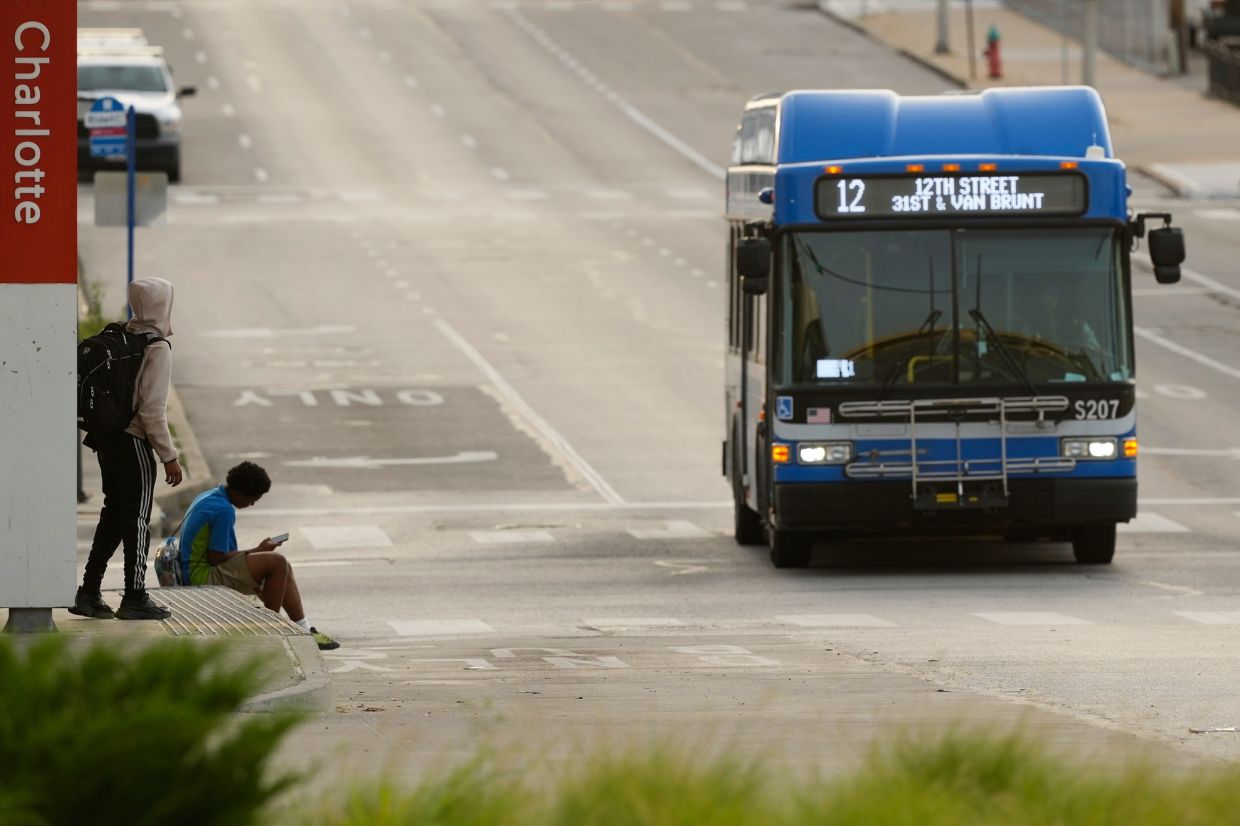
Authorities in Kansas City, Missouri, are moving forward with a controversial initiative to install facial recognition cameras on public buses, designed to scan passengers against databases of banned riders, missing persons and individuals flagged by law enforcement. The scheme represents one of the first systematic attempts to use artificial intelligence-powered facial identification on a major US public transportation network, positioning the midwest city at the forefront of an intensifying national conversation about whether technological surveillance in public spaces justifies the erosion of personal privacy.
The deployment has crystallised a fundamental tension in modern urban governance: the promise of security technology against mounting concerns about unchecked algorithmic surveillance. Privacy advocates warn that once such systems become normalised on transit infrastructure, regulatory safeguards often prove ineffective, and the technology's scope tends to expand well beyond its original purpose. Meanwhile, city administrators and law enforcement representatives argue that security cameras are already ubiquitous in public spaces, and facial recognition simply represents an incremental enhancement of existing capabilities rather than a radical departure.
Jay Stanley, a senior analyst with the American Civil Liberties Union's Project on Speech, Privacy and Technology, has characterised the Kansas City initiative as crossing a significant threshold in surveillance practice. He notes that live facial recognition trained on crowded public spaces represents unprecedented territory in the United States over the past quarter-century. The distinction matters: while police have historically used facial recognition to identify suspects in stored video footage after crimes occur, real-time screening of all passengers aboard buses represents a fundamentally different surveillance model, one that subjects every traveller to algorithmic scrutiny regardless of whether they have committed any offence.
SafeSpace Global, a Knoxville, Tennessee-based technology firm, will operate the system. The company previously deployed facial recognition software in nursing homes to alert staff when residents wandered outside, and later expanded into correctional facilities and school security. Kansas City buses mark the company's inaugural venture into public transportation, a sector the firm views as a natural extension of its existing portfolio. Chief executive Scott Boruff has sought to allay privacy concerns by emphasising that facial data is discarded if no match against active alerts is detected, with only standard video footage retained on local servers for up to five years.
Typically, Missouri state government would have contributed funding to such a municipal infrastructure project. However, the state declined to support the initiative due to reservations specifically about the facial recognition component, forcing the city to rely instead on local appropriations and federal transportation grants. Tyler Means, the transportation authority's chief mobility and strategy officer, has adopted a measured tone regarding privacy objections, characterising facial recognition as merely an extension of existing camera technology rather than a fundamental shift in surveillance practice. He predicted that public anxiety about the technology would dissipate once residents recognised that day-to-day experience had not materially changed.
Yet this reassurance fails to address the core concern articulated by surveillance critics. Stanley contends that facial recognition systems, once deployed, almost inevitably expand beyond their original parameters. What begins as a watch list limited to dangerous offenders or missing persons can easily broaden to encompass other categories of individuals as political pressures, bureaucratic mission creep, and technical capabilities evolve. Historical precedent offers cautionary examples. Tampa, Florida attempted to deploy facial recognition surveillance in its Ybor City neighbourhood following the 9/11 attacks specifically to identify crime suspects, but faced immediate public backlash and abandoned the programme. More recently, New Orleans police secretly utilised facial recognition surveillance cameras operated by private contractors in direct violation of municipal ordinances explicitly prohibiting such technology.
Detroit offers a more nuanced illustration of the politics surrounding facial recognition. In 2016, the police department partnered with gas stations and liquor stores to install cameras capturing live video feeds of violent crimes, which were transmitted directly to law enforcement. After encountering community resistance, then-police chief James Craig modified operational protocols governing facial recognition deployment rather than eliminating the system entirely. Craig continues to advocate for the technology, contending that cities possess effective tools for constraining misuse through robust policy frameworks, transparent governance structures, and genuine accountability mechanisms. He argues that abandoning facial recognition altogether would represent a counterproductive capitulation that forfeits legitimate security benefits.
The Kansas City project encountered significant delays before its anticipated spring launch coinciding with World Cup matches. Part of the postponement stemmed from technical requirements—specifically the need to upgrade Wi-Fi routers across the bus fleet to accommodate both facial recognition cameras and a new fare collection system simultaneously. The broader setback involved financial complications after state funding fell through, exemplifying the obstacles confronting American municipalities seeking to implement facial recognition infrastructure. Nevertheless, Means expressed confidence that the programme would ultimately proceed, potentially expanded to encompass as many as thirty buses rather than the original nine-bus pilot initiative.
Ryana Parks-Shaw, a Kansas City Council member serving as mayor pro tem, characterised the delay positively, emphasising that adequate deliberation and careful implementation matter more than rapid deployment. She stressed that any facial recognition programme must be pursued transparently with explicit safeguards and clear boundaries on permissible uses. This perspective reflects growing awareness among elected officials that public opinion regarding surveillance technology remains volatile, and that administrative legitimacy requires demonstrable commitment to meaningful constraints.
For the World Cup hosting period, Kansas City shifted to traditional security approaches, deploying approximately forty additional police officers to patrol bus stops and transit facilities. This reversion to labour-intensive human policing represents the practical alternative when algorithmic surveillance remains unavailable or delayed. The contrast illuminates a broader question for Southeast Asian cities and other emerging markets watching this debate: whether efficiency gains from facial recognition technologies justify the governance vulnerabilities and privacy erosions they introduce. As Kansas City continues deliberating its facial recognition rollout, policymakers globally face mounting pressure to develop frameworks that balance legitimate security interests against individual privacy protections in increasingly surveilled urban environments.

