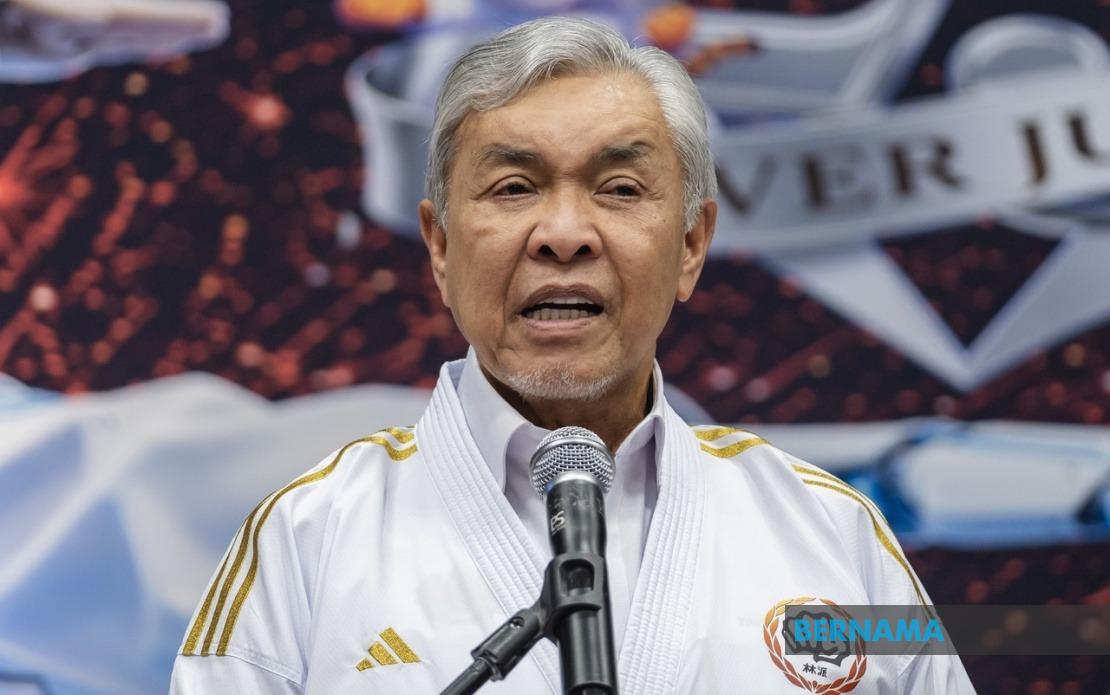
The Malaysian government appears set to formally consider karate as an official sport within the Malaysian Schools Sports Council (MSSM) championships, with Deputy Prime Minister Datuk Seri Dr Ahmad Zahid Hamidi confirming that the proposal will reach Cabinet level within days. Speaking at the International Open Karate Championship 2026 in Kuala Lumpur on June 26, Ahmad Zahid indicated that the matter would be escalated to Education Minister Fadhlina Sidek for formal evaluation, signalling serious momentum behind a push that has been gaining support within Malaysia's school sports ecosystem.
The timing of this announcement comes as the International Open Karate Championship celebrates its 25th year, drawing an impressive contingent of more than 1,850 competitors representing 17 nations to Titiwangsa Stadium. This level of international participation underscores karate's growing prominence and provides a visible platform for advocates seeking expanded recognition of the sport within Malaysia's institutional sports framework. Ahmad Zahid, whose Cabinet Committee on Sports Development oversees such strategic decisions, framed the upcoming Cabinet discussion as a collaborative process involving multiple government stakeholders with distinct responsibilities for school sports policy.
The push for karate's inclusion reflects a broader sentiment among grassroots sports administrators who view the MSSM as an essential pathway for identifying and nurturing athletic talent at the secondary school level. Datuk P. Thiagu, president of the Putrajaya Karate Association and organiser of the international tournament, articulated this perspective clearly, arguing that karate's presence in the MSSM calendar would substantially strengthen talent pipeline development. His remarks highlight a fundamental challenge in Malaysian school sports: determining which disciplines merit institutional support and structured competition frameworks that can expose young athletes to organised pathways and competitive opportunities.
Currently, karate exists within Malaysian schools largely through informal clubs and voluntary association involvement, without the standardised competitive structure that MSSM affiliation would provide. This structural gap has constrained the sport's reach and prevented systematic identification of young talent who might otherwise progress to representative and professional levels. Thiagu's assertion that karate has already become popular in Malaysian schools suggests the sport has achieved sufficient penetration and student interest to justify formalised institutional recognition, even without current MSSM status.
The strategic advantage of MSSM inclusion extends beyond mere sporting recognition. Association with Malaysia's premier school sports council would confer legitimacy, allocate dedicated championship slots, establish standardised competition rules across states, and potentially unlock government funding mechanisms currently unavailable to non-listed sports. These structural supports prove essential for sports seeking to develop sustainable competitive environments and produce athletes capable of representing Malaysia at national and international levels. Without such institutional scaffolding, even popular sports struggle to maintain consistent development pathways.
Karate's position in the global sporting landscape has been significantly elevated by its inclusion in the Olympic Games, having made its debut at the Tokyo 2020 Olympics. This international validation has arguably increased advocacy pressure for expanded domestic recognition within Malaysia's education system. Countries across Southeast Asia have responded to Olympic inclusion by integrating karate more prominently into school sports systems, creating competitive environments that mirror international standards. Malaysia's potential move would align the nation with this regional trend toward Olympic sport integration within educational frameworks.
The Cabinet review process signals that karate's inclusion is not merely a technical administrative matter but involves considerations of education policy, resource allocation, and institutional priorities. Education Minister Fadhlina Sidek's involvement underscores that school sports development falls within educational strategy rather than being handled purely through sports ministry channels. This institutional arrangement reflects Malaysia's dual-mandate approach to school sports, where education authorities maintain significant oversight over youth athletic development alongside dedicated sports bodies.
Implementation of karate within MSSM would require establishing state-level competitions, standardising technical requirements and judging criteria, training administrators, and coordinating with schools to ensure participation capacity. The logistical dimensions of such integration should not be underestimated; successful MSSM sports require robust administrative infrastructure and widespread school participation. Thiagu's call for near-term implementation suggests karate advocates believe existing school interest and association infrastructure could support relatively rapid integration once formal approval is granted.
The decision carries implications for other sports seeking MSSM recognition. A positive Cabinet determination on karate would establish precedent and potentially trigger similar petitions from sports federations currently operating outside the MSSM framework. The criteria for inclusion—popularity among students, international recognition, infrastructure readiness—would inform future decisions about which emerging sports warrant institutional support. This gatekeeping function means the Cabinet's karate decision will reverberate across Malaysia's broader school sports landscape.
For Malaysian karate practitioners and associations, this announcement represents tangible progress toward long-held objectives of institutional recognition and development support. The government's apparent receptiveness, as demonstrated by Ahmad Zahid's public commitment to Cabinet consideration, suggests political will exists for karate's advancement. However, formal Cabinet approval remains the crucial juncture where policy intentions translate into actionable sports development strategy. Until that determination materialises, karate's path to MSSM inclusion remains promising but not yet assured.

