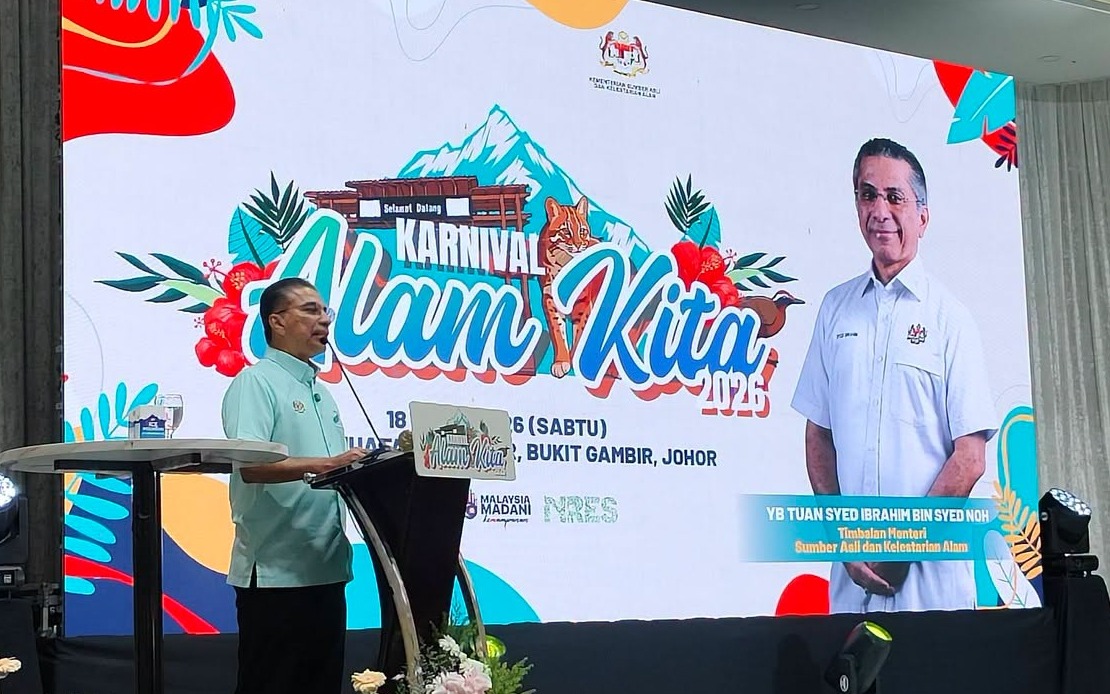
The Ministry of Natural Resources and Environment (NRES) has intensified its push to embed environmental consciousness into Malaysian households through Karnival Alam Kita (KAK) 2026, a major sustainability campaign now underway in Johor. Described as a direct engagement effort, the initiative seeks to translate often-abstract environmental concepts into tangible, actionable practices that residents can implement within their homes and communities. The campaign reflects growing recognition within government that sustainable living must transition from policy rhetoric to become woven into the fabric of daily Malaysian life.
Deputy NRES Minister Syed Ibrahim Syed Noh articulated the philosophical underpinning of this year's carnival during its launch ceremony at Dewan Muafakat Bukit Gambir. Rather than limiting sustainability messaging to technical or sectoral concerns—rare earth elements extraction, electronic waste management, or forestry policy—the ministry has deliberately reframed the narrative to emphasise how environmental stewardship connects to personal wellbeing and household economics. This linguistic recalibration acknowledges a persistent communication gap between environmental agencies and the general public, where complex sustainability concepts often fail to resonate beyond educated urban populations. By positioning green practices as accessible household decisions rather than abstract national imperatives, the ministry seeks to broaden the constituency of environmental action.
Central to this year's carnival framework is the concept of shared responsibility, deliberately extending accountability beyond government institutions. Syed Ibrahim stressed that environmental stewardship cannot be shouldered by NRES alone, but demands participation beginning at the domestic level—within families, extending through educational institutions, permeating workplaces, and ultimately strengthening entire communities. This devolution of environmental ownership reflects a pragmatic recognition that behavioural change at scale requires cultural shifts that government mandates alone cannot enforce. The framing invites Malaysian citizens to view themselves as active agents in sustainability rather than passive recipients of ministerial directives.
Paralleling the carnival launch, NRES unveiled the Young Environmental Ambassador Programme, a structured initiative targeting secondary school students for environmental leadership training. The programme aims to cultivate a cohort of youth advocates capable of cascading sustainability messages through peer networks and family structures, leveraging the persuasive power of younger generations over older household members. This intergenerational approach recognises that environmental consciousness-building often requires trusted messengers from within communities rather than external authority figures. For Malaysian education stakeholders, the programme represents an emerging bridge between curriculum-based environmental education and community-based behaviour change, potentially offering schools mechanisms to extend their pedagogical impact beyond classroom walls.
The carnival's practical dimension crystallised through KUDAH, a waste collection and sorting initiative implemented collaboratively by the NRES Lestari Squad and private sector partner Bateriku (M) Sdn Bhd. During inaugural activities, the operation recovered 37 kilogrammes of accumulated waste, notably including 17.3 kilograms of plastic bottles. The campaign quantified environmental impact through a carbon accounting lens, translating collected materials into tangible emissions reduction—the recovered plastics alone prevented approximately 43.2 kilograms of carbon dioxide equivalent from entering the atmosphere, equivalent to avoiding greenhouse gas emissions from roughly 100 kilometres of petrol vehicle operation. This metric-driven communication strategy bridges the psychological distance between individual actions and planetary consequences, making environmental impact viscerally comprehensible to ordinary citizens.
The partnership between NRES and Bateriku (M) Sdn Bhd underscores an emerging feature of Malaysian environmental policy: institutional collaboration between government agencies and commercial enterprises in sustainability delivery. This configuration grants private sector organisations expanded roles in environmental governance beyond compliance frameworks, positioning them as collaborative partners in public behaviour change. For Malaysian businesses increasingly subject to environmental and sustainability reporting requirements, such partnerships offer legitimacy pathways and operational visibility that differentiate them within competitive markets. The public-private arrangement simultaneously reduces fiscal burden on government whilst leveraging commercial distribution networks and brand influence to amplify messaging reach.
KAK 2026's programmatic scope extends across multiple environmental domains through interactive exhibitions and targeted campaigns addressing electronic waste recycling and used cooking oil collection. These specific waste streams represent particularly salient household-level sustainability challenges across Malaysian communities—mobile phone obsolescence and regular oil replacement generate continuous household waste streams that frequently enter unmanaged disposal pathways. By creating dedicated collection mechanisms and consumer awareness around these specific materials, the carnival addresses environmental problems at their source rather than attempting remediation further down waste management chains. This granular approach to sustainability problems often proves more effective than broad exhortations towards abstract environmental consciousness.
The carnival's inclusion of biodiversity awareness exhibitions recognises that environmental stewardship extends beyond waste management into ecosystem preservation and species protection. For Malaysian participants, particularly those in urban centres where direct biodiversity interaction may be limited, such exhibitions serve educational functions in demonstrating ecological interconnectedness and the cascading consequences of habitat degradation. Complementary sales of green products create market mechanisms whereby environmental preference translates into commercial transactions, simultaneously building consumer demand for sustainable alternatives whilst generating revenue for vendors offering such products. This market-based approach acknowledges that behaviour change often requires structural enablement—consumers cannot adopt sustainable products if supply chains remain underdeveloped or pricing renders alternatives unaffordable.
The government's emphasis on making sustainability "a language closer to daily life" reflects evolving understanding of environmental communication within Malaysian policy circles. Previous awareness campaigns often faltered by presenting sustainability as requiring individual sacrifice or abstract commitment to future generations—framings that struggled to gain traction among populations managing immediate economic pressures and competing household priorities. By demonstrating tangible personal benefits—reduced household waste, lower disposal costs, healthier home environments—the carnival repositions environmental action as aligned with conventional household economic rationality rather than opposed to it. This reframing potentially broadens the social base willing to adopt sustainable practices beyond environmentally conscious demographics.
For Malaysia's broader sustainability agenda, KAK 2026 occupies an intermediate institutional space between aspirational policy commitments and actual household behaviour modification. The government has committed to achieving net zero carbon emissions by 2050, a target requiring fundamental transformations in energy systems, industrial processes, and consumption patterns. Yet such aggregate transformations ultimately depend upon millions of individual decisions regarding waste disposal, product consumption, and resource use. The carnival serves as a visible demonstration of institutional effort to bridge this gap between macro policy and micro behaviour, creating visible touchpoints where ordinary Malaysians encounter sustainability messaging embedded in interactive, locally-relevant formats. Whether such engagement translates into sustained behaviour change rather than ephemeral event participation remains an open question that government monitoring and evaluation frameworks will eventually address.

