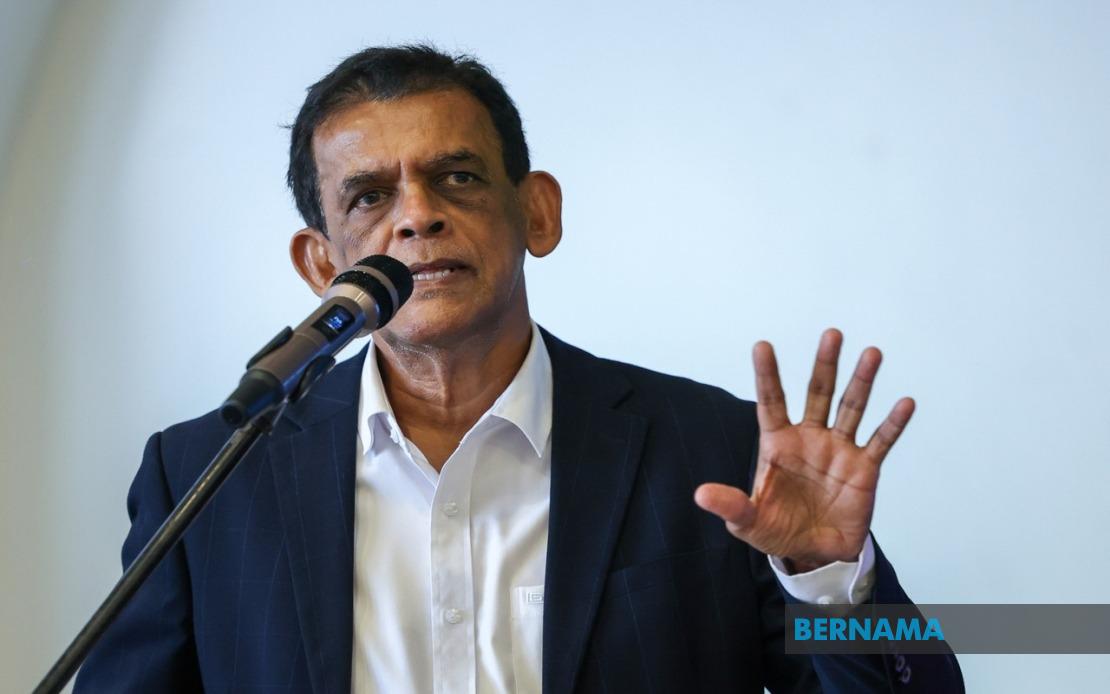
The Malaysian Artistes Association, known as Karyawan, has formally requested that the government intervene in the management of music royalties, a move designed to resolve longstanding grievances within the creative sector. The call came during the organisation's recent annual general meeting, where members unanimously backed the proposal alongside several other resolutions aimed at reforming how artists are compensated for their work. According to Datuk Freddie Fernandez, the association's president, the initiative represents a pivotal moment for an industry that has grappled with systemic challenges for more than two decades.
The financial scale of the issue underscores its importance. Public performance royalty collections in Malaysia are now approaching RM200 million annually, making the efficiency and integrity of the distribution system a matter of significant economic consequence for musicians and stakeholders across the board. This substantial revenue stream demands a level of governance that current arrangements have failed to deliver, according to Karyawan's assessment. The association contends that reform is not merely a matter of fairness but of fundamental industry sustainability and artist welfare.
Karyawan's proposal draws direct inspiration from Indonesia's established model, where a national collective management institution oversees the centralised gathering of performance royalties. Indonesia itself encountered comparable difficulties until government intervention resolved the fragmentation and disputes that characterised its earlier private-sector approach. The Indonesian precedent demonstrates that governmental oversight can successfully address the structural deficiencies that plague decentralised royalty systems, offering a proven template that Malaysia could adapt to its own context and requirements.
Transparency failures represent the most persistent complaint within Malaysia's music sector. Current arrangements have been marred by insufficient disclosure regarding how royalties are collected, managed, and ultimately distributed to rightful claimants. These opacity problems are compounded by elevated administrative expenses and the absence of unified coordination among multiple collecting organisations, each operating under different standards and procedures. This fragmentation has bred disputes and confusion, leaving artists uncertain about whether they are receiving fair compensation or how their royalties are being calculated and allocated.
Beyond simply transferring responsibility to government, Karyawan has proposed a comprehensive technological solution. The association advocates for development of a centralised digital platform operating under government supervision that would function as Malaysia's national music rights repository. Such a system would integrate music rights registration, real-time usage tracking, automated royalty calculations, and systematic distribution payments into a single, auditable ecosystem. Every musical composition, sound recording, ownership record, and licensing transaction would be documented and verified within this unified framework, creating unprecedented transparency across the entire value chain.
The operational advantages of such an infrastructure are substantial. When every use of a song is electronically matched to its legitimate rights holder, royalties can be calculated and distributed automatically based on verified ownership information and actual documented usage. This automation simultaneously reduces administrative duplication, enhances transparency, and establishes a clear digital audit trail accessible to government regulators, rights holders, music users, and other stakeholders. The resulting system would be considerably more efficient than the current arrangement while providing robust accountability mechanisms.
An additional consideration gaining urgency is the rise of artificial intelligence in music creation. Freddie noted that the proposed government-managed system would, to a meaningful degree, help regulate the proliferation of AI-generated music, an emerging challenge that requires immediate policy attention before it becomes entrenched in industry practice. Without proactive intervention through systematic oversight, AI-generated content could further destabilise an already troubled royalty ecosystem and potentially displace human artists from fair compensation pathways.
Karyawan's initiative aligns with the Copyright (Collective Management Organisation) Guidelines 2025, suggesting the proposal reflects broader regulatory evolution within Malaysia's intellectual property framework. The government-supervised model would strengthen governance standards, enhance record-keeping practices, improve reporting mechanisms, and establish clearer accountability structures throughout the royalty management ecosystem. This alignment indicates that the proposal operates within contemporary international best practices and regulatory expectations.
The current proposal emerges against a backdrop of significant institutional tension. Multiple parties, including Karyawan, MyIPO, the Ministry of Domestic Trade and Cost of Living, and the three existing royalty collection bodies—Music Authors' Copyright Protection, Public Performance Malaysia, and Recording Performers Malaysia—have initiated legal proceedings against the government. This litigation underscores the depth of dysfunction and the mutual lack of confidence among key players, suggesting that voluntary industry-led reform has become impossible without external intervention.
Perhaps most compellingly, Karyawan has documented persistent failures in how record labels compensate artists from album sales and streaming revenues. The case of late music legend Sudirman Arshad exemplifies this problem. His family only recently received RM367,000 in accumulated royalties after waiting many years, a sum that likely represents a fraction of what had actually accrued. Since highlighting this situation, numerous Karyawan members have stepped forward reporting similar experiences, indicating that royalty underpayment and delayed distribution constitute systemic problems rather than isolated incidents. The association is now consolidating documentation from affected members to pursue collective action seeking fair resolution and justice.
The Malaysian music industry stands at a crossroads. With public performance royalties reaching near-RM200 million annually and persistent complaints about transparency, fairness, and administrative competence, the case for government intervention has grown too substantial to ignore. Karyawan's proposal for a centralised, government-supervised digital platform represents a comprehensive response to decades of industry dysfunction. The Indonesian precedent demonstrates that such intervention can succeed. As regional economies increasingly recognise creative industries as drivers of growth and cultural influence, Malaysia's handling of music royalty reform will likely establish precedents for how the government engages with broader creative sector challenges, making this proposal consequential well beyond the immediate music community.

